The Ultimate Guide to Choosing Cricket Leg Guards (Batting Pads)

Introduction: Why the Right Cricket Batting Pads Matter
When playing cricket, players spend a lot of time thinking about their bat, gloves, helmet, and shoes.
However, one piece of protective equipment deserves just as much attention: cricket batting pads.
Batting pads are designed to protect the lower legs from the impact of a fast-moving cricket ball.
A well-fitted pair can give players confidence when facing fast bowlers while allowing them to move comfortably around the crease.
On the other hand, poorly fitted pads can feel heavy, uncomfortable, or restrictive.
They may interfere with footwork, make running difficult, and distract a batter during an innings.
This is why choosing the right cricket batting pads is about much more than appearance.
Players should consider:
- Protection
- Correct size
- Weight
- Fit
- Knee coverage
- Comfort
- Strapping
- Movement
- Playing level
The ideal pads should protect your legs without unnecessarily restricting movement.
This guide explains everything players need to know before buying their next pair of cricket leg guards.
What Are Cricket Batting Pads?
Cricket batting pads are protective equipment worn over the lower legs while batting.
They are designed to reduce the impact of a cricket ball striking the legs.
Modern pads generally include protective sections covering areas such as:
- Shins
- Knees
- Ankles
- Lower legs
The exact construction varies between manufacturers and models.
Some pads are lightweight and streamlined for players who prioritize mobility.
Others feature additional reinforcement for players who want maximum protection.
Why Do Batters Need Leg Guards?
A cricket ball can travel at very high speeds.
Even an experienced batter can misjudge a delivery.
A ball can strike the:
- Shin
- Knee
- Ankle
- Lower leg
Without appropriate protection, an impact can cause significant discomfort or injury.
Batting pads create a protective barrier between the player and the ball.
They also allow batters to focus on technique rather than worrying about every delivery hitting their legs.
Cricket Batting Pads Are About More Than Protection
Protection is the primary purpose of batting pads.
But comfort and movement are also extremely important.
A batter needs to:
- Move forward
- Move backward
- Play defensive shots
- Drive through the ball
- Rotate the strike
- Run between wickets
If the pads are excessively bulky or poorly fitted, they may interfere with these movements.
The best equipment balances protection with mobility.
How Pads Designed for Cricket Protect Your Legs
Modern pads are built using multiple protective components.
The front of the pad generally contains reinforced sections designed to absorb and distribute impact.
Padding around the knee provides additional protection in a vulnerable area.
Some models also include ankle protection.
Different manufacturers use different materials and construction methods.
Before purchasing, players should examine how the pads designed for their level of cricket provide coverage.
Understanding the Main Parts of a Batting Pad
Knowing the basic components can make choosing the right pair easier.
1. Shin Protection
The shin is one of the main areas protected by batting pads.
The front section absorbs impact from the cricket ball.
2. Knee Protection
The knee requires additional protection because it is a vulnerable joint.
This area may include a dedicated knee cup or reinforced padding.
3. Knee Roll
The knee roll is the padded section positioned around or above the knee.
It helps provide additional cushioning and protection while also influencing how the pad fits around the leg.
4. Ankle Protection
Some batting pads include additional padding around the ankle.
This can be useful when deliveries bounce unexpectedly or move toward the lower leg.
5. Straps
Straps help keep the pad securely attached to the leg.
A good strap system should hold the pad in place without creating excessive pressure.
Why Knee Protection Matters
The knees experience considerable movement during batting.
Players constantly bend, extend, and rotate their legs.
At the same time, the knee can be exposed to an incoming cricket ball.
This makes knee protection particularly important.
Some batting pads feature reinforced knee caps or molded knee sections.
Players should make sure the knee sits correctly inside the protective area.
If the knee is positioned too high or too low, protection and comfort can both be affected.
What Is a Knee Roll?
The knee roll is a recognizable padded feature on many traditional cricket leg guards.
It is positioned around the knee region and provides additional cushioning.
The design and thickness of a knee roll can vary significantly.
Some players prefer a more substantial knee roll for extra protection.
Others prefer a slimmer design that provides a lighter feel.
Neither option is automatically better.
The right choice depends on the player's preferences, playing level, and comfort.
How to Find the Correct Size
Size is one of the most important factors when purchasing batting pads.
The correct size helps ensure that the protective sections sit in the right positions.
Sizing is generally influenced by factors such as:
- Player height
- Leg length
- Knee position
- Playing level
- Manufacturer sizing system
Players should always check the specific manufacturer's size guide before purchasing.
Do not assume that the same size will fit identically across different brands.
Why an Incorrect Size Can Cause Problems
Pads that are too large may:
- Feel heavy
- Restrict movement
- Interfere with footwork
- Move during batting
- Become uncomfortable
Pads that are too small may:
- Leave areas exposed
- Position the knee incorrectly
- Provide inadequate coverage
- Become uncomfortable
The goal is to find a pair that sits securely and protects the intended areas.
How Should Batting Pads Fit?
A good pair of batting pads should sit naturally against the player's legs.
The knee should align with the protective knee section.
The shin should be properly covered.
The straps should hold the pad securely.
The pad should not rotate excessively when the player moves.
A player should be able to bend their knees and move their feet without feeling that the pads are fighting against their movement.
Testing Batting Pads Before Buying
If possible, players should try pads while wearing their normal cricket clothing.
Check whether you can:
- Bend your knees
- Move your feet
- Walk comfortably
- Take your batting stance
- Simulate forward movement
- Simulate backward movement
If the pads feel uncomfortable during simple movements, they may not be the right choice.
Weight Matters More Than Many Players Realize
Two pairs of batting pads can offer similar protection while feeling completely different.
The difference may come down to weight and construction.
Lightweight pads can make movement easier.
Heavier pads may offer a more substantial protective feel.
However, heavier does not automatically mean safer.
Players should find a balance between protection and mobility.
Lightweight vs Heavy Batting Pads
Lightweight Pads
Advantages can include:
- Easier movement
- Less fatigue
- Comfortable running
- Faster footwork
They may appeal to:
- Junior players
- Club players
- Players who prioritize mobility
Heavier Pads
Potential advantages include:
- Substantial protective coverage
- Traditional feel
- Additional reinforcement
They may appeal to players who prioritize protection and are comfortable with the added weight.
The ideal choice is personal.
Protection Without Restricting Movement
One of the most important principles when choosing batting pads is balance.
A pad should protect your legs without making movement unnecessarily difficult.
Batting requires dynamic movement.
Players need to adjust their position quickly depending on the delivery.
Pads that are excessively bulky may make this harder.
This is why modern cricket equipment increasingly focuses on combining protective coverage with lighter construction.
Traditional Pads vs Modern Pads
Traditional cricket pads often have a more classic appearance and construction.
Modern designs may focus on:
- Lower weight
- Improved ergonomics
- Better knee positioning
- Streamlined profiles
- Flexible materials
Both styles can be effective.
Players should focus on fit, comfort, protection, and suitability for their level of cricket rather than appearance alone.
Pads for Fast Bowling
Players who regularly face fast bowlers should pay particular attention to protection.
Fast deliveries can reach the batter quickly.
There is very little time to move the legs away from the ball.
Strong shin and knee protection becomes especially important.
Batters should also ensure that their helmet, gloves, and other protective equipment are appropriate for the level of bowling they face.
Pads for Spin Bowling
Facing spin creates different movement patterns.
Batters may:
- Use their feet
- Move down the pitch
- Sweep
- Reverse sweep
- Change stance position
Because movement is important against spin, players may prefer pads that feel less bulky.
Again, the priority should be protection combined with freedom of movement.
Junior Cricket Batting Pads
Young players require appropriately sized equipment.
Junior pads should be:
- Correctly sized
- Lightweight enough for the player
- Comfortable
- Properly secured
- Appropriate for the player's level
Parents should avoid buying oversized pads simply because the child is still growing.
Equipment should fit the player now rather than being selected purely for future use.
Why Children's Knee Position Matters
Children have different leg proportions as they grow.
If the pad is too long, the knee may not align correctly with the protective knee section.
This can reduce comfort and potentially leave important areas poorly protected.
Always use the manufacturer's sizing instructions when selecting junior equipment.
Batting Pads and Footwork
Footwork is one of the foundations of batting.
A batter needs to move toward or away from the ball depending on its length.
For example:
Full Delivery
The batter may move forward to play a drive.
Short Delivery
The batter may move backward to create space.
Spin Delivery
The batter may step down the pitch or adjust position.
Batting pads should allow these movements without unnecessary restriction.
Why Strapping Systems Matter
The straps keep the pads attached to the legs.
They should provide a secure fit without creating excessive pressure.
A good strap system helps prevent the pad from:
- Sliding
- Rotating
- Moving away from the knee
- Becoming loose during running
Players should check the straps regularly for wear.
Velcro vs Traditional Strap Systems
Many modern pads use Velcro-style closures.
They are convenient and quick to adjust.
Traditional strap systems may provide a different fit and feel.
Neither system is universally better.
The best option is the one that keeps the pad secure and comfortable.
Choosing the Right Cricket Pads for Your Playing Level
Your playing level should influence your equipment choices.
Beginners
Beginners should prioritize:
- Comfort
- Correct size
- Basic protection
- Easy movement
- Affordable construction
Club Players
Club players may want:
- Better protection
- Improved durability
- Lightweight construction
- Comfortable fit
Competitive Players
Competitive players may prioritize:
- Advanced protection
- Low weight
- Ergonomic design
- Premium materials
- Long-term durability
Cricket Batting Pads and Other Protective Gear
Batting pads should be considered part of a complete protective setup.
A batter may also need:
- Cricket helmet
- Batting gloves
- Abdominal guard
- Thigh guards
- Chest protection
- Arm protection
- Cricket shoes
Using one piece of protective equipment while ignoring the others does not provide complete protection.
Why the Abdominal Guard Matters
An abdominal guard protects a sensitive area of the body.
It is particularly important when facing hard cricket balls.
It should fit securely and be worn correctly underneath appropriate cricket clothing.
Why Batting Gloves and Pads Work Together
Your hands and legs are both exposed during batting.
Batting gloves protect the hands.
Cricket batting pads protect the legs.
Together, they allow players to focus more confidently on the ball.
A secure grip combined with appropriate leg protection creates a more complete batting setup.
Choosing Pads for Different Playing Surfaces
Batting pads themselves do not usually change dramatically based on the pitch surface.
However, the playing environment can influence how players move.
Hard surfaces may produce different bounce characteristics.
Synthetic surfaces can feel different from natural turf.
Players should therefore make sure their complete equipment setup—including cricket shoes—is appropriate for the ground.
How Cricket Ball Speed Influences Pad Selection
The faster the cricket ball travels, the more important appropriate protective equipment becomes.
Players facing recreational soft balls have different requirements from players facing high-speed leather balls.
Players should select protective equipment according to:
- Ball type
- Bowling speed
- Playing level
- Match conditions
- Player experience
When facing hard cricket balls, proper protective equipment should always be used.
How to Care for Cricket Batting Pads
Proper maintenance helps extend the life of your equipment.
Clean After Use
Remove dirt and grass after training or matches.
Allow Them to Dry
If the pads become wet, allow them to dry naturally.
Avoid Excessive Heat
Do not place protective equipment directly against strong heat sources.
Check the Straps
Inspect straps regularly for damage.
Inspect the Padding
Look for cracks, excessive wear, or damaged protective sections.
Store Properly
Keep the pads in a clean, dry area when not in use.
When Should You Replace Your Batting Pads?
Batting pads should be inspected regularly.
Consider replacement if you notice:
- Cracked protective sections
- Damaged straps
- Severely compressed padding
- Loose components
- Significant wear
- Poor fit
Protective equipment should remain in good condition.
If the equipment no longer provides the intended protection or secure fit, it is time to consider replacing it.
Common Mistakes When Buying Batting Pads
Players often make avoidable mistakes.
Buying the Wrong Size
Always check the manufacturer's measurements.
Choosing Only by Appearance
A stylish design is not enough.
Selecting the Heaviest Model
More weight does not automatically mean better protection.
Ignoring Knee Position
The knee should align correctly with the protective section.
Forgetting Comfort
Players may wear pads for long periods.
Ignoring Movement
Equipment should not unnecessarily restrict footwork.
Buying Oversized Equipment
Do not buy equipment simply because you expect to grow into it.
How to Choose the Right Cricket Batting Pads
Before purchasing, use this checklist:
1. Check the Size
Make sure the pads match your height and leg measurements.
2. Check Knee Alignment
Your knee should sit correctly within the knee protection.
3. Evaluate Protection
Make sure the shin, knee, and ankle areas receive appropriate coverage.
4. Test Movement
Walk, bend, and simulate your batting stance.
5. Check the Weight
Choose a weight you can comfortably manage.
6. Examine the Straps
Make sure they are secure and easy to adjust.
7. Consider Your Playing Level
Choose equipment appropriate for the type of cricket you play.
A Simple Batting Pad Fit Test
You can perform a quick fit test before using your new pads in a match.
Step 1
Put on the pads correctly.
Step 2
Secure all straps.
Step 3
Take your normal batting stance.
Step 4
Bend both knees.
Step 5
Move one foot forward.
Step 6
Move one foot backward.
Step 7
Walk and run a short distance.
If the pads remain secure and comfortable throughout these movements, the fit is likely suitable.
Why Comfort Builds Confidence
Protective equipment can influence how a player feels on the field.
When equipment fits properly, players can focus on:
- Watching the ball
- Making decisions
- Playing shots
- Running between wickets
- Communicating with teammates
If a player is constantly adjusting their pads, discomfort can become a distraction.
Comfort therefore plays an important role in confidence.
Cricket Batting Pads for Different Body Types
Players do not all have identical leg shapes.
Some have:
- Longer shins
- Wider calves
- Larger knees
- Narrower legs
This is another reason to try equipment whenever possible.
A pad that fits one player perfectly may feel different on another player's legs.
Fit should always take priority over simply choosing the same model used by another player.
Why Quality Matters in Protective Equipment
Good protective equipment should be reliable throughout repeated use.
Players should look for:
- Durable materials
- Secure stitching
- Strong straps
- Consistent padding
- Appropriate protective coverage
Quality does not necessarily mean buying the most expensive product.
Instead, look for equipment that provides the right combination of protection, comfort, durability, and value.
How Heega Sports Helps Players Choose Cricket Protection
At Heega Sports, we understand that protective equipment needs to support players without unnecessarily affecting their movement.
Our cricket equipment range includes products such as:
- Cricket batting pads
- Cricket leg guards
- Batting gloves
- Cricket helmets
- Abdominal guards
- Thigh protection
- Chest guards
- Cricket shoes
- Cricket bats
- Leather cricket balls
- Practice balls
- Cricket kit bags
- Practice nets
- Training accessories
Whether you are a beginner, academy player, club cricketer, or competitive player, choosing properly fitted equipment can make training and match preparation more comfortable.
Building a Complete Protective Cricket Kit
A serious batter should think about protection as a complete system.
A basic setup can include:
Head: Cricket helmet
Hands: Batting gloves
Legs: Cricket batting pads
Knees: Knee protection
Abdomen: Abdominal guard
Upper body: Chest and thigh protection where appropriate
Feet: Cricket shoes
Every item should fit correctly and be suitable for the level of cricket being played.
The Importance of Checking Equipment Before Every Match
Players should make equipment inspection part of their match routine.
Before stepping onto the field, check:
- Helmet condition
- Glove condition
- Pad straps
- Knee protection
- Abdominal guard
- Cricket shoes
- Bat grip
A few minutes of preparation can help prevent avoidable equipment problems during the match.
Final Thoughts: Choosing Batting Pads Is About Balance
The best cricket batting pads are not necessarily the biggest, heaviest, or most expensive.
The ideal pair should provide the right combination of:
- Protection
- Correct size
- Comfort
- Secure fit
- Lightweight movement
- Knee protection
- Durability
The knee roll, shin protection, knee section, straps, and overall construction all contribute to how a pad performs.
Most importantly, your equipment should protect your legs without unnecessarily restricting movement.
A batter needs freedom to move forward, move backward, rotate the strike, play shots, and run between wickets.
That is why choosing the right cricket batting pads should always involve more than simply looking at the design.
Measure your legs.
Check the manufacturer's sizing guide.
Make sure your knee aligns correctly.
Test the movement.
Consider the level of cricket you play.
And choose equipment that gives you confidence without compromising comfort.
Whether you are preparing for your first academy session or competing at club level, the right protective equipment can help you focus on the game rather than the equipment.
Because when your pads fit properly and your protection feels secure, you can step onto the field ready to face the next delivery with confidence.
🏏 Find the Right Cricket Protection at Heega Sports
Explore cricket batting pads, leg guards, batting gloves, cricket helmets, abdominal guards, chest protection, cricket shoes, cricket bats, leather cricket balls, kit bags, practice nets, and training equipment at Heega Sports.
Shop Now
Heega Sports – Helping Cricket Players Stay Protected, Comfortable, and Ready for Every Delivery.
Related posts
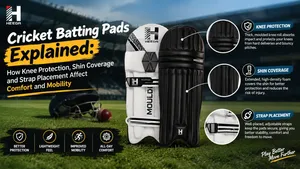 Cricket Batting Pads Explained: How Knee Protection, Shin Coverage and Strap Placement Affect Comfort and MobilityLearn how cricket batting pads, knee protection, shin coverage and strap placement affect comfort, mobility, impact protection and batting performance.
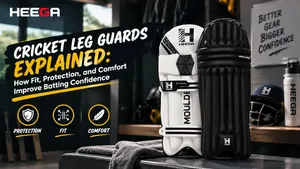 Cricket Leg Guards Explained: How Fit, Protection, and Comfort Improve Batting ConfidenceLearn how cricket leg guards provide protection, comfort, fit, and confidence while batting, plus tips for choosing and maintaining the right pair.
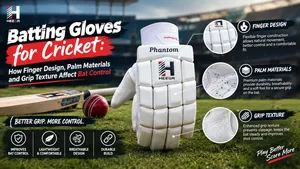 Batting Gloves for Cricket: How Finger Design, Palm Materials and Grip Texture Affect Bat ControlDiscover how cricket batting gloves, finger design, palm materials and grip texture influence bat control, comfort, protection and batting performance.