What Happens to a Cricket Ball After Hundreds of Deliveries? The Journey of Match Wear

Introduction: A Cricket Ball Has Its Own Journey
At the beginning of a cricket match, a new ball can look almost perfect.
Its surface is clean.
Its seam is clearly visible.
Its shape is consistent.
Its leather has a fresh appearance.
But after hundreds of deliveries, that same ball can look completely different.
It may become scratched, discolored, rougher, and softer.
The seam may lose some of its sharpness.
Its behavior can also change.
A cricket ball is therefore not simply an object used to deliver every ball of an innings.
It gradually becomes part of the match.
Every delivery leaves an impression.
Every bat contact changes the surface.
Every bounce contributes to wear.
Every throw from the boundary can add another mark.
This gradual transformation is one of the most interesting aspects of cricket.
What Happens to a New Cricket Ball?
A new cricket ball is manufactured to meet specific playing requirements.
Depending on its type, it generally features:
- A leather outer surface.
- A stitched seam.
- A central core.
- A carefully controlled weight.
- A defined circumference.
- A durable outer finish.
The exact construction varies according to the manufacturer and type of ball.
Why the New Ball Looks Different
A new ball usually has:
- A cleaner surface.
- A prominent seam.
- A relatively consistent finish.
- A firm structure.
These characteristics contribute to how the ball behaves during its early use.
The First Deliveries
The ball begins changing almost immediately.
It may hit the pitch dozens of times.
It may strike the bat.
Fielders may throw it.
The wicketkeeper may catch it repeatedly.
Each action contributes to gradual wear.
The Pitch Starts the Wear Process
Every time the ball hits the pitch, the outer surface experiences friction.
Even a well-maintained pitch creates some level of contact between the ball and ground.
Over many deliveries, those small interactions add up.
Repeated Bouncing Changes the Surface
The ball repeatedly experiences:
- Compression.
- Friction.
- Impact.
- Rotation.
These forces gradually affect its surface.
The amount of wear depends on the pitch, ball condition, bowling style, and match format.
Bat Contact Creates Another Type of Wear
A cricket ball does not only hit the pitch.
It can also strike:
- The middle of the bat.
- The edge.
- The bat's toe.
- Protective equipment.
- The ground after a shot.
Each type of contact can leave a different mark.
What Happens When the Ball Hits the Bat?
The ball experiences a high-energy collision.
Depending on the shot, the impact can cause:
- Surface marks.
- Compression.
- Scuffing.
- Changes in finish.
Repeated impacts gradually make the ball look older.
Edges Can Cause Significant Surface Marks
When a batter edges the ball, the contact can occur at an unusual angle.
This may produce more visible marks than a clean strike.
Boundary Fielding Adds More Wear
After a batter hits the ball toward the boundary, fielders may:
- Pick it up from the grass.
- Throw it long distances.
- Slide while collecting it.
- Stop it with their hands.
These actions contribute to the ball's journey.
The Ball Is Constantly Moving
During an innings, the ball may travel:
Bowler → Pitch → Batter → Fielder → Wicketkeeper → Bowler
This cycle can happen hundreds of times.
Every movement contributes to its changing condition.
Why the Seam Matters
The seam is one of the most important physical features of a cricket ball.
It helps bowlers control:
- Presentation.
- Rotation.
- Seam position.
- Swing.
As the ball gets older, the seam gradually becomes less prominent.
What Happens to the Seam Over Time?
Repeated contact with the pitch and bat can cause the seam to become:
- Less sharp.
- More worn.
- Flattened in places.
- Less visually distinct.
The rate of change depends on usage and playing conditions.
Seam Wear Can Change Bowling Options
A new ball often provides a prominent seam.
An older ball may provide a different set of possibilities.
Bowlers may adapt their tactics as the seam changes.
The Surface Becomes Rougher
One of the most visible changes is surface wear.
The leather may develop:
- Scratches.
- Scuff marks.
- Discoloration.
- Rough patches.
This is a natural result of match use.
Why One Side May Look Different From the Other
Players traditionally attempt to maintain one side of the ball in better condition.
The other side naturally becomes rougher through use.
This difference can become important for swing bowling.
Ball Polishing Is Part of Match Management
Fielders and bowlers may polish the ball using approved methods.
The purpose is generally to maintain the condition of the surface.
Polishing can help preserve the desired finish of one side.
Why Players Keep the Ball Dry
Moisture can affect the ball's surface.
Players therefore generally try to keep it as dry and well maintained as match conditions allow.
What Happens When the Ball Gets Wet?
Rain or damp conditions can change how the ball feels.
It may become:
- Slipperier.
- More difficult to grip.
- Harder to polish.
- Different in surface behavior.
This can influence bowling control.
Ball Weight Does Not Simply Disappear
A cricket ball does not normally become dramatically lighter simply because it has been used.
However, its physical condition changes through repeated impacts and wear.
The important transformation is often in the surface, seam, and overall playing characteristics.
The Ball Can Become Softer
Repeated impacts can gradually affect the ball's structure.
As a ball ages, its response can change.
This is one reason older balls can behave differently from brand-new ones.
Why Older Balls Can Behave Differently
An older ball may have:
- A rougher surface.
- A less prominent seam.
- More visible scuffing.
- A different level of firmness.
These characteristics can influence how players use it.
Reverse Swing and Ball Age
One of the most famous examples of an older ball producing different movement is reverse swing.
Reverse swing is associated with a ball that has developed significant differences between its two sides.
The aerodynamic behavior can become very different from conventional new-ball swing.
Why Reverse Swing Is Difficult to Face
The batter may expect the ball to behave according to its visible seam.
But an older ball can sometimes move in an unexpected direction.
This creates a major challenge.
Ball Wear and Spin Bowling
Older balls can also become useful to spin bowlers.
A rougher surface may interact differently with the pitch.
Depending on conditions, this can help the ball grip the surface.
Why Dry Surfaces Matter
A dry and worn pitch combined with an older ball can create conditions where spin bowling becomes increasingly important.
Test Cricket Creates the Longest Ball Journey
In Test cricket, the ball can remain in use for a substantial period.
It may experience hundreds of deliveries across a long innings.
This gives it plenty of time to change.
Limited-Overs Cricket Is Different
In shorter formats, balls experience a different match environment.
The ball is generally used for a shorter period.
However, the intensity of batting and fielding can still create significant surface wear.
White Balls Have Their Own Challenges
White cricket balls are widely used in limited-overs cricket.
Visibility is an important consideration.
As a white ball becomes dirty or scuffed, maintaining visibility can become more difficult.
Why White Ball Condition Matters
Players need to see the ball clearly.
This is particularly important under:
- Floodlights.
- Bright sunlight.
- Changing evening conditions.
Pink Balls Are Also Designed for Visibility
Pink balls are used in certain day-night Test matches.
They need to remain visible as lighting conditions change.
Their surface treatment and construction are designed with these requirements in mind.
Why Different Ball Colors Matter
The color of a cricket ball is not simply cosmetic.
It is linked to visibility and the conditions in which the ball is used.
The Ball's Shape Matters
A cricket ball is designed to be round.
Maintaining its shape is important for predictable performance.
Repeated impacts can gradually affect the ball's physical condition.
Why Players Check the Ball
Players and officials may pay attention to the ball's condition.
They may look for:
- Excessive damage.
- Changes in shape.
- Seam condition.
- Surface wear.
When Is a Ball Replaced?
Cricket laws and competition regulations determine when a ball can be replaced.
A replacement may be required or permitted in situations involving:
- Loss.
- Damage.
- Certain forms of deterioration.
- Match-specific conditions.
The exact replacement rules depend on the format and competition.
A Replacement Ball Is Not Always Identical in Age
When a ball is replaced, teams may sometimes use a ball that has been prepared to approximate the condition of the previous ball, depending on the competition rules.
This is important because changing from a heavily worn ball to a completely new ball could significantly alter the contest.
Ball Condition Can Influence Strategy
Captains and bowlers pay attention to the ball's condition because it can influence tactics.
For example:
A relatively new ball may encourage swing bowling.
A rougher ball may encourage different bowling plans.
An older ball may be used with variations in pace or spin.
Bowlers Adapt Their Approach
As the ball changes, bowlers may adjust:
- Seam position.
- Length.
- Pace.
- Release.
- Bowling angle.
- Variation.
Batters Adapt Too
Batters also need to recognize changes in ball behavior.
They may adjust:
- Shot selection.
- Footwork.
- Timing.
- Defensive technique.
- Risk level.
The Ball Creates a Battle Between Bat and Ball
Cricket is often described as a contest between bat and ball.
The condition of the ball adds another layer to this contest.
The ball changes.
The pitch changes.
The batter adapts.
The bowler responds.
The game continuously evolves.
Why Ball Condition Makes Cricket Interesting
Imagine two identical deliveries.
One comes from a brand-new ball.
The other comes from a heavily worn ball.
Even if the bowler releases them at similar speeds, they may not behave identically.
That unpredictability makes cricket fascinating.
Ball Wear Is Also a Lesson in Physics
The changing ball demonstrates several physical principles:
- Friction.
- Impact.
- Aerodynamics.
- Compression.
- Surface roughness.
- Energy transfer.
The cricket field effectively becomes a real-world physics laboratory.
Friction Plays a Major Role
Every time the ball interacts with:
- The pitch.
- The bat.
- The ground.
- A fielder's hands.
friction occurs.
Over hundreds of interactions, those forces contribute to surface wear.
Energy Transfer Changes the Ball
When a ball hits the bat or pitch, energy moves between objects.
Repeated impacts gradually affect the ball's physical condition.
Aerodynamics Changes With Surface Condition
The air interacts with the ball differently depending on its surface.
As the surface changes, the airflow around the ball can also behave differently.
This is particularly relevant to swing bowling.
Technology Helps Track Ball Behavior
Modern cricket increasingly uses technology to analyze performance.
Video systems and ball-tracking technologies can help teams study:
- Ball speed.
- Trajectory.
- Movement.
- Bounce.
- Release position.
Data Can Reveal Small Changes
A bowler may feel that an older ball behaves differently.
Performance data can help teams investigate whether measurable differences exist.
Ball Condition and Coaching
Coaches can use match footage to teach bowlers how the ball changes.
Players can learn to recognize:
- Surface wear.
- Seam condition.
- Appropriate bowling options.
Learning to Read the Ball
Experienced players often develop an instinct for ball condition.
They can quickly recognize whether the ball is:
- New.
- Worn.
- Scuffed.
- Damp.
- Softening.
This awareness becomes part of match intelligence.
Why Beginners Should Learn About Ball Condition
Understanding the ball can help young and developing players become smarter cricketers.
They can learn that equipment is not static.
Its condition affects how the game is played.
Training With Different Types of Cricket Balls
Players can benefit from practicing with different balls depending on their objectives.
Training options may include:
- Leather match balls.
- Practice leather balls.
- Synthetic balls.
- Soft training balls.
Each can create different practice experiences.
Heega Sports and Cricket Ball Selection
At Heega Sports, we understand that the right cricket ball depends on the player's level and training requirements.
Our cricket range can support:
- Academy training.
- Match preparation.
- Skill development.
- Practice sessions.
- Recreational cricket.
Choosing the appropriate ball helps players train in conditions that match their goals.
How to Maintain a Cricket Ball During Training
Players should follow the care instructions appropriate for the specific ball.
General good practices include:
- Keep the ball dry when required.
- Store it in a suitable place.
- Avoid unnecessary impacts.
- Inspect it regularly.
- Follow manufacturer or competition guidance.
Don't Use a Match Ball Like a Training Toy
A high-quality match ball is designed for specific playing conditions.
Using it carelessly during unsuitable training can accelerate unnecessary damage.
Why Quality Matters
A well-made cricket ball can provide more consistent:
- Shape.
- Seam.
- Weight.
- Surface.
- Durability.
Consistency is particularly valuable during technical training.
The Ball's Story Is Part of the Match
A cricket ball can tell the story of what happened during an innings.
A new ball reflects the beginning.
Scuff marks show repeated use.
A worn seam represents hundreds of deliveries.
A rough surface tells the story of pitch and bat contact.
The ball gradually records the physical history of the match.
Different Countries, Different Playing Conditions
Cricket is played in many environments, including Nepal, Germany, the United States, Canada, the Netherlands, and the United Kingdom.
Different climates, pitches, match formats, and facilities can influence how quickly a ball changes.
Nepal
Growing cricket infrastructure in Nepal provides opportunities for players to experience different ball conditions through academy, club, and competitive cricket.
Germany
As cricket continues developing in Germany, players increasingly experience organized matches where understanding equipment condition can support better preparation.
United States
The expanding cricket environment in the USA includes different venues and playing surfaces, creating varied experiences with ball behavior.
Canada
Seasonal conditions can create different challenges for players training and competing across Canadian cricket environments.
Netherlands
Dutch cricket offers structured competition where players can develop a strong understanding of ball and pitch conditions.
United Kingdom
The UK's long cricket tradition provides extensive experience with managing different ball conditions across formats and playing environments.
Final Thoughts
A cricket ball does not remain the same throughout a match.
From the first delivery to hundreds of subsequent impacts, it gradually changes.
The surface becomes more worn.
The seam becomes less prominent.
Scuff marks appear.
The ball may soften.
Its aerodynamic behavior can change.
Bowlers adjust their methods.
Batters adapt their techniques.
Fielders continue maintaining the ball within the laws and playing conditions.
All of these details contribute to the evolving battle between bat and ball.
That is what makes cricket different from simply throwing a ball and hitting it.
The equipment itself becomes part of the strategy.
A cricket ball starts a match as a carefully manufactured piece of equipment.
By the end of its journey, it carries the physical evidence of everything that happened on the field.
Every scratch has a story. Every delivery adds another chapter.
🏏 Choose Quality Cricket Balls for Better Training
Explore leather cricket balls, practice balls, Kashmir Willow cricket bats, batting gloves, pads, helmets, cricket kit bags, practice nets, and other cricket essentials at Heega Sports.
Shop Now
Heega Sports – Quality Cricket Equipment for Every Stage of the Game.
Related posts
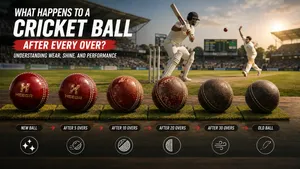 What Happens to a Cricket Ball After Every Over? Understanding Wear, Shine, and PerformanceDiscover what happens to a cricket ball during a match and how wear, shine, seam condition, moisture, and surface changes influence swing, seam, spin, grip, and performance.
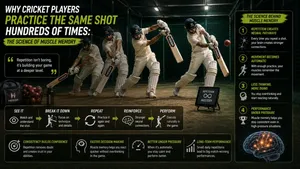 Why Cricket Players Practice the Same Shot Hundreds of Times: The Science of Muscle MemoryDiscover why cricket players repeat the same shots hundreds of times and how muscle memory, repetition, coordination, and deliberate practice improve batting technique and consistency.
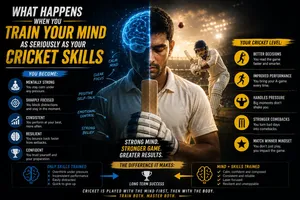 What Happens When You Train Your Mind as Seriously as Your Cricket SkillsDiscover what happens when you train your mind as seriously as your cricket skills. Learn practical mental training techniques for better focus, confidence, decision-making, pressure management, visualization, and match performance.