What Happens to a Cricket Ball After It Leaves the Bowler’s Hand?

Introduction: A Cricket Ball Has a Journey of Its Own
A cricket delivery may last only a few seconds.
But during that short journey, the ball can experience several changes.
It can move through the air.
It can swing toward or away from the batter.
It can rotate rapidly.
It can bounce from the pitch at an unexpected angle.
It can change direction after hitting the surface.
To a casual viewer, a fast delivery may simply look like a ball travelling from the bowler to the batter.
For players and coaches, however, every delivery contains valuable information.
The ball's speed, rotation, seam position, release point, flight path, pitch contact, and condition all influence what happens next.
This is one of the reasons cricket is such a fascinating sport.
The moment the ball leaves the bowler's hand, a combination of physics, technique, conditions, and skill begins shaping its journey.
Across Nepal, Germany, the United States, Canada, the Netherlands, and the United Kingdom, players learn to understand these movements because reading the ball is one of the foundations of good cricket.
The Journey Begins at Release
Everything starts with the bowler's release.
At this moment, several factors are established:
- Ball speed.
- Release height.
- Release angle.
- Seam position.
- Spin.
- Direction.
A bowler who controls these elements can make the ball behave very differently from one delivery to another.
Speed Determines How Quickly the Batter Must React
Fast bowlers release the ball at high speeds.
The faster the delivery, the less time the batter has to respond.
Speed can create pressure because the batter must make decisions quickly.
However, speed alone is not enough.
A fast delivery that lacks accuracy may be easier to score from than a slightly slower ball that lands in the perfect area.
The Seam Can Change the Ball's Behaviour
The seam is one of the most important features of a cricket ball.
A bowler can deliberately position the seam in different ways.
A stable seam can help a bowler maintain a predictable movement pattern.
A slightly angled seam can contribute to movement through the air or after pitching.
This is why bowlers spend considerable time practicing seam control.
What Is Swing?
Swing occurs when the cricket ball moves sideways through the air.
Instead of travelling in a perfectly straight line, the ball can curve toward or away from the batter.
Swing bowling is particularly effective when the bowler combines:
- Seam position.
- Ball condition.
- Release technique.
- Wrist position.
- Appropriate speed.
Conventional Swing
Conventional swing is commonly associated with a relatively newer ball.
The condition of the two sides of the ball can influence airflow around it.
Bowlers attempt to maintain the ball's condition and seam orientation to encourage movement.
For batters, even a small amount of late movement can make a delivery significantly harder to play.
Reverse Swing
As the ball becomes older and its condition changes, bowlers may attempt to generate reverse swing.
The movement can occur in a different direction from what a batter expects from conventional swing.
Reverse swing requires considerable control and is often associated with skilled fast bowling.
Spin Changes the Ball's Flight
Spin bowlers create movement by rotating the ball around an axis.
Different types of spin can cause the ball to:
- Drift through the air.
- Dip toward the pitch.
- Turn after bouncing.
- Change pace.
The amount and direction of rotation are extremely important.
Off-Spin and Leg-Spin Create Different Problems
Off-spinners and leg-spinners generally make the ball rotate in different directions.
The batter must identify:
- The bowler's action.
- The wrist position.
- The flight.
- The expected direction of turn.
Good batters learn to recognize these clues quickly.
Flight Is Part of the Bowler's Strategy
Spin bowlers do not always try to bowl as quickly as possible.
Sometimes they give the ball more flight.
A higher trajectory can encourage the batter to attack the ball in the air.
The bowler may then use the resulting risk to create a wicket opportunity.
Dip Can Surprise the Batter
A spinning ball can sometimes appear to travel on one path before dropping more sharply than expected.
This is known as dip.
It can make a batter misjudge:
- Where the ball will land.
- When to play the shot.
- How much footwork is required.
The Ball Eventually Meets the Pitch
After travelling through the air, the ball reaches the most important part of its journey:
The pitch.
The surface can dramatically influence what happens next.
Bounce Depends on the Pitch
A cricket pitch can produce different types of bounce.
A harder surface may offer:
- Faster rebound.
- More consistent bounce.
A softer or slower surface may produce:
- Lower bounce.
- Reduced pace.
- More time for the batter.
Players must adjust according to the surface.
Seam Movement Happens After Pitching
If the seam lands at an angle and interacts with the surface, the ball can move sideways.
This is known as seam movement.
The amount of movement depends on factors such as:
- Seam position.
- Pitch condition.
- Surface grass.
- Moisture.
- Ball condition.
- Bowling technique.
Why Green Pitches Can Help Seam Bowlers
A surface with grass and moisture can sometimes provide conditions that assist seam movement.
However, the exact behaviour of a pitch depends on many factors.
Good bowlers learn to observe the surface rather than simply assuming what it will do.
The Batter Has Only a Moment to React
Once the ball bounces, the batter has extremely little time to decide what to do.
They must judge:
- Line.
- Length.
- Pace.
- Bounce.
- Movement.
Then they must choose a response.
That might be:
- Defence.
- Drive.
- Cut.
- Pull.
- Sweep.
- Leave.
The quality of the decision can be just as important as the quality of the shot.
What Is Line and Length?
Line describes where the ball travels relative to the batter.
Length describes where the ball pitches.
Bowlers constantly adjust both.
A good combination can make scoring difficult.
A poor combination can provide the batter with an easy scoring opportunity.
Yorkers Are Designed to Reach the Base of the Stumps
A yorker is delivered very close to the batter's feet.
It is difficult to attack because the batter has limited room to swing.
Yorkers are particularly important during:
- Death overs.
- Pressure situations.
- T20 matches.
- Close run chases.
Bouncers Take a Different Path
A bouncer is intentionally delivered short so that it rises toward the batter.
It can be used to:
- Challenge the batter's technique.
- Change the batter's rhythm.
- Create catching opportunities.
- Force defensive responses.
The effectiveness of a bouncer depends on execution and conditions.
Slower Balls Disrupt Timing
In limited-overs cricket, bowlers frequently use slower deliveries.
The objective is to make the batter commit to a shot before the ball reaches them.
If the batter expects a fast delivery but receives a slower one, timing can become difficult.
The Ball Changes as the Match Progresses
A cricket ball does not remain in exactly the same condition throughout an innings.
It experiences:
- Impact from the bat.
- Contact with the pitch.
- Friction with the ground.
- Handling by fielders.
- Exposure to weather.
Its surface gradually changes.
Ball Wear Can Influence Bowling
As a ball becomes older, its behaviour can change.
The seam may become less pronounced.
The surface can become rougher.
One side may become more polished than the other.
Experienced bowlers pay close attention to these changes.
Fielders Also Influence the Ball's Condition
Players sometimes polish the ball during an innings.
This is not simply a routine habit.
Maintaining the ball's condition can help bowlers achieve particular movement.
Fielders therefore play a small but important role in managing the ball.
Weather Can Change the Ball's Journey
Weather conditions can influence how a cricket ball behaves.
Factors include:
- Humidity.
- Wind.
- Temperature.
- Moisture.
- Dew.
Bowlers and captains must consider these conditions when developing their plans.
Wind Can Influence Movement
Strong wind can affect the ball's flight.
Bowlers may adjust their angle or position on the crease depending on the direction of the wind.
Even small environmental changes can influence tactical decisions.
Dew Can Create Challenges
In day-night matches, dew can make the ball wet.
A wet ball may become harder to grip and control.
This can influence:
- Spin bowling.
- Seam control.
- Fielding.
- Catching.
Captains often consider the possibility of dew when making decisions before a match.
The Ball's Colour Can Also Matter
Cricket uses different coloured balls depending on the format and conditions.
Red balls are traditionally associated with longer-format cricket.
White balls are widely used in limited-overs cricket.
Pink balls are used in certain day-night longer-format matches.
The different colours are not simply cosmetic choices.
Visibility and playing conditions are important considerations.
Why White Balls Behave Differently Over Time
White cricket balls are designed to remain visible under lights.
However, they also experience wear throughout a match.
Their surface condition changes as they are hit, bowled, fielded, and rubbed against the ground.
These changes can influence how bowlers use them.
Why Pink Balls Are Special
Pink cricket balls are designed to remain visible during day-night play.
They must perform across changing light conditions.
Their use demonstrates how equipment design adapts to the demands of modern cricket.
Technology Helps Us Understand Ball Movement
Modern cricket increasingly uses technology to study deliveries.
Video analysis can help coaches examine:
- Release points.
- Seam position.
- Bowling speed.
- Swing.
- Spin.
- Bounce.
This information helps players understand why certain deliveries are effective.
Tracking Technology Adds More Information
Advanced performance systems can provide data about:
- Ball velocity.
- Movement.
- Release characteristics.
- Pitch location.
- Spin-related metrics.
Such information can help players refine their technique.
Nepal: Learning to Read Different Conditions
As cricket develops across Nepal, players encounter a variety of pitches and playing environments.
Understanding how the ball responds to different surfaces can help young cricketers develop stronger match awareness.
Germany: Adapting to Different Playing Environments
German cricket includes both outdoor and indoor opportunities.
Players therefore experience different surfaces and conditions, encouraging them to become adaptable when reading ball behaviour.
United States: Growing Interest in Cricket Science
As cricket expands in the USA, modern coaching and technology are helping players understand the technical side of bowling, batting, and ball movement.
Canada: Learning Across Changing Conditions
Canadian players may encounter significant differences between outdoor summer cricket and indoor training.
Understanding how conditions affect the ball becomes an important part of preparation.
The Netherlands: Technical Understanding Matters
Dutch cricket has a strong emphasis on disciplined technique.
Understanding seam, swing, spin, and pitch interaction can help players develop more complete cricket awareness.
United Kingdom: A Long History of Ball Craft
The UK's cricket tradition has produced generations of players and bowlers who have studied ball movement, pitch conditions, and weather as essential parts of the game.
Why Understanding Ball Movement Makes Better Batters
Batters who understand how a cricket ball behaves can prepare more effectively.
They learn to recognize:
- Seam movement.
- Swing.
- Spin.
- Pace changes.
- Bounce variation.
This knowledge improves decision-making.
Why Understanding Ball Movement Makes Better Bowlers
Bowlers also benefit from understanding the science behind their deliveries.
They can experiment with:
- Release points.
- Seam angles.
- Wrist positions.
- Pace.
- Length.
- Spin.
Understanding cause and effect helps bowlers train more intelligently.
Equipment Plays an Important Role
The cricket ball is only one part of the equipment required to play safely and effectively.
Players also depend on:
- Cricket bats.
- Batting gloves.
- Batting pads.
- Helmets.
- Cricket shoes.
- Wicketkeeping equipment.
- Practice nets.
- Cricket kit bags.
Good-quality equipment allows players to focus on developing their skills.
How Heega Sports Supports Better Cricket Training
At Heega Sports, we understand that players need dependable equipment to develop their game.
Our cricket range supports players across different ages and skill levels.
Our products include:
- Kashmir Willow cricket bats.
- Leather cricket balls.
- Practice cricket balls.
- Batting gloves.
- Batting pads.
- Cricket helmets.
- Cricket shoes.
- Practice nets.
- Cricket kit bags.
- Training accessories.
Whether a player is learning how to bowl their first swing delivery or preparing for competitive cricket, suitable equipment can make training more productive.
Final Thoughts
A cricket ball's journey begins the moment it leaves the bowler's hand.
From there, countless factors influence its movement.
Speed determines reaction time.
Seam position can influence movement.
Spin can change flight and direction.
The pitch determines bounce and possible seam movement.
Weather can alter conditions.
Ball wear can change behaviour as the match progresses.
For players, understanding these details turns cricket from a simple game of hitting and throwing into a fascinating combination of skill, science, and decision-making.
Across Nepal, Germany, the United States, Canada, the Netherlands, and the United Kingdom, players continue learning how to read the ball more effectively.
The ball may travel only a short distance.
But within that journey lies much of the science that makes cricket so fascinating.
🏏 Explore Cricket Equipment at Heega Sports
Equip yourself with quality Kashmir Willow cricket bats, leather cricket balls, practice balls, batting gloves, batting pads, cricket helmets, cricket shoes, practice nets, cricket kit bags, and training accessories designed for players at every level.
Shop Now
Heega Sports – Helping Players Understand the Game, Master Their Skills, and Play with Confidence.
Related posts
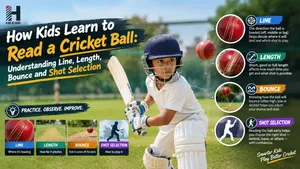 How Kids Learn to Read a Cricket Ball: Understanding Line, Length, Bounce and Shot SelectionLearn how kids can read a cricket ball by understanding line, length, bounce and shot selection to develop better batting skills and confidence.
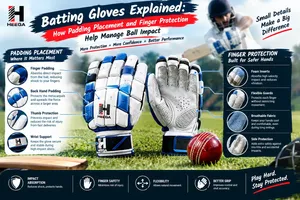 Batting Gloves Explained: How Padding Placement and Finger Protection Help Manage Ball ImpactLearn how batting glove padding placement, finger protection, and fit help manage ball impact. Find practical tips for choosing cricket batting gloves.
 Cricket Shoes for Fast Bowlers: How Ankle Support, Heel Stability and Traction Affect the Bowling ActionLearn how cricket shoes for fast bowlers affect ankle support, heel stability, traction, and landing control. Find the right fit for your bowling action.