What Is a Cricket Ball Made Of? The Leather Craftsmanship Behind Every Cricket Ball
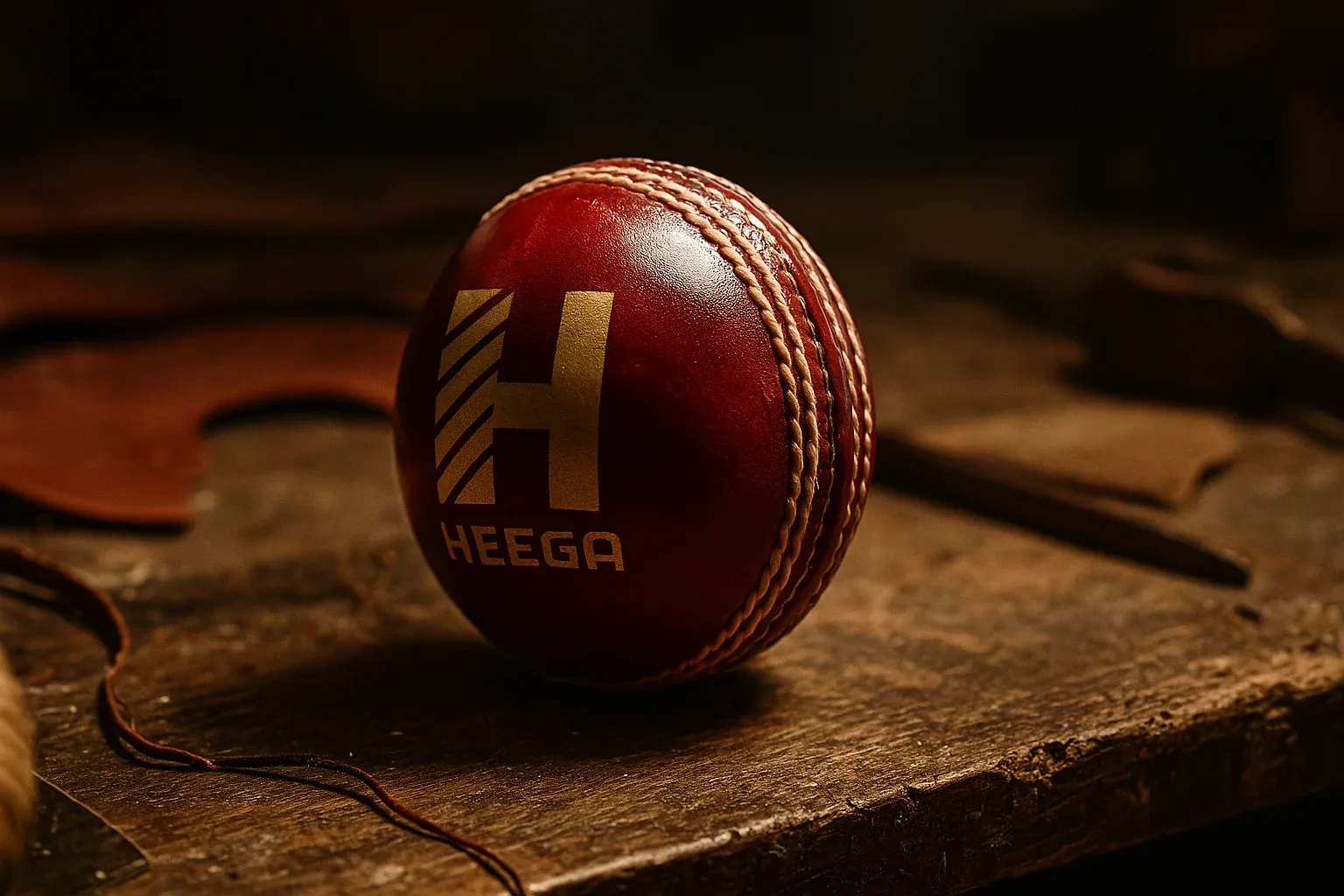
Introduction: The Story Behind Every Cricket Ball
A cricket ball may look simple at first glance.
It is round, hard, and usually covered with leather.
But a high-quality cricket ball is the result of careful material selection and precise manufacturing.
Inside the ball are several layers.
Each layer has an important purpose.
The core provides weight and structure.
The winding helps create the required shape and firmness.
The leather outer covering protects the internal structure.
The stitching keeps the covering securely in place.
Together, these components create a ball that can survive repeated impact from a cricket bat and maintain its shape during play.
The construction also affects how the ball behaves.
A properly manufactured ball can:
- Bounce consistently
- Swing through the air
- Maintain its shape
- Respond predictably off the bat
- Remain durable during cricket matches
Understanding how a ball is made also explains why different cricket balls are designed for different forms of the game.
A red ball used in Test cricket has different requirements from a white cricket ball used in limited-overs cricket.
Training balls can have completely different materials and construction.
So, let's look inside the ball and understand how each part contributes to its performance.
What Is a Cricket Ball Made Of?
The construction of a traditional cricket ball generally includes several key components.
These may include:
- Cork
- Rubber or other core materials
- String or thread windings
- Leather
- Stitching thread
- Protective finishing materials
The exact construction can vary depending on the manufacturer and the type of ball.
A traditional match ball is designed to withstand high-speed impacts and repeated use.
The outer surface is particularly important because it influences durability, grip, swing, and interaction with the pitch.
The Cork Core: The Center of the Ball
At the center of many traditional cricket balls is a cork-based core.
Cork is lightweight but provides useful structural properties.
The central core helps give the ball its basic:
- Weight
- Shape
- Firmness
- Stability
The core is not usually exposed directly.
It sits underneath multiple layers of winding and the outer covering.
This layered construction helps the finished cricket ball maintain its shape.
Why the Core Matters
The internal core plays an important role in the overall behavior of the ball.
A properly constructed core contributes to consistent weight distribution.
This is important because a ball that is not properly balanced can behave unpredictably.
Professional cricket requires consistency.
Whether a bowler is delivering a fast ball or a spinner is trying to generate turn, the ball needs to behave reliably.
Winding Material Adds Structure
After the central core is prepared, layers of thread or string are wound around it.
This process creates additional structure.
The winding helps:
- Build the ball's size
- Strengthen the internal construction
- Maintain its shape
- Create a firm surface underneath the leather
The winding must be applied consistently.
Uneven construction can affect the shape and balance of the finished ball.
How the Leather Cover Is Added
The outer layer is usually made from leather for traditional match balls.
The leather provides a strong protective surface around the internal layers.
It also gives the ball the familiar appearance associated with traditional cricket.
The covering is carefully prepared before being fitted around the ball.
The process requires accuracy because the finished ball needs to remain:
- Round
- Firm
- Balanced
- Durable
- Consistent in size
The Leather Case Protects the Ball
The leather case is one of the most important parts of a traditional cricket ball.
It protects the internal core from repeated impacts.
During a match, the ball can be struck by a hard cricket bat at high speed.
It can also hit the ground hundreds of times.
The leather must therefore be strong enough to withstand significant wear.
At the same time, the surface needs to maintain the characteristics required for bowling and batting.
Why Cricket Balls Have a Seam
One of the most recognizable features of a traditional cricket ball is its seam.
The seam is created where sections of the leather covering are joined and stitched.
It serves more than an aesthetic purpose.
The seam can influence how the ball interacts with the air and pitch.
Fast bowlers can use the seam to encourage movement.
Spin bowlers can also use the seam and surface condition when trying to create variations.
Hand Stitching Creates the Seam
High-quality traditional balls are often hand stitched.
This requires skilled workmanship.
The stitching needs to be:
- Secure
- Even
- Consistent
- Strong
The seam is an important part of the finished product.
Poor stitching can reduce durability and affect the ball's shape.
Careful craftsmanship helps ensure that the ball remains usable during demanding cricket matches.
Why Rows of Stitching Matter
The visible stitching around the seam is one of the defining characteristics of a traditional cricket ball.
Multiple rows of stitching help secure the leather sections.
They also contribute to the durability of the seam.
With regular use, the seam gradually changes.
This is particularly important in longer formats of cricket.
In Test matches, bowlers can use the condition of the seam and surface as the ball ages.
Red Ball Construction for Test Cricket
The traditional red ball is strongly associated with Test cricket.
Test matches can last for several days.
The ball therefore needs to remain durable over a long period.
A high-quality red cricket ball is designed to retain its shape and seam for extended periods of play.
Bowlers may use the ball differently as the innings progresses.
Its condition can become an important part of the contest between the batting and bowling teams.
Why Red Balls Are Used in Test Matches
Visibility is one reason red balls are traditionally used in longer-format cricket.
Test cricket is commonly played during daylight and under lighting conditions where a red ball can remain visible.
Players also traditionally wear white clothing, creating a clear visual contrast with the ball.
The red ball has therefore become an iconic part of the traditional Test cricket experience.
What Makes a White Cricket Ball Different?
The white cricket ball is commonly used in limited-overs cricket.
It is particularly associated with:
- One-day cricket
- T20 cricket
- Day-night matches
- Modern professional tournaments
White balls are designed with visibility in mind, especially when players are wearing colored uniforms.
They also need to remain visible under stadium lights.
Why White Balls Are Used in Limited-Overs Cricket
Limited-overs cricket often continues into the evening.
A white ball can be easier to see under artificial lighting.
This makes it practical for modern cricket matches played under floodlights.
The ball's construction still needs to provide:
- Consistent shape
- Durability
- Reliable bounce
- Good visibility
- Suitable seam characteristics
Red Ball vs White Cricket Ball
The biggest difference is not simply color.
The balls are designed around different playing environments.
FeatureRed BallWhite Cricket Ball
Common use
Test cricket
Limited-overs cricket
Visibility
Daylight-focused
Suitable for floodlights
Clothing
White clothing
Colored uniforms
Typical formats
Test matches
ODI and T20
Surface behavior
Designed for longer use
Designed for shorter formats
Appearance
Traditional red
White
The exact behavior depends on the manufacturer and playing conditions.
How the Surface Changes During a Match
A new cricket ball has a relatively smooth surface.
As the match progresses, the ball experiences repeated contact with:
- Bat
- Pitch
- Ground
- Bowler's hand
- Fielder's hand
This gradually changes the surface.
Bowlers and fielders can therefore pay close attention to the condition of the ball.
Swing and the Ball's Surface
Swing bowling depends on several factors.
These can include:
- Ball speed
- Seam position
- Surface condition
- Air movement
- Bowling technique
- Ball condition
The outer surface can become increasingly important as the ball gets older.
Bowlers may try to maintain one side of the ball while allowing the other side to become rougher.
This can contribute to conventional and reverse swing under suitable conditions.
Why Bowlers Polish the Ball
Fielding teams often polish the ball during play.
The purpose is to maintain a smooth surface on one side.
This can help bowlers who are trying to generate swing.
The condition of the ball can become a tactical consideration during longer innings.
What Happens When a Ball Becomes Old?
As a cricket ball gets older, its condition changes.
The leather may become:
- Scratched
- Scuffed
- Discolored
- Softer
- Rougher
The seam can also become less prominent.
These changes can influence how the ball behaves.
In professional cricket, bowlers learn to adapt their techniques as the ball ages.
Why the Leather Quality Matters
Not all leather is identical.
The quality of the leather can affect:
- Durability
- Surface consistency
- Appearance
- Stitching quality
- Resistance to wear
Manufacturers must select suitable leather for the intended type of cricket ball.
A premium match ball requires careful material selection.
Leather Thickness and Ball Performance
The leather covering needs to provide protection without making the ball unnecessarily heavy.
Manufacturers therefore need to balance:
Durability + Weight + Shape + Performance
The covering must also be fitted accurately.
Even small inconsistencies can affect the final product.
Cricket Ball Weight Matters
Weight is another important specification.
A regulation cricket ball must meet the relevant playing requirements.
The weight influences how the ball travels through the air and responds after contact with the bat or pitch.
A ball that is too light or too heavy would not provide the expected playing experience.
This is why manufacturers carefully control the construction and final weight.
Why Shape Consistency Is Important
A cricket ball must remain round.
Shape affects:
- Bounce
- Swing
- Seam movement
- Bat contact
- Bowling accuracy
If the ball becomes badly misshapen, its behavior can become unpredictable.
Professional match balls are therefore manufactured and inspected carefully.
How the Ball Is Finished
Once the internal construction and leather covering are completed, the ball goes through finishing processes.
These can include:
- Surface treatment
- Polishing
- Coloring
- Branding
- Inspection
- Weight checking
- Shape checking
The final product needs to meet the manufacturer's quality standards.
How Cricket Balls Are Manufactured for Different Formats
Not every ball is made for professional Test cricket.
Different types of balls are designed for different purposes.
These can include:
Match Balls
Designed for competitive cricket matches.
Training Balls
Designed for practice sessions and regular coaching.
Tennis Balls
Often used for beginner drills, recreational games, and modified cricket.
Soft Practice Balls
Useful for younger players and indoor training.
Each type has different requirements.
Training Balls vs Match Balls
Training balls are often designed for repeated practice.
They may be made using materials that are more affordable and suitable for frequent use.
A professional match ball has different requirements.
It needs to provide the appropriate:
- Weight
- Bounce
- Durability
- Seam
- Surface
- Construction
Choosing the correct ball depends on how you plan to use it.
Why Tennis Balls Are Used for Practice
Tennis balls are popular in beginner cricket training.
They are softer and safer than traditional hard cricket balls.
Coaches may use them for:
- Hand-eye coordination
- Batting drills
- Catching practice
- Reaction exercises
- Beginner training
They allow younger players to learn basic movements in a more approachable environment.
Can You Play Cricket With Different Types of Balls?
Yes.
The type of ball should match the purpose of the session.
Young children may start with softer balls.
Developing players may progress to training balls.
Competitive players may use traditional leather match balls.
The transition should depend on age, skill level, safety requirements, and coaching guidance.
Why the Ball Is Tested Before Use
Manufacturers can inspect finished balls for several characteristics.
These may include:
- Weight
- Shape
- Stitching
- Seam quality
- Surface finish
- Overall construction
Quality control helps ensure that the finished product performs consistently.
Professional cricket requires reliable equipment.
The Role of Quality Control
A cricket ball goes through a demanding environment.
It can be:
- Bowled at high speed
- Hit with a bat
- Thrown by fielders
- Struck against the ground
- Used for long periods
Quality control is therefore essential.
Manufacturers need to make sure the construction can withstand repeated impacts.
Why Cricket Ball Craftsmanship Still Matters
Modern sports equipment uses advanced manufacturing techniques.
However, traditional craftsmanship remains important for premium leather balls.
The combination of:
- Quality leather
- Strong core
- Accurate winding
- Precise stitching
- Careful finishing
helps create a reliable cricket ball.
The craftsmanship can be especially important for players who compete regularly.
Choosing the Right Cricket Ball
The best ball depends on the type of cricket you play.
For Test Cricket
Choose a high-quality traditional red leather ball designed for long-duration play.
For Limited-Overs Cricket
A suitable white cricket ball is generally used.
For Training
Choose training balls according to the player's age and practice requirements.
For Younger Players
Softer options can provide a more suitable introduction to the game.
Cricket Ball Care and Maintenance
Proper care can help preserve a ball during training and competitive use.
For traditional leather balls:
- Keep them dry
- Avoid unnecessary moisture
- Store them in a suitable place
- Do not leave them exposed to extreme heat
- Inspect the stitching regularly
- Keep the surface clean
Match balls should also be handled carefully to avoid unnecessary damage.
Why Moisture Can Be a Problem
Leather can be affected by moisture.
A wet or damp ball may change in condition.
This can influence its:
- Weight
- Surface
- Shape
- Durability
Players should therefore avoid leaving leather cricket balls in wet environments.
Cricket Balls and Playing Conditions
The same ball can behave differently depending on the environment.
Conditions can include:
- Humidity
- Temperature
- Pitch type
- Grass coverage
- Wind
- Lighting
Bowlers and batters learn to adapt to these conditions.
This is one reason cricket remains such a tactically rich sport.
How Pitch Conditions Affect the Ball
The pitch can influence how a ball behaves after bouncing.
On a harder surface, the ball may bounce differently than it would on a softer pitch.
Grass can also influence seam movement.
Players need to observe the conditions before deciding how to approach a match.
The Ball, Bat, and Pitch Work Together
Cricket performance is not determined by one piece of equipment.
The interaction between:
Bat + Ball + Pitch + Player
creates the actual playing experience.
A well-made cricket ball allows players to develop and test their skills more consistently.
Why Equipment Quality Matters for Young Players
Young players are still developing their technique.
Using suitable equipment can make learning more comfortable.
Training balls can help beginners practice:
- Batting
- Catching
- Throwing
- Bowling
- Reaction skills
As players improve, they can gradually move toward harder and more advanced equipment.
How Heega Sports Supports Cricket Players
At Heega Sports, we understand that quality equipment plays an important role in cricket development.
Our cricket collection includes equipment for:
- Young players
- Beginners
- Academy players
- Club cricketers
- Competitive players
Players can explore products such as:
- Leather cricket balls
- Practice cricket balls
- Training balls
- Cricket bats
- Batting gloves
- Batting pads
- Cricket helmets
- Cricket kit bags
- Practice nets
- Training accessories
The right equipment helps players train consistently and prepare for their next level of cricket.
From Raw Materials to the Finished Ball
The journey of a traditional cricket ball involves several stages.
It starts with the internal core.
The core is then surrounded by winding material.
The leather covering is prepared and fitted.
The sections are stitched together.
The seam is carefully finished.
Finally, the ball is inspected for quality.
Every stage matters.
A small problem during construction can affect the final product.
Why Manufacturing Precision Matters
Consistency is one of the most important qualities in cricket equipment.
A properly manufactured ball should provide predictable performance.
This allows players to focus on their skills rather than equipment problems.
For professional players, even small differences can become noticeable.
That is why manufacturers invest so much attention in:
- Weight
- Shape
- Seam
- Leather
- Core construction
- Finishing
Final Thoughts
A traditional cricket ball is much more than a simple leather sphere.
Its construction combines several carefully selected materials.
The internal core provides the foundation.
Winding creates additional structure.
The leather case protects the ball.
Strong stitching creates the seam.
Together, these components produce the finished ball used in competitive cricket.
The construction also helps explain why different balls are used for different formats.
A red ball is closely associated with Test cricket and Test matches.
A white cricket ball is widely used in limited-overs cricket and modern cricket matches.
Meanwhile, training balls and tennis balls provide useful options for practice and younger players.
The manufacturing process is ultimately about consistency.
The ball needs to maintain its shape, weight, durability, and playing characteristics.
For players who play cricket regularly, understanding equipment can make the game even more interesting.
Every seam, layer, stitch, and piece of leather has a purpose.
The next time you see a cricket ball travel from a bowler's hand toward the batter, remember that its performance begins long before it reaches the pitch.
It begins with careful materials, skilled craftsmanship, precise construction, and strict quality control.
🏏 Explore Quality Cricket Equipment at Heega Sports
Find cricket balls, training balls, cricket bats, batting gloves, batting pads, helmets, practice nets, kit bags, and other cricket equipment for players at different stages of their cricket journey.
Shop Now
Heega Sports – Quality Equipment for Every Training Session and Cricket Match.
Related posts
 Leather Ball Cricket Explained: How Ball Condition, Seam and Swing Influence BowlingLearn how leather ball cricket works and how ball condition, seam position, shine, and swing influence bowling accuracy, movement, and performance.
 How to Choose the Right Cricket Bat for Leather Ball Cricket.Learn how to choose the right cricket bat for leather ball cricket based on willow, weight, balance, profile, size, playing style, and budget.
 Leather Cricket Ball vs Synthetic Cricket Ball: Which One to Choose?Compare leather and synthetic cricket balls for practice, nets and matches. Learn about weight, seam, durability, bounce, performance and player level.