What Makes a Good Cricket Ball? Quality & Durability Guide

Introduction: What Makes a Good Cricket Ball?
When you pick up a cricket ball, it is easy to think that one ball is much like another.
After all, most traditional cricket balls have the same basic appearance. They are round, have a leather covering, and feature the familiar raised seam.
But anyone who has spent time playing cricket knows that the difference between an average ball and a good cricket ball can be surprisingly noticeable.
The feel in your hand is different.
The seam can feel sharper.
The leather can feel more consistent.
The ball can retain its shape better.
And during a match, these small details can influence how the ball behaves.
A quality cricket ball is the result of careful construction, suitable materials, accurate manufacturing, and proper finishing.
Whether you are a beginner, academy player, club cricketer, coach, or serious competitive player, understanding these factors can help you make a better choice.
In this guide, we will explain what makes a cricket ball good, how to judge its quality, why durability matters, and which features you should consider before buying one.
Why Cricket Ball Quality Matters
The ball is involved in almost every part of a cricket match.
It is bowled at high speed.
It hits the bat.
It bounces on the pitch.
It is thrown across the field.
It is caught repeatedly.
And in longer formats, it may remain in play for a considerable period.
Because of this, a cricket ball needs to be strong enough to handle repeated use.
A well-made ball should also provide consistent characteristics.
Players rely on the ball for:
- Bowling
- Batting
- Catching
- Throwing
- Fielding
- Seam practice
- Swing practice
- Spin practice
If the ball is poorly made, damaged, or unsuitable for the intended level of cricket, it can make training less consistent and may affect match performance.
That is why quality matters.
What Is a Good Cricket Ball Made Of?
A traditional leather cricket ball is made from several components that work together.
The main parts include:
- Cork-based core
- Wound yarn or string
- Leather outer panels
- Strong stitching
- Raised seam
- Surface finishing
Each part contributes something different.
The core helps determine the weight and resilience.
The wound yarn builds the internal structure.
The leather creates the outer playing surface.
The stitching joins the panels and forms the seam.
The finishing process gives the ball its final appearance and surface characteristics.
A good cricket ball is not simply made from good materials. Those materials also need to be assembled consistently.
The Importance of the Cricket Ball Core
The core sits at the centre of a traditional cricket ball.
It contributes to several important characteristics, including:
- Weight
- Hardness
- Resilience
- Bounce
- Overall structure
A consistent core is important because the inside of the ball affects what happens on the outside.
If the internal construction is inconsistent, it can contribute to differences in balance, shape, or performance.
This is one reason professional and high-quality cricket balls require careful manufacturing.
Why Wound Yarn Matters
Around the central core, layers of yarn or string are wound to build the ball's structure.
This may not be visible once the ball is finished, but it is an important part of its construction.
The winding process needs to be controlled carefully.
If the material is wound unevenly, the final ball may not have the desired shape or balance.
A well-constructed cricket ball should have a consistent internal structure that supports its spherical shape.
Leather Quality and Cricket Ball Performance
The leather covering is the part of the ball that players see and handle.
It also takes a tremendous amount of punishment during a match.
A cricket ball can hit:
- The bat
- The pitch
- The ground
- The player's gloves
- The boundary surface
- Other equipment
Good leather should be strong and durable while maintaining the desired feel.
The quality of the leather can influence:
- Durability
- Surface condition
- Appearance
- Feel
- Shape retention
For traditional competitive cricket, leather quality is therefore one of the features worth paying attention to.
What Makes Cricket Ball Leather Good Quality?
Good leather should have a consistent finish and should be suitable for the intended type of ball.
The leather should cover the underlying construction properly.
It should also be strong enough to withstand repeated impacts.
When inspecting a new cricket ball, look for:
- Even surface
- Secure panel construction
- No major cracks
- No loose sections
- Consistent finishing
- Properly formed seam
A small cosmetic mark may not necessarily affect performance.
However, significant damage or poor construction deserves closer attention.
Understanding Cricket Ball Stitching
Stitching is one of the most important visible features of a traditional cricket ball.
The leather panels are stitched together to create the finished ball.
The stitching also creates the raised seam.
Good stitching should be:
- Secure
- Consistent
- Properly aligned
- Durable
- Suitable for the intended ball
Loose or inconsistent stitching can eventually affect the ball's structure.
This is particularly important when a ball is expected to withstand repeated use.
Why the Cricket Ball Seam Matters
The seam is a defining feature of the traditional cricket ball.
For bowlers, it provides an important reference point and can be used as part of the grip.
Fast bowlers may use the seam when working on:
- Seam movement
- Swing
- Release
- Line and length
- Control
Spinners can also use the seam to help position their fingers.
A clearly defined seam can therefore contribute to the ball's usefulness for serious bowling practice and competitive play.
What Is a Hand-Stitched Cricket Ball?
A hand-stitched cricket ball is one where the leather panels are stitched together using a manual stitching process.
Hand stitching requires skill and precision.
The stitches need to remain secure and properly aligned.
Many players associate hand-stitched construction with premium cricket balls because of the craftsmanship involved.
However, the best way to judge a cricket ball is to consider its complete construction rather than one feature alone.
Leather, core, stitching, shape, weight, and finishing all matter.
Why Shape Is Important
A cricket ball should maintain a reasonably spherical shape.
This may sound obvious, but shape has a direct connection with consistency.
A badly deformed ball can behave differently when:
- Bowled
- Bounced
- Hit
- Thrown
- Spun
For this reason, manufacturers need to control the shaping process carefully.
Players and coaches should also inspect used balls regularly for obvious deformation.
How to Check the Shape of a Cricket Ball
You do not always need complicated equipment to perform a basic visual check.
Start by holding the ball at eye level.
Rotate it slowly and look for:
- Flat areas
- Uneven sections
- Damaged panels
- Bulges
- Major deformation
You can also place it on a flat surface and roll it gently.
An obviously uneven roll may indicate a shape problem.
For precise measurements, use suitable measuring equipment rather than relying only on visual inspection.
Cricket Ball Weight and Why It Matters
Weight is another important factor when judging a cricket ball.
For senior men's cricket under MCC Law 4, a regulation ball weighs between 155.9 g and 163 g.
The applicable specification can differ for other playing categories.
Weight affects how the ball feels during:
- Bowling
- Batting
- Catching
- Throwing
- Fielding
A consistent weight is particularly important for players who are accustomed to a specific ball.
Why Bowlers Notice Cricket Ball Weight
A bowler holds the ball for almost every delivery.
The weight and feel can influence how comfortable the ball feels in the hand.
Fast bowlers depend on rhythm and repeatability.
Spinners depend heavily on finger or wrist control.
If the ball feels noticeably different from the equipment used during regular training, the change can be distracting.
That is why competitive players often prefer consistent match and practice equipment.
Cricket Ball Circumference
Weight is not the only measurement that matters.
For senior men's cricket, the MCC Laws specify a circumference of 22.4 cm to 22.9 cm.
A cricket ball gauge can be useful when checking size.
This can be especially helpful for:
- Cricket academies
- Clubs
- Schools
- Coaches
- Equipment managers
- Cricket equipment suppliers
If a ball appears unusually large, small, or misshapen, it is worth checking rather than assuming it is fine.
What Is a Cricket Ball Gauge?
A cricket ball gauge is a tool designed to help check whether a ball falls within a specified size range.
Depending on the gauge design, it may provide a quick reference for checking the ball's circumference or size.
The exact process depends on the particular gauge.
Always follow the instructions supplied with the measuring tool.
Remember that a gauge designed for size does not replace a weighing scale when checking cricket ball weight.
What Makes a Cricket Ball Durable?
Durability is one of the most important qualities for players who use their equipment regularly.
A durable cricket ball needs to withstand repeated contact without quickly losing its basic shape or structural integrity.
Several factors contribute to durability:
- Leather quality
- Core construction
- Yarn winding
- Stitching
- Seam construction
- Surface finishing
- Manufacturing consistency
A durable ball can be especially valuable for clubs and academies where equipment is used frequently.
Match Cricket Ball vs Training Cricket Ball
Not every practice session requires a premium match ball.
In fact, using expensive match balls for every training session can increase equipment costs.
Training balls are designed for repeated practice and may use different materials or construction.
FeatureMatch Cricket BallTraining Cricket Ball
Main purpose
Competitive cricket
Practice and drills
Construction
Match-focused
Varies by product
Cost
Generally higher
Often more economical
Durability
Designed for match conditions
Often designed for frequent practice
Performance
Competition-oriented
Training-oriented
Best use
Official matches
Nets and practice
The right choice depends on what you are trying to achieve.
Red Cricket Ball and Test Cricket
The red ball is strongly connected with Test cricket and traditional long-format cricket.
A Test match can continue for several days, so the ball needs to withstand substantial use.
During the match, the ball's surface and seam gradually change.
Fast bowlers may benefit from a newer ball, while older-ball conditions can create different opportunities for bowlers.
This changing behaviour is one of the reasons Test cricket is so tactically interesting.
White Cricket Ball and Limited-Overs Cricket
The white cricket ball is widely used in ODI and T20 cricket.
Its colour helps with visibility in modern limited-overs conditions, including matches played under floodlights.
A white ball can also show dirt and wear differently from a red ball.
This means players need to pay attention to the ball's condition throughout the innings.
Pink Cricket Ball for Day-Night Cricket
Pink balls are primarily associated with day-night Test matches.
They are designed to remain visible as the lighting conditions change.
This creates a different visual and playing environment from traditional daytime Test cricket.
The ball's colour is therefore connected to the conditions in which it is expected to perform.
Cricket Ball and Swing Performance
Swing bowling is one of the most exciting parts of cricket.
A bowler can attempt to move the ball through the air by controlling its seam, release, speed, and surface condition.
The ball itself is only one part of the equation.
Weather, humidity, wind, pitch conditions, and bowling technique can all influence movement.
Still, a well-constructed ball gives bowlers a consistent foundation from which to practice these skills.
Cricket Ball and Seam Movement
Seam movement occurs when the ball deviates after pitching.
The seam can play an important role because bowlers can attempt to land it at a specific angle.
However, seam movement is also heavily influenced by the pitch.
A bowler needs accuracy, control, and a suitable release to make the most of the conditions.
A good cricket ball helps provide a reliable surface and seam for this type of practice.
Cricket Ball and Spin
Spin bowling requires a high level of control.
The bowler manipulates the ball using fingers, wrist position, grip, and release.
The seam can provide a useful reference point.
As the ball becomes older, its surface changes, which can also affect the way it feels in the spinner's hand.
A consistent cricket ball therefore helps spinners practice with predictable equipment.
Cricket Ball vs Tennis Balls
Tennis balls are commonly used for casual cricket and beginner training.
They are much softer and lighter than traditional leather cricket balls.
Tennis balls can be useful for:
- Reaction drills
- Batting timing
- Hand-eye coordination
- Beginner practice
- Recreational games
However, they do not reproduce the same hardness, bounce, seam, or movement as a leather cricket ball.
If you are preparing for competitive cricket, it is important to include realistic match-ball practice as your skill level develops.
What Are Training Balls Used For?
Training balls can make practice more flexible.
They are available in different materials and hardness levels.
Some are designed for general nets, while others are specifically suited to younger players or particular drills.
Training balls can be useful for:
- Bowling practice
- Batting drills
- Fielding
- Catching
- Reaction training
- Beginner sessions
- Indoor practice
The important thing is to select a training ball that matches the purpose of the session.
How to Identify a Good Cricket Ball
If you are buying a cricket ball, take a few moments to inspect it.
Check the Leather
The outer covering should look properly finished and free from major damage.
Check the Seam
The seam should be clearly formed and securely stitched.
Check the Shape
The ball should appear reasonably spherical.
Check the Weight
If required, use an accurate weighing scale.
Check the Size
Use an appropriate cricket ball gauge or measuring method.
Check the Intended Use
Make sure the ball is designed for your level and format.
These simple checks can help you avoid choosing equipment that does not suit your needs.
Signs of a Poor-Quality Cricket Ball
Some warning signs are easy to spot.
Look for:
- Loose stitching
- Poorly aligned seam
- Major leather cracks
- Uneven shape
- Obvious flat spots
- Poor surface finishing
- Unusual weight
- Damaged panels
Not every cosmetic imperfection means that a ball is unusable.
But significant construction problems should not be ignored.
How to Maintain a Leather Cricket Ball
Even a high-quality cricket ball needs proper care.
Keep It Dry
Avoid unnecessary moisture.
Clean It Carefully
Remove dirt using suitable methods rather than aggressive chemicals.
Store It Correctly
Keep the ball in a cool, dry place.
Protect the Leather
Avoid unnecessary scratching or rough handling.
Protect the Seam
Do not pull at loose threads or stitching.
Avoid Excessive Heat
Do not leave leather balls exposed to extreme heat for long periods.
Good maintenance can help preserve the ball's condition between sessions.
How Long Does a Cricket Ball Last?
There is no single answer because the lifespan depends on how the ball is used.
A ball used in a competitive match may experience much more wear than one used occasionally for light training.
Factors include:
- Ball quality
- Frequency of use
- Pitch condition
- Weather
- Playing level
- Bat impact
- Fielding conditions
- Maintenance
A training ball designed for repeated practice may last much longer in that environment than a premium match ball used in intensive competitive cricket.
Choosing a Cricket Ball for Beginners
Beginners should not feel pressured to buy the most expensive cricket ball available.
The better approach is to choose equipment that matches the player's age, skill level, and training environment.
A softer training ball can be useful for learning basic batting and fielding.
As the player develops, they can gradually move toward harder, more realistic match-style equipment.
The goal is to make learning comfortable while still developing the skills needed for future competition.
Choosing a Cricket Ball for Academies
Academies often need different types of balls because players train at different levels.
A coach may need:
- Soft training balls for beginners
- Durable practice balls for regular nets
- Leather balls for advanced players
- Match-quality balls for simulation sessions
Having the right mix can improve training quality while helping control equipment costs.
Choosing a Cricket Ball for Club Cricket
Club players usually need a combination of match and training equipment.
For official matches, always follow the competition's rules.
For regular nets, durable training balls can reduce unnecessary wear on match-quality equipment.
A club that trains multiple teams may also benefit from maintaining an equipment checklist so balls can be inspected and replaced when necessary.
What Makes a Top Quality Cricket Ball?
A top quality cricket ball combines several characteristics.
It should have:
- Reliable core construction
- Consistent weight
- Suitable circumference
- Good-quality leather
- Strong stitching
- Well-defined seam
- Proper spherical shape
- Durable surface
- Consistent finishing
Most importantly, the ball should be appropriate for its intended purpose.
A premium match ball may be excellent for competitive cricket but unnecessary for a beginner's first training session.
Quality is always connected to suitability.
Why Manufacturing Consistency Matters
Imagine buying six cricket balls that are supposed to be identical.
If each ball feels noticeably different, training becomes difficult to standardize.
One ball may feel harder.
Another may feel heavier.
A third may have a different seam.
Consistent manufacturing reduces these differences.
This is especially valuable for coaches, academies, clubs, and serious players who want their training equipment to closely match competition conditions.
Cricket Ball Quality for Cricket Matches
In competitive cricket matches, the ball is governed by the rules of the relevant competition.
Players should use the correct type and specification.
This becomes particularly important when moving between different formats.
Test cricket has different traditions and requirements from T20 cricket.
School cricket may have different requirements from senior men's cricket.
The safest approach is always to check the regulations of the competition before purchasing or using a match ball.
Why the Right Cricket Ball Improves Training
Good equipment does not automatically turn someone into a better cricketer.
However, the right cricket ball can create a better environment for practice.
A consistent ball allows players to repeat drills under similar conditions.
That can help with:
- Bowling accuracy
- Batting timing
- Seam awareness
- Spin control
- Catching
- Throwing
- Reaction
- Fielding
When equipment is predictable, players can focus more on technique.
How Heega Sports Supports Cricket Players
At Heega Sports, we understand that cricket equipment needs to work for real players in real training environments.
A cricket ball may be small, but it is involved in almost every part of the game.
That is why quality, construction, durability, and suitability all matter.
Whether you are preparing for a competitive match or simply heading to the nets after work or school, the right equipment should give you confidence when you pick it up.
Heega Sports offers a range of cricket equipment, including:
- Leather cricket balls
- Training balls
- Practice cricket balls
- Kashmir Willow cricket bats
- English Willow cricket bats
- Batting gloves
- Batting pads
- Cricket helmets
- Cricket shoes
- Cricket socks
- Cricket kit bags
- Practice nets
- Cricket stumps
- Training accessories
Our aim is to help players, coaches, academies, and cricket enthusiasts find equipment suited to their level and purpose.
Cricket Ball Quality Checklist
Before buying or using a cricket ball, consider the following.
Construction
Does the ball have a solid and consistent construction?
Leather
Does the leather look durable and properly finished?
Seam
Is the seam clearly defined and securely stitched?
Weight
Does the weight match the intended playing category?
Shape
Is the ball properly spherical?
Size
Is the circumference appropriate?
Durability
Can the ball handle the type of use you have planned?
Purpose
Is it intended for matches, training, or recreational cricket?
Player Level
Is the ball appropriate for the age and skill level of the player?
Common Questions About Cricket Ball Quality
What makes a good cricket ball?
A good cricket ball should have consistent construction, suitable leather, reliable weight, proper shape, secure stitching, a well-defined seam, and durability appropriate to its intended use.
Is leather important in a cricket ball?
Yes. Leather forms the outer playing surface of a traditional cricket ball and contributes to its durability, feel, and surface characteristics.
Why is the seam important?
The seam joins the leather panels and provides bowlers with an important grip and reference point. It can also contribute to swing and seam bowling.
What is the ideal weight of a cricket ball?
For senior men's cricket under MCC Law 4, the ball weighs between 155.9 g and 163 g. Other categories can have different requirements.
What is the difference between a match ball and a training ball?
A match ball is designed to meet competition requirements, while a training ball is generally designed for practice and repeated use. Construction and performance can vary.
Are tennis balls good for cricket practice?
Tennis balls can be useful for beginner drills, reaction practice, timing, and recreational cricket. They do not, however, behave exactly like traditional leather cricket balls.
How do I know if a cricket ball is durable?
Check the quality of the leather, stitching, seam, construction, and overall shape. The intended use also matters because different balls are designed for different levels of wear.
How should I store my cricket ball?
Store it in a dry place away from excessive heat and moisture. Avoid crushing the ball or damaging its leather and seam.
Is an expensive cricket ball always better?
Not necessarily. The best ball is the one that suits your playing level, format, training purpose, and competition requirements.
Final Thoughts
A good cricket ball is the result of many small details coming together.
The core needs to be consistent.
The yarn needs to provide a reliable structure.
The leather needs to be suitable for the intended use.
The stitching needs to be secure.
The seam needs to be properly formed.
The ball needs to maintain its shape and appropriate weight.
And, perhaps most importantly, the ball needs to perform consistently for the player using it.
A red ball has a special place in Test cricket.
A white cricket ball is widely used in limited-overs formats.
Pink balls are associated with day-night Test matches.
Training balls provide practical options for everyday practice, while tennis balls can be useful for specific drills and recreational cricket.
So, when choosing your next cricket ball, do not look at colour or price alone.
Think about quality, construction, durability, performance, and purpose.
The best cricket ball is not necessarily the most expensive one.
It is the one that gives you the right combination of feel, consistency, durability, and performance for the way you play.
Because once you step onto the field, you should be thinking about your next delivery, your next shot, or your next catch—not wondering whether your equipment can keep up.
🏏 Choose Quality Cricket Equipment at Heega Sports
Whether you are a beginner learning the basics, an academy player working on your technique, a club cricketer preparing for the weekend, or a competitive player looking for reliable match equipment, choosing the right cricket gear matters.
Explore Heega Sports for:
- Leather cricket balls
- Training balls
- Practice cricket balls
- English Willow cricket bats
- Kashmir Willow cricket bats
- Batting gloves
- Batting pads
- Cricket helmets
- Cricket shoes
- Cricket kit bags
- Practice nets
- Cricket stumps
- Training accessories
Shop Now
Heega Sports – Quality Cricket Equipment for Training, Matches, and Player Development.
Related posts
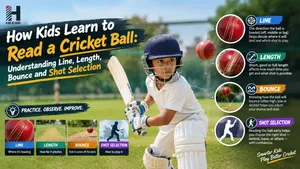 How Kids Learn to Read a Cricket Ball: Understanding Line, Length, Bounce and Shot SelectionLearn how kids can read a cricket ball by understanding line, length, bounce and shot selection to develop better batting skills and confidence.
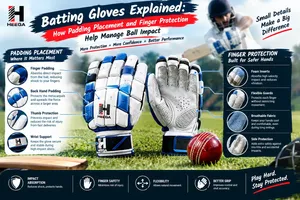 Batting Gloves Explained: How Padding Placement and Finger Protection Help Manage Ball ImpactLearn how batting glove padding placement, finger protection, and fit help manage ball impact. Find practical tips for choosing cricket batting gloves.
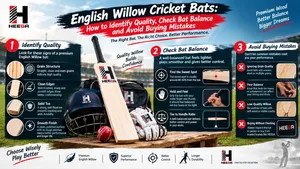 English Willow Cricket Bats: How to Identify Quality, Check Bat Balance and Avoid Buying MistakesLearn how to identify a quality English willow cricket bat, check its balance and pickup, understand grain patterns, and avoid common buying mistakes.