Why Catching Practice Is So Important for Young Cricketers.

Introduction: A Catch Can Change Everything
When children first learn cricket, batting often gets most of the attention.
They want to hit the ball.
They want to score runs.
They enjoy watching the ball disappear toward the boundary.
Fielding can sometimes feel less exciting.
But catching is one of the most important skills a young cricketer can develop.
A single catch can change an innings.
It can dismiss a batter.
It can stop a partnership.
It can shift momentum.
More importantly, catching practice develops physical and mental skills that children can use across many areas of sport.
Regular catching drills can improve:
- Hand-eye coordination.
- Reaction speed.
- Concentration.
- Balance.
- Movement.
- Confidence.
- Communication.
- Anticipation.
The best part is that catching does not require an expensive cricket facility.
It can be practiced at an academy, school, club, park, or even at home using suitable equipment and safe distances.
For young players, catching should not be treated as something they only practice when a match is coming.
It should become a natural part of cricket development.
Why Should Children Practice Catching?
Catching looks simple.
The ball comes toward the player.
The player catches it.
But successful catching requires several skills to work together.
A young player needs to:
- See the ball.
- Judge its movement.
- Move into position.
- Place their hands correctly.
- Track the ball until contact.
- Secure the ball.
- Maintain balance.
That is a lot of information for a developing player to process.
Regular practice makes these movements more familiar.
Catching Develops Hand-Eye Coordination
One of the biggest benefits of catching practice is improved hand-eye coordination.
Children learn to coordinate what their eyes see with how their hands move.
This can help them in:
- Cricket.
- Other sports.
- Everyday physical activities.
- General movement development.
The more varied the catching practice, the more opportunities children have to improve this coordination.
Reaction Speed Improves Through Repetition
A cricket ball can move quickly.
Even a young player may have very little time to react when the ball is struck hard.
Simple reaction drills can help children become more comfortable responding to unexpected movement.
Over time, they can learn to react without freezing.
Children Learn to Track the Ball
Young players sometimes look away from the ball at the wrong moment.
Catching practice teaches them an important habit:
Keep watching the ball until you have completed the catch.
This sounds obvious, but it takes practice.
A child who consistently watches the ball develops better visual discipline.
Catching Teaches Concentration
Fielders may spend several minutes doing nothing.
Then suddenly, the ball comes toward them.
They must be ready immediately.
This makes concentration particularly important.
Catching practice helps children learn to stay mentally engaged even when they are not constantly involved in the action.
Balance Is Part of Good Catching
A player who is off balance may struggle to complete a catch.
Young players therefore need to learn how to:
- Move their feet.
- Stop under control.
- Adjust their body.
- Prepare their hands.
Balance allows the player to create a more stable catching position.
Footwork Can Make Catching Easier
Good catching does not always begin with the hands.
Sometimes it begins with the feet.
If the ball is slightly to the left, the player may need to move.
If it travels behind them, they may need to turn quickly.
Teaching children to move toward the ball instead of reaching unnecessarily can improve their catching technique.
Start With Simple Catches
Young players should not immediately be asked to catch difficult high-speed deliveries.
Begin with manageable exercises.
For example:
- Gentle underarm throws.
- Chest-height catches.
- Low catches.
- Short-distance catches.
Once the child becomes comfortable, difficulty can gradually increase.
Make Catching Practice Age-Appropriate
The drill should match the child's development.
Younger children may need:
- Softer balls.
- Shorter distances.
- Slower throws.
- Larger targets.
Older or more experienced players can gradually work with greater speed, movement, and complexity.
The goal is to create successful repetitions while still providing a challenge.
Use Soft Balls for Beginners
Soft cricket balls can be useful when children are learning basic catching skills.
They can reduce fear and allow young players to focus on technique.
This can be particularly helpful for children who are nervous about catching harder balls.
Progress to Practice Cricket Balls
As children become more confident, practice balls can introduce different levels of challenge.
Players can gradually learn to handle:
- Faster throws.
- Higher catches.
- Moving catches.
- Different trajectories.
Progress should be gradual.
High Catches Teach Judgement
A ball hit into the air requires the fielder to judge its path.
Young players need to learn:
- Where the ball is going.
- How quickly it is descending.
- Where they should position themselves.
High catches are therefore as much about movement and judgement as they are about hand technique.
Practice the "Get Under the Ball" Habit
When appropriate, young fielders can learn to move into a balanced position beneath a high catch.
Instead of standing still and reaching at the last moment, they can move early and prepare their body.
This creates a more stable catching position.
Low Catches Develop Different Skills
Not every catch arrives at chest height.
Balls can travel along the ground or just above it.
Low-catching practice can develop:
- Flexibility.
- Hand positioning.
- Quick reactions.
- Body control.
Young players should gradually experience different ball heights.
Catching to the Side Requires Movement
A ball may not arrive directly in front of a fielder.
Side-catching drills teach children to:
- Move laterally.
- Keep their eyes on the ball.
- Adjust their hands.
- Recover quickly.
These skills can become useful during match situations.
One-Handed Catches Should Come Later
One-handed catches can look impressive.
But young beginners do not need to master them immediately.
Two-handed catching should generally provide the foundation.
Once players develop confidence and coordination, more advanced catching challenges can be introduced.
Reaction Catching Makes Practice Exciting
Children usually enjoy challenges.
A parent or coach can vary the direction of a gentle throw.
The child must react quickly and attempt the catch.
This creates a simple game while developing visual and physical reactions.
Use Targets to Make Drills More Interesting
Instead of endless repetitions, create challenges.
For example:
Can you complete five catches without dropping one?
Or:
Can you catch three different types of throws in a row?
Small targets can make practice feel more like a game.
Turn Catching Into a Competition Carefully
A little friendly competition can be fun.
However, young children should not feel embarrassed when they drop a catch.
Instead of focusing on who made the most mistakes, focus on improvement.
The goal is to make children want to practice again.
Dropped Catches Are Part of Learning
Every young player will drop catches.
That is normal.
Even experienced cricketers make mistakes.
Children should learn that a dropped catch is not proof that they are bad at cricket.
It is simply an opportunity to try again.
How Parents Should React to Dropped Catches
A negative reaction can make children nervous about catching.
Instead of:
"How could you drop that?"
try:
"Good effort. Let's try it again."
A calm response helps protect confidence.
Confidence Makes a Difference
A child who is afraid of dropping a catch may hesitate.
Hesitation can make catching more difficult.
Positive practice helps children develop trust in their own reactions.
Confidence does not mean believing they will catch everything.
It means being willing to attempt the catch.
Communication Is Part of Catching
Catching is not only an individual skill.
Players also need to communicate.
In a match, two fielders may move toward the same ball.
They need to call clearly and quickly.
Teaching children basic communication helps reduce confusion.
Practice Calling for the Ball
Coaches can introduce simple communication habits during fielding drills.
Children can learn to:
- Call clearly.
- Listen to teammates.
- Stop when another fielder has taken responsibility.
- Support the catcher.
These habits can become valuable during matches.
Catching Helps Children Understand Fielding Positions
Different positions offer different catching opportunities.
Children may experience:
- Close catching.
- Slip-style catching.
- Outfield catches.
- High catches.
- Boundary catches.
Exposure to different situations helps them understand how fielding works.
Close Catching Requires Quick Reactions
Players near the batter may have very little time to respond.
This makes close catching challenging.
Young players should only be introduced to such drills at an appropriate level and with suitable equipment and coaching.
Outfield Catching Requires More Movement
Outfielders often have more time to judge the ball but may need to cover greater distances.
They need to:
- Track the ball.
- Run into position.
- Judge the landing area.
- Catch while moving.
This combines speed, awareness, and coordination.
Boundary Catching Is an Advanced Skill
Near the boundary, fielders must think about both the ball and their position.
They need to understand where the boundary is and maintain body control.
This is more advanced and should be introduced as children become more experienced.
Catching Improves General Athletic Ability
Regular fielding drills can help children develop:
- Movement.
- Coordination.
- Agility.
- Balance.
- Spatial awareness.
These abilities can support their wider athletic development.
Catching Can Be Practiced Almost Anywhere
One major advantage of catching practice is its flexibility.
Children can practice in suitable:
- Gardens.
- Parks.
- Cricket grounds.
- Training facilities.
- School fields.
The environment should always be safe and appropriate for the drill.
Parents Can Practice With Their Children
Parents do not need to be cricket coaches to help.
Simple throwing and catching games can provide valuable repetition.
Start slowly.
Use appropriate equipment.
Keep the distance manageable.
Make it enjoyable.
A Simple 10-Minute Catching Session
A short practice can be enough.
Minutes 1–2
Gentle chest-height catches.
Minutes 3–4
Slightly higher catches.
Minutes 5–6
Low catches.
Minutes 7–8
Side movement catches.
Minutes 9–10
A fun catching challenge.
Short, positive sessions can be more effective for children than long sessions that become boring.
Avoid Practicing Until the Child Is Exhausted
Young players do not need endless repetition.
When concentration drops, technique can deteriorate.
Short sessions with good-quality repetitions can be more enjoyable.
Make the Difficulty Gradual
A useful progression can be:
Easy → Comfortable → Challenging → Advanced
Do not jump directly from simple catches to difficult high-speed drills.
Confidence grows when children experience manageable success.
Use Different Ball Types
Different balls can create different experiences.
Depending on the child's age and coaching environment, players may practice with:
- Soft balls.
- Synthetic practice balls.
- Tennis balls.
- Suitable cricket training balls.
The chosen ball should be appropriate for the child's age and the drill.
Why Tennis Balls Can Be Useful
Tennis balls are often useful for simple reaction and coordination games.
They can be incorporated into safe drills that focus on movement and visual tracking.
They should still be used in an appropriate environment with suitable supervision.
Catching Should Be Part of Every Training Session
Fielding should not be treated as an occasional activity.
Even a few minutes of catching during each practice session can create regular exposure.
Consistency matters.
Coaches Can Create Catching Circuits
A coaching session can rotate children through different stations.
For example:
Station 1
Chest catches.
Station 2
High catches.
Station 3
Low catches.
Station 4
Movement catches.
Station 5
Reaction catches.
This keeps groups active and reduces waiting time.
Catching Games Can Keep Children Engaged
Children often enjoy games more than repetitive drills.
Ideas include:
- Catching ladders.
- Team catching challenges.
- Reaction contests.
- Target catching.
- Moving-ball games.
The activities should remain age-appropriate and focused on skill development.
Don't Make Children Fear Fielding
If children are constantly shouted at after mistakes, they may become afraid of fielding.
That can affect their willingness to attempt difficult catches.
A supportive environment encourages players to take calculated risks and learn.
Celebrate Brave Attempts
A child may dive for a difficult catch and miss.
That attempt can still be valuable.
Praise:
- Commitment.
- Movement.
- Focus.
- Effort.
This encourages children to keep trying.
Catching Can Reveal Natural Strengths
Some children may discover that they have excellent reactions.
Others may have strong judgement under high balls.
Some may be particularly comfortable taking low catches.
These strengths can influence future fielding development.
Not Every Child Has to Be a Specialist Fielder
Every player should learn basic fielding skills.
But children do not need to become specialist fielders immediately.
The goal is to build a foundation that supports the entire team.
Catching Builds Responsibility
When a player is placed in the field, teammates depend on them.
This teaches children that every role matters.
They learn to stay alert and be ready when the team needs them.
Catching Can Strengthen Team Confidence
A successful catch can energize an entire team.
Children quickly learn that fielding contributions can change the mood and momentum of a match.
This helps them understand that cricket is a team game.
Safety Should Always Come First
Catching practice must be appropriate for the child's age and experience.
Parents and coaches should consider:
- Ball type.
- Throwing speed.
- Distance.
- Surrounding space.
- Protective equipment where appropriate.
- Supervision.
Children should never be pushed into drills beyond their ability simply to make practice look more advanced.
Check the Playing Area Before Practice
Make sure there are no obvious hazards nearby.
Avoid practicing where children could collide with:
- Vehicles.
- Hard obstacles.
- Glass.
- Crowded pathways.
- Other activities.
A safe environment makes learning easier.
Equipment Can Support Better Training
Young players can benefit from suitable training equipment such as:
- Practice balls.
- Catching aids.
- Cones.
- Stumps.
- Training nets.
Equipment does not replace coaching, but it can make sessions more varied.
How Heega Sports Supports Young Fielders
At Heega Sports, we believe young players should develop every part of their cricket game.
Our range includes:
- Junior cricket bats.
- Kashmir Willow bats.
- Practice cricket balls.
- Leather cricket balls.
- Batting gloves.
- Batting pads.
- Cricket helmets.
- Cricket shoes.
- Cricket kit bags.
- Practice nets.
- Training accessories.
With the right equipment and regular practice, children can develop confidence across batting, bowling, and fielding.
Nepal: Growing Opportunities for Young Fielders
As youth cricket continues developing in Nepal, fielding skills can play an important role in creating more complete young players.
Regular catching practice can help children become more confident contributors to their teams.
Germany: Building Fielding Skills Through Structured Practice
As cricket develops across Germany, young players can benefit from structured fielding sessions that make catching a normal part of training.
United States: Introducing More Children to Cricket
As youth cricket expands in the United States, simple catching games can provide an accessible way for children to develop coordination while enjoying the sport.
Canada: Developing Skills Across Different Training Environments
Young players in Canada can use indoor and outdoor sessions to work on catching, reactions, and movement throughout the year.
The Netherlands: Creating Complete Young Cricketers
Strong fielding fundamentals can complement batting and bowling development, helping young players become more versatile members of their teams.
United Kingdom: Developing Traditional Fielding Skills
With its extensive junior and club cricket structure, the UK offers many opportunities for children to develop catching skills through regular practice and match experience.
A Simple Catching Checklist for Parents
Before a catching session, parents can remember:
- Use age-appropriate equipment.
- Start with easy catches.
- Increase difficulty gradually.
- Encourage children to watch the ball.
- Focus on footwork.
- Practice different catching heights.
- Keep sessions short and enjoyable.
- Praise effort.
- Stay patient after mistakes.
- Always prioritize safety.
Final Thoughts
Catching may look like one simple movement, but it combines many important skills.
A young player needs to see the ball, judge its movement, move into position, prepare their hands, maintain balance, and stay focused until the catch is complete.
That is why catching practice deserves a regular place in youth cricket.
It can improve hand-eye coordination, reactions, concentration, movement, confidence, communication, and general fielding awareness.
More importantly, catching can teach children something valuable about sport:
Mistakes are normal, but giving up is optional.
A dropped catch is not the end of the session.
It is another chance to learn.
Whether a child eventually becomes a batter, bowler, wicketkeeper, all-rounder, or specialist fielder, strong catching skills can make them a more complete cricketer.
From Nepal, Germany, the United States, Canada, and the Netherlands to the established cricket environment of the United Kingdom, young players can benefit from one simple habit:
Keep practicing the catch.
Because one day, that ball may come toward them in a crucial moment.
And when it does, confidence built through thousands of simple practice catches can make all the difference.
🏏 Build Better Fielding Skills With Heega Sports
Explore practice cricket balls, junior cricket bats, Kashmir Willow bats, cricket shoes, training nets, kit bags, and other cricket training accessories designed to help young players practice, improve, and enjoy every part of the game.
Shop Now
Heega Sports – Helping Young Cricketers Catch Better, Move Faster, and Play With Confidence.
Related posts
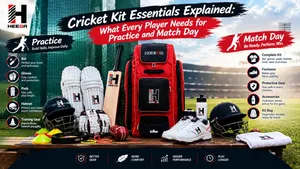 Cricket Kit Essentials Explained: What Every Player Needs for Practice and Match DayDiscover essential cricket kit items for practice and match day, including bats, protective gear, clothing, footwear, and accessories for every player.
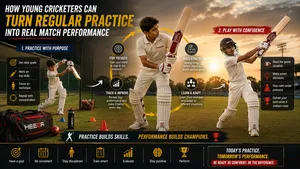 How Young Cricketers Can Turn Regular Practice Into Real Match Performance.Learn how young cricketers can turn regular practice into match performance through realistic drills, match simulations, decision-making, pressure training, and consistency.
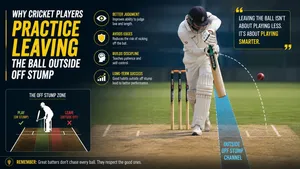 Why Cricket Players Practice Leaving the Ball Outside Off StumpDiscover why cricket players practice leaving the ball outside off stump and how this simple skill improves shot selection, patience, balance, and batting confidence.