Why Cricket Bat Handles Feel Different: How Handle Shape Affects Control and Comfort

Introduction: The Handle Is More Important Than It Looks
When choosing a cricket bat, most players immediately look at the blade.
They notice the profile.
They compare the edges.
They examine the sweet spot.
They consider the willow grade.
But there is another part of the bat that has a major influence on how it feels in the hands:
the handle.
The handle is the connection between the player and the blade.
Every shot, defensive movement, drive, pull, cut, and lofted stroke involves the handle transferring energy from the player's hands into the bat.
This is why two cricket bats with very similar blades can feel completely different.
One may feel smooth and comfortable.
Another may feel stiff.
One may provide a soft response.
Another may transmit more vibration.
The difference can come partly from the handle.
Handle construction, shape, flexibility, grip, splice design, and the player's own preferences all influence the overall feel of a cricket bat.
What Is a Cricket Bat Handle?
The handle is the upper section of the bat that the player holds.
It connects to the blade through the splice and allows the batter to control the movement of the bat.
A typical cricket bat handle is constructed to provide a balance between:
- Strength
- Flexibility
- Control
- Comfort
- Shock absorption
The ideal combination depends on the player's style and preferences.
Why Cricket Bat Handles Are Not All the Same
There is no single handle design that feels perfect for every player.
Different players have different:
- Hand sizes
- Batting techniques
- Grip preferences
- Swing styles
- Strength levels
- Comfort requirements
Manufacturers therefore use different construction approaches to create different sensations.
The Handle Is the Player's Connection to the Bat
Think about the bat as a system.
The blade makes contact with the ball.
The handle allows the player to control that blade.
This means the handle has an important role in how the player experiences every shot.
A well-suited handle can make the bat feel easier to control.
Handle Shape Can Change the Feel
The shape of a handle affects how it sits inside the player's hands.
Some handles feel:
- More rounded
- More oval
- More pronounced
- More comfortable in certain grip positions
Even relatively small differences can change how a player holds the bat.
Round Handles
Rounder handles can provide a familiar feeling for many players.
They allow the hands to move naturally around the handle and may suit players who prefer a traditional grip sensation.
Oval Handles
Oval-shaped handles can provide greater awareness of how the bat is positioned.
Some players like this because it can make the orientation of the blade easier to recognize.
However, preference varies significantly between players.
Why Handle Shape Matters for Control
Bat control depends partly on how comfortably the hands can guide the bat.
If the handle feels natural, a player may find it easier to:
- Adjust the bat angle
- Control defensive shots
- Play precise strokes
- Change direction
- Manage the bat during fast bowling
Grip Pressure Also Matters
The handle does not work independently of the player's grip.
Holding the bat extremely tightly can affect movement.
A relaxed but controlled grip can allow the hands and wrists to work more naturally.
A Comfortable Grip Can Improve Bat Control
When players are comfortable with the handle, they can focus more on the ball rather than constantly thinking about how the bat feels.
This can make batting more natural.
Handle Flexibility Is Important
One of the biggest differences between cricket bat handles is how they respond under impact.
Some feel relatively flexible.
Others feel firmer.
The amount of flexibility can influence:
- Shock absorption
- Feel
- Response
- Comfort
Why Flexible Handles Can Feel Softer
A handle with suitable flexibility can absorb some of the vibration generated when the bat makes contact with the ball.
This can produce a softer sensation in the hands.
Why Some Players Prefer Firmer Handles
Players who prefer a more direct response may enjoy a firmer-feeling handle.
It can provide a stronger connection between the hands and blade.
Again, this is largely a matter of individual preference.
The Handle Is Designed to Manage Impact
When a cricket ball hits the bat, energy travels through the blade.
Some of that energy can travel toward the handle.
The handle's construction helps manage the resulting vibration.
This is why handle design matters for comfort.
What Is a Cane Handle?
Traditional cricket bat handles are commonly constructed using cane.
Cane offers a useful combination of:
- Strength
- Flexibility
- Resilience
It has been used in cricket bat construction for generations.
Why Cane Is Used
A cricket bat handle needs to withstand repeated impacts while still providing enough flexibility to remain comfortable.
Cane can help provide this balance.
Multi-Piece Handle Construction
Many cricket bat handles are constructed using multiple pieces of cane.
These pieces are laminated and assembled to create a strong structure.
The construction process helps control how the handle responds under impact.
Why Laminated Construction Matters
Combining multiple pieces can help create:
- Structural strength
- Consistent flexibility
- Better durability
- Controlled response
The exact construction varies between manufacturers.
The Splice Connects Handle and Blade
The handle needs to connect securely to the blade.
This connection is known as the splice.
A well-constructed splice provides structural stability between the two major parts of the bat.
Why the Splice Matters
The splice must withstand repeated impact.
It also influences how energy travels between the handle and blade.
A strong and properly constructed connection is therefore essential.
Traditional Splice Designs
Cricket bats can use different splice approaches.
The exact design may vary according to manufacturer and bat construction.
The goal is always to create a reliable connection between the handle and blade.
Handle Length Can Affect Feel
Players can also experience differences in handle length.
A longer handle may provide a slightly different balance and leverage sensation.
A shorter handle may feel different in the hands.
The appropriate choice depends on the player's height, bat size, and personal preference.
Short Handle and Long Handle
Adult cricket bats are commonly available in different handle configurations.
Short Handle
Often preferred by players of typical adult height.
Long Handle
Can be suitable for taller players who need additional reach and a different overall setup.
The choice should be based on comfort and control rather than simply selecting the longest option.
The Handle Influences Bat Pickup
Pickup refers to how heavy or light the bat feels while being moved.
Two bats can have identical weights but feel completely different.
Why?
Because weight distribution matters.
Balance and Handle Position
The relationship between the handle and blade affects how the bat's weight is perceived.
A bat with more weight toward the blade may feel different from one with a more evenly distributed balance.
Why Pickup Matters
A comfortable pickup can help a batter:
- Lift the bat easily
- Adjust quickly
- Generate bat speed
- Control shots
- React to fast bowling
Handle and Bat Speed
The handle does not magically create bat speed.
However, a comfortable handle can help the player move the bat naturally.
If the handle feels awkward, the player may struggle to maintain a smooth swing.
Wrist Movement and Handle Design
Batting involves significant wrist and forearm movement.
The handle needs to allow the player to control the blade while maintaining a comfortable grip.
This is particularly important for:
- Flicks
- Cuts
- Glances
- Drives
- Controlled shots
Different Batting Styles Prefer Different Feel
Every batter develops their own technique.
An aggressive player may prefer a firm and responsive setup.
A player who relies heavily on timing may prefer a softer feel.
A technically controlled batter may prioritize balance and maneuverability.
There is no universally perfect handle.
Handle Design and Defensive Batting
Defensive strokes require control.
A player needs to bring the bat into the correct position without unnecessary movement.
A comfortable handle can help the hands guide the bat accurately.
Handle Design and Aggressive Batting
Power hitting also requires control.
Players need to generate bat speed while maintaining the correct swing path.
A suitable handle can help the player maintain confidence during powerful shots.
Why Fast Bowlers Make Handle Feel More Important
High-speed deliveries can generate significant impact.
When a batter makes contact with a fast ball, vibration can be more noticeable.
This is where handle construction and shock management become especially relevant.
Edges Can Feel Different Too
Not every contact occurs in the middle of the bat.
Shots played toward the edge can produce different vibrations.
A good handle and grip can help make these impacts more manageable.
The Role of the Bat Grip
The handle itself is only one part of the equation.
The grip placed over the handle also changes the feel.
Different grips can vary in:
- Thickness
- Texture
- Firmness
- Cushioning
- Weight
Thicker Grips
Some players prefer thicker grips because they can feel more comfortable in the hands.
They may also change how the bat sits within the grip.
Thinner Grips
Other players prefer thinner grips because they want a closer connection to the handle.
This may provide greater feedback about the bat's position.
Grip Texture Matters
A grip needs to provide enough traction to prevent unnecessary movement.
A secure grip can help players maintain control without squeezing the bat excessively.
Why Grip Replacement Can Change a Bat's Feel
Even if the bat itself remains unchanged, replacing the grip can make it feel different.
A new grip can alter:
- Handle thickness
- Cushioning
- Weight
- Hand comfort
- Overall pickup
This is why experienced players sometimes experiment with different grips.
How Players Find Their Preferred Handle
There is no perfect formula.
Players usually discover their preference through experience.
They may try:
- Different handle shapes
- Different grips
- Different flexibility levels
- Different bat weights
- Different balance points
Eventually, they learn what feels most natural.
Hand Size Can Influence Preference
A player's hand size can affect comfort.
A handle that feels comfortable for one player may feel too thin or too thick for another.
Younger Players Need Appropriate Handles
Junior cricket bats are designed with younger players in mind.
Children should not simply use adult bats because they are stronger or more expensive.
The bat should match their:
- Height
- Strength
- Playing level
- Physical development
The Handle Should Not Feel Unmanageable
If a young player struggles to control the bat, technique can suffer.
An appropriately sized and weighted bat allows the player to focus on learning.
Why Bigger Does Not Always Mean Better
Some players believe a larger bat automatically provides more power.
But if the player cannot control it effectively, the additional size may become a disadvantage.
Control comes first.
Handle Comfort and Confidence
A player who feels comfortable with their bat may approach batting with greater confidence.
Confidence does not come from equipment alone.
But comfortable equipment can remove unnecessary distractions.
How to Test a Cricket Bat Handle
When trying a bat, players can check:
1. Grip Comfort
Does the handle feel natural?
2. Thickness
Does it fit comfortably in the hands?
3. Balance
Does the bat feel easy to lift?
4. Flexibility
Does the handle feel too stiff or too soft?
5. Control
Can you move the bat naturally?
Practice a Few Shadow Shots
Before purchasing a bat, a player can perform controlled shadow strokes.
Try:
- Defensive movement
- Straight drive
- Pull
- Cut
- Back-foot movement
The goal is to see whether the bat feels natural.
Don't Judge a Bat Only by Weight
Two bats with the same listed weight can feel very different.
Always consider:
- Pickup
- Balance
- Handle
- Grip
- Blade profile
Weight Distribution Matters
A bat with a lower sweet spot may feel different from one with a higher sweet spot.
The handle interacts with this overall balance.
Handle and Sweet Spot Work Together
The handle does not determine the sweet spot.
However, the overall construction of the bat determines how the player experiences the blade.
This is why bat selection should consider the entire bat rather than one specification.
Different Manufacturers Have Different Feel
Manufacturers may use different approaches to:
- Cane selection
- Handle construction
- Splice design
- Grip materials
- Bat balance
As a result, two bats of similar specifications can feel different.
Why Professional Players Are Particular About Handles
At higher levels, players become very familiar with their equipment.
They know exactly how they want the bat to feel.
A small difference in handle thickness or grip can become noticeable after thousands of deliveries.
Familiarity Can Be Valuable
Once a player finds a comfortable setup, maintaining consistency can help them feel confident.
This is one reason experienced players often have strong equipment preferences.
Handle Care Matters
The handle should be treated carefully.
Players should:
- Store the bat properly.
- Avoid unnecessary impacts.
- Keep the bat dry.
- Check the grip regularly.
- Inspect for damage.
Watch for Handle Damage
Signs of a potential problem may include:
- Excessive movement.
- Unusual cracking.
- Loose components.
- Significant changes in feel.
If something seems abnormal, the bat should be inspected by a qualified professional.
Don't Ignore a Damaged Handle
The handle is a structural component.
Continuing to use a damaged bat can make the problem worse and may create a safety concern.
Why Handle Technology Continues to Evolve
Cricket bat manufacturers continue experimenting with materials and construction methods.
The goal is to improve:
- Comfort
- Strength
- Shock absorption
- Durability
- Consistency
Traditional materials remain important, but manufacturing techniques continue developing.
The Future of Cricket Bat Handles
Future designs may focus even more on:
- Customized handle profiles
- Improved vibration control
- Lightweight construction
- Player-specific specifications
- Advanced materials
Technology may allow manufacturers to tailor bats more closely to individual preferences.
Heega Sports and Cricket Bat Selection
At Heega Sports, we understand that choosing a cricket bat involves more than selecting a willow grade.
Players should consider the complete setup, including:
- Bat size
- Weight
- Balance
- Profile
- Handle
- Grip
- Playing style
A well-matched bat can make training and match play more comfortable.
Kashmir Willow and Handle Comfort
Kashmir Willow cricket bats are popular among many developing and recreational players.
They can provide a practical combination of durability, value, and performance.
However, the willow type is only one part of the bat.
Handle construction and overall balance still matter.
How to Choose a Cricket Bat Handle
A simple approach is:
Step 1: Consider Your Height
Choose an appropriate bat size.
Step 2: Consider Your Playing Style
Think about whether you prioritize control, power, or maneuverability.
Step 3: Test the Handle
Check thickness, shape, and comfort.
Step 4: Check Pickup
Lift and move the bat naturally.
Step 5: Check the Grip
Make sure your hands feel secure.
Step 6: Practice Shadow Shots
See whether the bat moves naturally.
Common Mistakes When Choosing a Handle
Avoid:
- Choosing based only on appearance.
- Selecting the heaviest bat available.
- Ignoring handle comfort.
- Using an unsuitable grip.
- Choosing a bat without testing its pickup.
- Assuming every bat feels the same.
Final Thoughts
A cricket bat handle may look like a relatively small part of the bat, but its influence on comfort and control is significant.
The handle connects the player's hands to the blade.
Its shape can affect grip.
Its construction can influence flexibility and vibration.
Its connection to the blade contributes to the overall feel.
The grip can change thickness and cushioning.
The balance of the complete bat affects pickup.
All of these factors combine to create the sensation a player experiences when holding a cricket bat.
That is why one bat may immediately feel natural while another takes time to adjust to.
The best cricket bat is not necessarily the one with the biggest edges, highest price, or most impressive appearance.
It is the one that allows the player to control the bat confidently and comfortably.
When the handle, grip, weight, balance, and blade work together, the bat becomes more than a piece of equipment.
It becomes an extension of the player's technique.
🏏 Find a Cricket Bat That Feels Right in Your Hands
Explore Kashmir Willow cricket bats, junior bats, adult bats, batting gloves, cricket balls, pads, helmets, kit bags, practice nets, and other cricket essentials at Heega Sports.
Shop Now
Heega Sports – Helping Players Find the Right Balance of Comfort, Control, and Performance.
Related posts
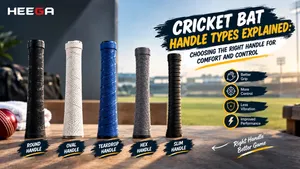 Cricket Bat Handle Types Explained: Choosing the Right Handle for Comfort and Control.Understand cricket bat handle types and learn how handle construction, flexibility, shape, grip, and comfort affect control, timing, and performance.
 Cricket Batting Pads Explained: How Knee Protection, Shin Coverage and Strap Placement Affect Comfort and MobilityLearn how cricket batting pads, knee protection, shin coverage and strap placement affect comfort, mobility, impact protection and batting performance.
 Batting Gloves for Cricket: How Finger Design, Palm Materials and Grip Texture Affect Bat ControlDiscover how cricket batting gloves, finger design, palm materials and grip texture influence bat control, comfort, protection and batting performance.