Why Cricket Bat Toe Protection Matters for Long-Term Bat Life

Introduction: The Smallest Part of the Bat Can Cause Big Problems
When players look after their cricket equipment, most of their attention goes toward the blade.
They check the edges.
They inspect the willow.
They look for cracks around the toe and shoulders.
They keep an eye on the face after every few sessions.
But there is one small area that often gets overlooked:
The toe of the cricket bat.
The bottom of the bat receives a surprising amount of punishment.
It can come into contact with the ground, moisture, hard surfaces, and the ball. During practice, players may place the bat on damp ground without thinking about it. During matches, the toe repeatedly moves close to the crease and can pick up dirt and moisture.
Over time, this can affect the condition of the wood.
That is where toe protection becomes useful.
A simple toe protector can help reduce exposure to moisture and protect the bottom of the blade from everyday wear.
It cannot make a bat indestructible.
It cannot repair serious damage.
And it cannot replace proper bat maintenance.
But when combined with sensible care, toe protection can help extend the useful life of a cricket bat.
For players who have invested in a quality bat, this small piece of protection can be worth paying attention to.
What Is the Toe of a Cricket Bat?
The toe is the bottom end of the blade.
It is the part closest to the ground when the batter takes their stance.
Unlike the middle of the blade, the toe is not normally associated with hitting the ball.
However, it still plays an important role in the durability of the bat.
Every time a player places the bat on the ground, the toe is exposed.
During normal use, it may encounter:
- Damp pitches
- Wet grass
- Mud
- Dust
- Hard cricket surfaces
- Moisture inside kit bags
- Accidental impacts
Because the toe is made from wood, prolonged exposure to moisture can become a problem.
This is why protecting it makes practical sense.
Why Does the Toe Need Protection?
Wood naturally reacts to its environment.
Moisture can enter exposed areas of timber.
A cricket bat is generally designed to perform best when its willow is kept in suitable conditions and protected from unnecessary moisture.
The toe is particularly vulnerable because it is close to the ground.
Imagine playing on a damp morning.
The grass may appear only slightly wet.
The batter takes guard.
The bottom of the bat repeatedly touches the crease.
Even if the moisture is not immediately noticeable, the toe can pick up some of it.
Repeated exposure is something players should avoid.
Toe protection creates an additional barrier between the wood and the playing surface.
How Moisture Can Damage a Cricket Bat
Moisture is one of the biggest concerns for wooden cricket bats.
When wood absorbs excessive moisture, it can affect its condition.
Potential problems include:
- Swelling
- Softening
- Splitting
- Cracking
- Reduced durability
- Damage around the toe
This does not mean a single drop of water will ruin your bat.
The bigger concern is repeated or prolonged exposure.
A bat that is regularly used in wet conditions and then stored without drying properly is more likely to experience problems than one that is kept dry and maintained carefully.
Toe protection helps reduce one source of exposure.
What Does a Toe Protector Actually Do?
A toe protector is designed to cover the bottom section of the bat.
Depending on the product, it may be made from materials such as:
- Rubber
- Synthetic compounds
- Protective polymers
The protector forms a barrier between the wooden toe and the ground.
It can help reduce:
- Moisture exposure
- Scratches
- Surface wear
- Small impacts
- Dirt accumulation
The exact level of protection depends on the design and installation.
A toe protector should be viewed as an additional layer of protection rather than a guarantee against damage.
Toe Protection Is Not Just About Water
Moisture gets most of the attention, but it is not the only reason to protect the toe.
The bottom of a cricket bat can also experience physical wear.
When the bat is repeatedly placed on hard surfaces, the wood may become scratched or damaged.
Small marks may not affect performance immediately.
However, repeated wear can gradually weaken the exposed area.
A protective layer can help absorb some everyday contact.
That is particularly useful for players who practice frequently.
Why Practice Sessions Can Be Hard on the Toe
Match conditions are not always the biggest source of bat wear.
Training can be surprisingly demanding.
Think about a typical practice session.
A player may:
- Take guard repeatedly.
- Tap the bat behind the crease.
- Place the bat on the ground.
- Move around the crease.
- Practice for several hours.
- Carry the bat between different surfaces.
All of this creates repeated contact.
A player who trains several times every week can put considerable wear on their equipment.
Toe protection can help manage some of that everyday stress.
Toe Protection and Different Playing Surfaces
Not every cricket ground has the same surface.
Players may practice on:
- Natural grass
- Artificial pitches
- Concrete areas
- Matting wickets
- Indoor cricket surfaces
Some surfaces are softer than others.
Harder surfaces can create more abrasion on the toe.
Artificial and indoor environments can also expose the bottom of the bat to different types of contact.
This is another reason players should consider protection based on where they normally play.
Damp Grass Can Be a Hidden Problem
A pitch does not need to look completely wet for moisture to matter.
Early-morning cricket can involve dew.
Rain may have fallen overnight.
The outfield may still be damp.
A player may not notice how much moisture their bat is picking up during a session.
The toe is particularly exposed in these circumstances.
Using suitable toe protection and keeping the bat away from unnecessary moisture can help reduce the risk.
Why Kashmir Willow Bats Need Proper Care
Kashmir Willow bats are widely used by junior players, club cricketers, academies, and developing players.
They offer a practical combination of performance and value.
But like any wooden bat, they still require proper care.
Players should:
- Keep the bat dry.
- Protect the toe.
- Inspect the blade regularly.
- Avoid unnecessary impacts.
- Store it correctly.
- Maintain the grip.
- Address damage early.
A reasonably priced bat still deserves proper maintenance.
Looking after it can help the player get more useful life from the equipment.
What About English Willow Bats?
English Willow bats are often chosen by serious club and competitive players because of their performance characteristics.
They can represent a significant investment.
That makes maintenance even more important.
A player who spends heavily on a quality cricket bat should not ignore simple protective measures.
Toe protection is one of the easiest things to consider.
It does not require complicated maintenance.
It is simply another way of reducing unnecessary exposure to damage.
Does Every Cricket Bat Need a Toe Protector?
Not necessarily.
Some bats already come with toe protection from the manufacturer.
Others may be supplied with additional protective features.
Some players may choose to install a protector separately.
The decision depends on:
- Bat construction
- Manufacturer recommendations
- Playing conditions
- Frequency of use
- Player preference
If you are unsure, check the manufacturer's care instructions before making modifications.
When Should a Toe Protector Be Installed?
If your bat does not already have adequate protection, installing a suitable protector before regular use can be sensible.
This is particularly worth considering if you:
- Play on damp grounds.
- Train frequently.
- Use the bat outdoors regularly.
- Play on hard surfaces.
- Want additional protection around the toe.
The protector should be installed correctly.
A poorly fitted protector can create its own problems.
Why Correct Installation Matters
Toe protection works best when it is properly fitted.
The protector should sit securely against the toe.
It should not create unnecessary gaps.
It should not interfere with the shape of the bat.
If adhesive or another fitting method is required, follow the product instructions carefully.
Players who are uncertain should consider asking a qualified cricket equipment professional for help.
The goal is simple:
Protect the wood without interfering with the bat's normal use.
Can a Toe Protector Prevent Cracks?
It can help reduce certain types of damage, but it cannot guarantee that cracks will never appear.
A cricket bat experiences repeated impacts.
The willow can naturally develop marks and small cracks over time.
A protector may help protect the toe from moisture and external wear.
But serious cracking can have other causes, including:
- High-impact use
- Mishits
- Excessive moisture
- Hard surfaces
- Poor maintenance
- Natural wear
Players should still inspect the entire bat regularly.
Toe Protection Cannot Fix an Already Damaged Bat
This is an important distinction.
A protector is a preventive measure.
It is not a repair solution for serious damage.
If the toe is already:
- Split
- Severely cracked
- Swollen
- Soft
- Structurally damaged
simply covering it may not solve the underlying problem.
The bat should be inspected by someone experienced in cricket bat repair.
Early attention can sometimes prevent a small issue from becoming a larger one.
How to Check the Toe After Playing
It takes only a few seconds.
After a session, look at the bottom of the bat.
Check for:
- Moisture
- Dirt
- Loose material
- Cracks
- Splitting
- Protector movement
- Unusual swelling
If anything looks different from normal, investigate it.
Regular inspection is much easier than dealing with major damage later.
What to Do if the Toe Gets Wet
Do not panic.
A little moisture does not automatically mean the bat is ruined.
The important thing is to deal with it properly.
Wipe away visible moisture with a dry cloth.
Then allow the bat to dry naturally in a suitable indoor environment.
Avoid excessive heat.
Do not place the bat directly against a heater.
Do not use aggressive drying methods unless specifically recommended by the manufacturer.
Gradual drying is generally safer for wooden equipment.
Never Leave a Wet Bat Inside Your Kit Bag
This is one of the simplest mistakes to avoid.
Players sometimes finish practice, put everything into their cricket kit bag, and forget about it until the next session.
That can trap moisture around the equipment.
If your bat has been exposed to water or damp conditions, take it out of the bag and allow it to dry properly.
Your kit bag should be used for transportation and storage—not as a place to hide wet equipment.
How Storage Affects Bat Life
Good storage is part of bat maintenance.
Keep your cricket bat:
- In a dry environment
- Away from direct moisture
- Away from extreme heat
- Away from unnecessary pressure
- In a suitable protective cover
Avoid storing the bat in places where temperature and humidity change dramatically.
A stable environment is generally better for wooden cricket equipment.
Does Bat Oil Protect the Toe?
Bat oil can be part of general bat maintenance, but it should not automatically be treated as a replacement for toe protection.
Different bats and willow grades can have different care requirements.
Always follow the manufacturer's recommendations.
The toe has a specific vulnerability because of its proximity to the ground.
A dedicated protector can provide a physical barrier that general maintenance alone may not provide.
Why Players Should Avoid Wet Conditions When Possible
Sometimes cricket has to be played in less-than-perfect conditions.
However, unnecessary exposure to rain and standing water should be avoided.
If the pitch is excessively wet, using wooden equipment can become risky.
A player should never assume that protective accessories make it safe to expose the bat to large amounts of water.
Toe protection is helpful, but sensible playing decisions remain important.
Toe Protection Can Reduce Everyday Wear
Not every benefit needs to be dramatic.
Sometimes equipment protection is simply about slowing down normal wear.
Think of the toe protector as similar to a protective case for other equipment.
It takes some of the everyday abuse instead of leaving the wood completely exposed.
For a player who practices regularly, those small protective benefits can add up over months and seasons.
Why Long-Term Bat Care Saves Money
A good cricket bat can be a meaningful investment.
Replacing equipment frequently can become expensive.
Proper maintenance does not guarantee that a bat will last forever.
However, it can help reduce avoidable damage.
Simple habits such as:
- Using toe protection
- Keeping the bat dry
- Checking for cracks
- Storing it correctly
- Maintaining the grip
- Avoiding unsuitable surfaces
can help you get more value from the bat.
The idea is straightforward:
Protect the equipment you already own.
Toe Protection for Junior Players
Young players are often harder on equipment than experienced adults.
They may:
- Drag the bat along the ground.
- Leave it outside.
- Place it on wet grass.
- Forget to dry it.
- Use it on unsuitable surfaces.
Parents and coaches can help by teaching basic equipment care early.
A junior player does not need a complicated maintenance routine.
They simply need to learn a few habits.
Keep the bat dry.
Don't throw it.
Don't leave it in the rain.
Check the toe.
Store it properly.
These habits can become part of their cricket routine.
Parents Can Make Bat Care a Simple Routine
Parents do not need to inspect every detail after every delivery.
A quick post-practice routine is enough.
Ask the child to:
- Wipe the bat if necessary.
- Check the toe.
- Look for obvious damage.
- Remove it from the kit bag.
- Store it somewhere dry.
This takes only a few minutes.
Over time, the child learns to take responsibility for their equipment.
That is a useful lesson beyond cricket.
Coaches Can Teach Players About Equipment
Equipment care is often part of becoming a serious player.
Coaches can encourage players to understand why their equipment needs attention.
Instead of simply saying, "Look after your bat," explain the reason.
The toe is exposed to the ground.
Moisture can damage wood.
Repeated impacts create wear.
Early cracks should be inspected.
A player who understands the reason behind maintenance is more likely to follow the routine.
Signs Your Toe Protector May Need Attention
Inspect the protector itself.
Look for:
- Peeling edges
- Loose sections
- Gaps
- Cracks
- Movement
- Adhesive failure
- Damage around the surrounding wood
If the protector is no longer secure, it may not provide the protection you expect.
Do not ignore a loose protector simply because the bat still looks usable.
Does a Toe Protector Affect Bat Performance?
A properly fitted protector should primarily serve as protection.
Players may notice a small difference in how the bottom of the bat feels, depending on the protector's design and thickness.
However, the main objective is durability rather than changing the bat's playing characteristics.
If you notice an unusual change in balance or handling after installation, check that the protector has been fitted correctly.
Can Toe Protection Make a Bat Last Forever?
No.
This is one of the biggest misconceptions to avoid.
A toe protector is not a magic shield.
Every cricket bat has a useful life.
Willow naturally experiences wear.
The bat face receives repeated impact.
Edges can deteriorate.
Handles can develop problems.
Cracks can appear.
The purpose of toe protection is to reduce one category of avoidable damage—not to eliminate all wear.
The Rest of the Bat Needs Protection Too
Looking after the toe is important, but it should not become the only maintenance habit.
Players should also pay attention to:
- Bat face
- Edges
- Spine
- Shoulders
- Handle
- Grip
- Toe
- Protective cover
A bat is a complete piece of equipment.
Every part deserves attention.
A Simple Cricket Bat Maintenance Routine
A practical routine can be surprisingly simple.
Before Playing
Check the bat for obvious damage.
During Practice
Avoid hitting unsuitable surfaces.
After Playing
Remove dirt and moisture.
After Wet Conditions
Dry the bat naturally.
During Storage
Keep it somewhere dry and protected.
Every Few Sessions
Inspect the toe, edges, face, and handle.
When Damage Appears
Address it early.
Consistency matters more than complicated maintenance.
Common Mistakes That Shorten Bat Life
Leaving the Bat on Wet Ground
This exposes the toe to unnecessary moisture.
Storing a Wet Bat
Moisture can remain trapped inside the kit bag.
Ignoring Small Cracks
Minor damage can become more serious.
Using the Bat on Hard Surfaces
This can create unnecessary impact and wear.
Dragging the Toe
Repeated dragging can damage the bottom edge.
Using Poorly Fitted Protection
A loose protector may not provide effective coverage.
Applying Unnecessary Repairs
Improper modifications can sometimes make problems worse.
Does Toe Protection Matter More for Frequent Players?
Generally, the more often you use your bat, the more important maintenance becomes.
A player who bats once every few weeks has less exposure to repeated wear than someone who trains several times per week.
Club players, academy players, and competitive cricketers can therefore benefit from paying closer attention to the condition of their equipment.
Frequent use makes small maintenance habits more valuable.
Cricket Bat Care During Different Seasons
Weather can influence equipment care.
Summer
Heat and dry conditions can affect how equipment should be stored.
Monsoon
Moisture becomes a bigger concern.
Winter
Cold and damp conditions may require additional attention.
Indoor Training
Hard surfaces and artificial environments can create different types of wear.
Your maintenance routine should reflect the conditions in which you play.
Why Good Equipment Habits Start Early
A player who learns equipment care at a young age is more likely to continue those habits later.
The lesson is simple.
Your equipment is part of your preparation.
You check your gloves.
You inspect your pads.
You clean your helmet.
You maintain your shoes.
And you protect your cricket bat.
These small routines help players become more organized and responsible.
How Heega Sports Supports Better Cricket Bat Care
At Heega Sports, we believe that choosing a quality cricket bat is only the beginning.
Players should also understand how to look after their equipment.
Our cricket range includes products designed to support players at different stages, including:
- Kashmir Willow cricket bats
- English Willow cricket bats
- Junior cricket bats
- Batting gloves
- Batting pads
- Cricket helmets
- Leather cricket balls
- Practice balls
- Cricket kit bags
- Cricket shoes
- Practice nets
- Cricket bat care accessories
Whether you are a junior player learning the basics or an experienced cricketer preparing for competitive matches, proper equipment care can help create a better and more reliable cricket experience.
A Quick Checklist for Protecting Your Bat Toe
Before putting your bat away, ask:
- Is the toe dry?
- Is the protector secure?
- Are there any cracks?
- Is there dirt around the bottom?
- Has the bat been stored outside?
- Is the bat still in good condition?
- Does the protector need replacing?
This takes less than a minute.
That minute can help you notice problems before they become harder to deal with.
The Bottom Line: Small Protection Can Make a Big Difference
A cricket bat is built to withstand repeated impact.
But that does not mean players should ignore preventable sources of damage.
The toe is one of the most exposed parts of the blade.
It is close to the ground.
It can encounter moisture.
It can suffer scratches and abrasion.
It can receive repeated contact during training.
A suitable toe protector can help reduce some of these risks.
But the protector works best when combined with sensible care.
Keep your bat dry.
Avoid unnecessary contact with wet surfaces.
Inspect it regularly.
Store it properly.
Deal with damage early.
And follow the manufacturer's maintenance instructions.
These habits may not seem exciting.
They are not the part of cricket that gets people talking.
Nobody celebrates a batter because they remembered to dry their bat after practice.
But equipment care matters.
A player who looks after their cricket bat is more likely to have reliable equipment when they need it.
And when you have invested time, money, and effort into your game, protecting your equipment is simply part of being prepared.
Final Thoughts
Toe protection is a small detail in the world of cricket equipment.
Yet small details often matter over the long term.
The toe sits closest to the ground and is regularly exposed to moisture, dirt, and physical wear.
Without suitable protection and maintenance, these factors can contribute to premature damage.
A toe protector can provide an additional barrier and help protect the wood from everyday exposure.
But it should never be considered a substitute for proper bat care.
The best approach is simple:
Protect the toe. Keep the bat dry. Inspect it regularly. Store it properly.
Whether you use a junior bat, Kashmir Willow model, or premium English Willow cricket bat, these basic habits can help you get more value from your equipment.
Your bat will still experience normal wear.
It may eventually need repairs or replacement.
That is part of playing cricket.
But there is no reason to allow avoidable damage to shorten its useful life.
Take care of the small things, and your equipment will be better prepared to handle the big moments.
🏏 Protect Your Cricket Bat With Heega Sports
Explore cricket bats, bat care accessories, batting gloves, batting pads, cricket helmets, leather cricket balls, practice balls, cricket kit bags, cricket shoes, practice nets, and other cricket equipment.
Shop Now
Heega Sports – Helping Players Protect Their Equipment and Play With Confidence.
Related posts
-300x169.webp) Cricket Bat Toe Protection: How to Prevent Damage and Extend Your Bat’s LifespanLearn how cricket bat toe protection helps prevent moisture damage, reduce wear, protect willow, and extend your bat’s lifespan with proper care.
Cricket Bat Toe Protection: How to Prevent Damage and Extend Your Bat’s LifespanLearn how cricket bat toe protection helps prevent moisture damage, reduce wear, protect willow, and extend your bat’s lifespan with proper care.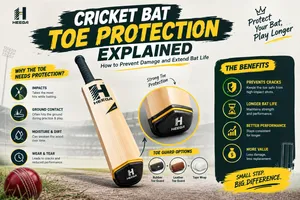 Cricket Bat Toe Protection Explained: How to Prevent Damage and Extend Bat LifeLearn how cricket bat toe protection prevents moisture, cracks and damage. Discover toe guards, maintenance tips and simple ways to extend your bat's life.
 Cricket Batting Pads Explained: How Knee Protection, Shin Coverage and Strap Placement Affect Comfort and MobilityLearn how cricket batting pads, knee protection, shin coverage and strap placement affect comfort, mobility, impact protection and batting performance.