Why Cricket Gloves Wear Out Faster Than Expected: Common Causes and Care Tips
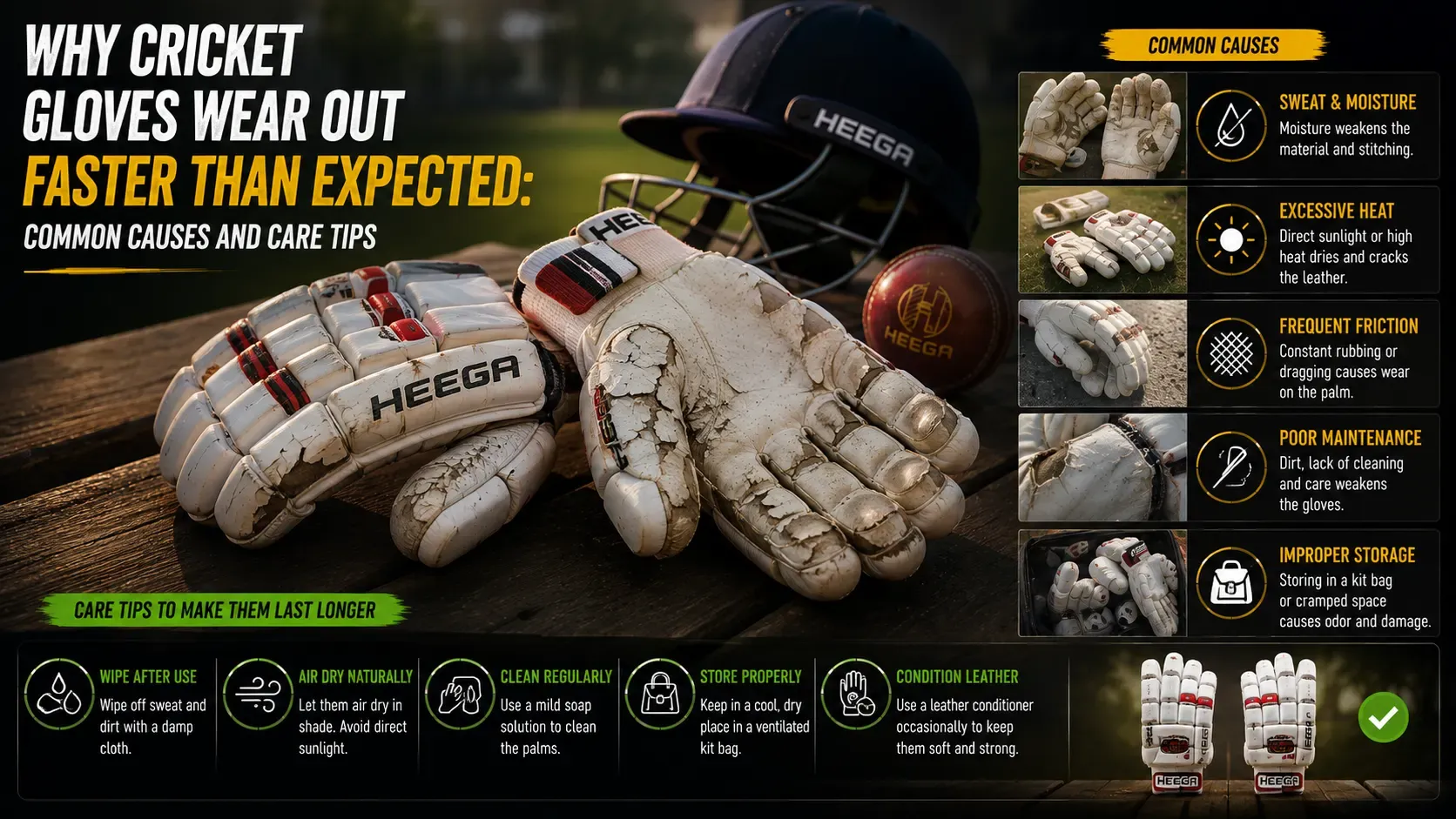
Introduction: Why Do Cricket Gloves Wear Out?
Cricket gloves are designed to protect a batter's hands while providing grip, comfort, and control.
Yet many players are surprised when their gloves begin showing signs of damage after regular use.
The palm may become smooth.
The inner material may start peeling.
The fingers may feel loose.
The padding can become compressed.
The wrist strap may lose its effectiveness.
Sometimes, this happens because the gloves are being used frequently. But in many cases, poor care, incorrect storage, excessive moisture, and unsuitable use can significantly shorten their lifespan.
Cricket gloves are pieces of protective equipment, so their condition matters.
A damaged glove may not provide the same level of:
- Protection
- Grip
- Comfort
- Flexibility
- Stability
Understanding why gloves wear out helps players take better care of them and recognize when replacement is necessary.
What Makes Cricket Gloves Wear Out?
A cricket glove experiences considerable stress during normal use.
Every time a batter:
- Holds the bat
- Rotates the handle
- Plays a shot
- Sweats
- Adjusts the grip
- Removes the glove
- Puts it back on
the materials experience some degree of friction and movement.
Over hundreds or thousands of repetitions, normal wear becomes visible.
The Palm Usually Shows Wear First
The palm is one of the hardest-working areas of a batting glove.
It remains in constant contact with the bat handle.
This repeated contact creates friction.
Eventually, the palm material can become:
- Smooth
- Thin
- Cracked
- Discoloured
- Torn
Why Bat Handle Friction Matters
A cricket bat handle does not remain completely still inside the hands.
During a powerful stroke, the handle can move slightly within the grip.
This creates repeated friction against the glove's palm.
Over time, that friction contributes to material wear.
Grip Type Can Affect Glove Wear
Different bat grips create different amounts of friction.
A rough or heavily textured grip can provide excellent control, but it may also increase wear on the glove.
This does not mean players should avoid textured grips.
It simply means the glove and grip combination should be considered together.
Sweat Is a Major Enemy of Cricket Gloves
Players naturally sweat during cricket.
Unfortunately, gloves absorb some of that moisture.
Repeated exposure to sweat can affect the materials used inside the glove.
How Sweat Affects the Inner Material
Moisture can contribute to:
- Odour
- Material deterioration
- Loss of softness
- Reduced comfort
- Faster breakdown
This is one reason gloves should not be left inside a closed kit bag immediately after practice.
Why Drying Gloves Properly Matters
After training or a match, gloves should be allowed to dry naturally.
Players should avoid storing damp gloves in enclosed spaces.
Do Not Leave Wet Gloves Inside Your Kit Bag
A closed kit bag can trap moisture.
This creates an environment where gloves may remain damp for a long time.
That can accelerate deterioration and create unpleasant odours.
Avoid Excessive Direct Heat
While gloves need to dry, placing them directly against a strong heat source is not ideal.
Excessive heat can affect materials such as:
- Leather
- Synthetic surfaces
- Foam
- Adhesives
- Elastic components
Natural air drying is generally safer.
Why Cricket Gloves Can Smell
Odour is usually linked to moisture, sweat, and bacteria.
A glove that is repeatedly used without adequate drying can develop a strong smell.
Odour Is a Warning Sign for Care
A bad smell does not automatically mean the glove must be replaced.
However, it indicates that the glove needs better drying and hygiene practices.
Padding Also Changes With Use
Batting gloves contain protective padding designed to reduce the impact of the ball.
Over time, repeated impacts can compress the padding.
Why Compressed Padding Matters
Padding that has become significantly compressed may not provide the same protection as when the glove was new.
Players should inspect their gloves regularly.
Finger Protection Can Wear Down
The fingers are particularly important because they are exposed to potential impact.
Repeated contact with the bat, ball, and surrounding equipment can cause wear.
Check the Finger Sections Regularly
Players should look for:
- Torn outer material
- Loose stitching
- Damaged padding
- Gaps
- Misshapen protective inserts
The Thumb Area Can Wear Quickly
The thumb frequently changes position during batting.
It also experiences pressure against the bat handle.
As a result, the thumb area can show signs of wear relatively early.
Wrist Straps Can Lose Their Grip
The wrist strap helps secure the glove around the hand.
Repeated opening and closing can gradually reduce the effectiveness of hook-and-loop fasteners.
Why a Loose Wrist Fit Is a Problem
A glove should remain secure during batting.
If it moves excessively, the player may experience:
- Reduced comfort
- Less confidence
- Movement during impact
- Poorer overall fit
Incorrect Glove Size Can Increase Wear
A glove that is too small may stretch excessively.
A glove that is too large may move around more than necessary.
Both situations can contribute to unnecessary wear.
Why Proper Fit Matters
The glove should feel:
- Secure
- Comfortable
- Flexible
- Protective
without creating excessive pressure.
Players Should Not Choose Gloves Based Only on Appearance
A visually attractive glove may not necessarily be the right glove for a particular player.
Fit, protection, flexibility, and construction are more important.
Using Batting Gloves for the Wrong Purpose
Batting gloves are designed specifically for batting.
They should not be treated like general-purpose training gloves.
Using them for activities outside their intended purpose can create unnecessary damage.
Why Throwing Equipment Around Matters
Players sometimes remove gloves and throw them onto the ground after getting out.
This can damage:
- Palm material
- Finger padding
- Wrist straps
- Stitching
Small habits can have a surprisingly large impact on equipment life.
Cricket Gloves and Ground Contact
Grass, soil, dust, and moisture can enter glove materials when they repeatedly touch the ground.
This can accelerate wear.
Keep Gloves Off Wet Surfaces
Wet grass can transfer moisture into the glove.
This is particularly important after rain or during dew-heavy conditions.
Dust Can Also Affect Gloves
Dust and dirt can accumulate in the palm and finger sections.
Regular cleaning can help maintain the glove's condition.
How to Clean Cricket Gloves
Cleaning should always follow the manufacturer's care instructions.
In general, players should avoid aggressive washing unless the glove is specifically designed for it.
Instead:
- Remove loose dirt gently.
- Allow moisture to dry naturally.
- Use a suitable soft cloth when appropriate.
- Avoid soaking the entire glove unless the manufacturer permits it.
Why Machine Washing Can Be Risky
A washing machine can expose gloves to:
- Excessive water
- Strong agitation
- Heat
- Mechanical stress
These factors may damage padding, stitching, or adhesives.
Do Not Use Harsh Chemicals
Strong cleaning chemicals can affect synthetic surfaces, leather, adhesives, and protective materials.
Use only products recommended for the glove's construction.
Storage Makes a Big Difference
Proper storage can significantly influence equipment lifespan.
When not being used, gloves should ideally be stored:
- Dry
- Clean
- In a ventilated location
- Away from excessive heat
- Away from direct sunlight
Why Ventilation Matters
Air circulation allows residual moisture to escape.
This is particularly important after a long training session.
Do Not Compress Gloves Under Heavy Equipment
A cricket kit bag can become crowded.
Heavy items placed directly on top of gloves may deform padding over time.
Give Gloves Their Own Space
Whenever possible, gloves should be stored in a way that allows them to retain their natural shape.
Separate Wet Equipment
If your kit contains wet clothing, towels, or other damp equipment, keep them away from your gloves whenever possible.
Why Kit Bag Organization Matters
A well-organized kit bag makes it easier to:
- Find equipment
- Dry equipment
- Inspect equipment
- Protect delicate items
How Often Should Cricket Gloves Be Replaced?
There is no universal replacement schedule.
The lifespan depends on:
- Usage frequency
- Playing level
- Grip type
- Glove construction
- Care
- Storage
- Match conditions
A player training several times every week will naturally use gloves more heavily than someone who plays occasionally.
Signs It Is Time to Replace Your Gloves
Players should consider replacement when they notice significant:
- Palm damage
- Torn stitching
- Missing padding
- Broken protection
- Loose finger sections
- Failed wrist straps
- Permanent deformation
Protection Should Always Come First
Players should never continue using badly damaged protective equipment simply to save money.
If the glove's protective structure is compromised, replacement is the safer choice.
Training Gloves May Wear Differently
A player who spends many hours in the nets can experience considerable glove wear even without playing frequent matches.
This is because training involves repeated batting.
Why Net Sessions Can Be Hard on Gloves
A batter may face hundreds of deliveries during practice.
That means hundreds of:
- Bat swings
- Impacts
- Grip adjustments
- Handle movements
The cumulative effect can be substantial.
Match Gloves Can Also Experience Heavy Wear
Competitive matches may involve intense batting situations.
A player can put considerable pressure on their gloves during:
- Power hitting
- Running between wickets
- Long innings
- Sweaty conditions
Why Long Innings Can Increase Wear
The longer a player bats, the longer their gloves remain exposed to:
- Sweat
- Friction
- Repeated grip pressure
Having More Than One Pair Can Be Useful
Players who train frequently may benefit from having separate gloves for:
- Training
- Matches
- Backup use
This can reduce the amount of wear placed on a single pair.
Why Alternating Gloves Can Help
Rotating between suitable pairs allows each pair to dry fully between sessions.
It can also reduce continuous wear.
However, Rotation Does Not Replace Proper Care
Simply owning multiple pairs will not solve poor storage or hygiene habits.
Each pair still needs proper maintenance.
Cricket Glove Grip and Bat Control
The palm's condition affects how the glove interacts with the bat handle.
A worn palm may feel less secure.
Why Grip Confidence Matters
Players need to feel confident that their hands will remain stable during the swing.
Equipment should support this confidence rather than create distractions.
A Worn Glove Can Affect Comfort
Even if the glove still looks usable, internal wear can change how it feels.
Players may notice:
- Hard spots
- Thin areas
- Uneven padding
- Reduced flexibility
Comfort Is Part of Performance
A player who is constantly adjusting their glove during an innings may become distracted.
Good equipment should allow the player to focus on the game.
Gloves and Different Playing Conditions
Environmental conditions can affect glove lifespan.
Players may encounter:
- Hot weather
- Humidity
- Rain
- Dew
- Dust
- Cold temperatures
Each condition can create different equipment challenges.
Hot and Humid Conditions
Sweat can become a major concern in hot climates.
Players should pay particular attention to drying and ventilation.
Wet Conditions
Rain and moisture require additional care.
Gloves should be dried properly before being stored.
Cold Conditions
Cold weather can affect how some materials feel.
Players should avoid storing equipment in excessively damp or extreme environments.
Why Players in Different Countries Face Different Challenges
Cricket is played across a wide range of climates.
Players in Nepal, Germany, the United States, Canada, the Netherlands, and the United Kingdom can experience very different environmental conditions.
Nepal
Hot conditions and intense training can result in significant sweat exposure.
Players should focus on ventilation and regular drying.
Germany
Changing weather conditions can mean players experience both damp outdoor sessions and indoor training.
Proper storage remains important.
United States
Different regions offer different climates, from hot and humid environments to cooler conditions.
Players need to adapt equipment-care routines accordingly.
Canada
Seasonal changes can be significant.
Indoor training during colder months creates a different equipment-care environment from outdoor summer cricket.
Netherlands
Cooler and wetter conditions can make moisture management particularly important.
United Kingdom
Frequent changes in weather mean players may encounter damp grounds and wet equipment.
Good ventilation and drying habits are especially valuable.
How Parents Can Help Young Players
Parents often manage equipment for younger cricketers.
Teaching children simple care habits can make equipment last longer.
Children should learn to:
- Remove gloves from the kit bag after practice.
- Let them dry.
- Avoid throwing them on the ground.
- Store them properly.
- Tell an adult when padding is damaged.
Teaching Equipment Responsibility
Looking after cricket equipment is also a valuable life lesson.
It teaches children:
- Responsibility
- Organization
- Care
- Discipline
Coaches Can Encourage Better Equipment Habits
Coaches can remind players to inspect and maintain their equipment.
A simple end-of-session routine can make a difference.
A Five-Minute Post-Training Routine
After practice:
- Remove the gloves from the kit bag.
- Check for visible damage.
- Shake off loose dirt.
- Allow the gloves to air dry.
- Store them properly once completely dry.
This takes very little time.
Why Regular Inspection Matters
Small damage can become larger if ignored.
A tiny tear may eventually become a major opening.
Early inspection gives players an opportunity to address problems sooner.
Can Expensive Gloves Last Longer?
Price alone does not determine lifespan.
A premium glove can still wear quickly if it is:
- Used heavily
- Stored incorrectly
- Exposed to excessive moisture
- Subjected to unnecessary friction
What Actually Makes Gloves Durable?
Durability depends on factors such as:
- Material quality
- Construction
- Stitching
- Padding
- Palm material
- Usage
- Care
Choosing Gloves for Your Playing Level
Beginners may prioritize:
- Comfort
- Protection
- Fit
- Value
Advanced players may have more specific preferences regarding:
- Palm material
- Flexibility
- Weight
- Finger protection
- Fit
Why Players Should Not Overlook Protection
Grip and comfort are important, but batting gloves are protective equipment.
Protection should remain a priority.
Cricket Gloves Are Consumable Equipment
Even with excellent care, gloves will eventually wear out.
They are designed to be used.
The goal is not to make them last forever.
The goal is to get the best possible performance and lifespan from them while keeping protection intact.
How Heega Sports Helps Players Choose Cricket Gloves
At Heega Sports, we understand that cricket gloves need to balance protection, comfort, grip, and durability.
Our cricket equipment range includes:
- Batting gloves
- Inner gloves
- Cricket bats
- Leather cricket balls
- Practice balls
- Batting pads
- Cricket helmets
- Cricket shoes
- Cricket kit bags
- Practice nets
- Training accessories
Choosing appropriate equipment and caring for it correctly can help players enjoy more comfortable and productive training sessions.
Final Thoughts
Cricket gloves naturally experience significant wear because they are constantly exposed to friction, pressure, sweat, impacts, and repeated movement.
However, players can often extend their useful life by making simple changes to their equipment-care routine.
Keep gloves dry.
Avoid unnecessary ground contact.
Store them in a ventilated space.
Inspect the padding regularly.
Choose the correct size.
Use appropriate cleaning methods.
Most importantly, replace gloves when their protective structure is no longer reliable.
A cricket glove is not just another piece of kit.
It protects one of the most important tools a batter has—their hands.
Good care protects both the equipment and the player.
🏏 Protect Your Hands With Quality Cricket Equipment
Explore cricket batting gloves, inner gloves, bats, leather balls, batting pads, helmets, kit bags, practice nets, and training accessories at Heega Sports.
Shop Now
Heega Sports – Helping Players Protect Their Hands and Play With Confidence.
Related posts
 Batting Gloves for Cricket: How Finger Design, Palm Materials and Grip Texture Affect Bat ControlDiscover how cricket batting gloves, finger design, palm materials and grip texture influence bat control, comfort, protection and batting performance.
 Batting Gloves Explained: How Padding Placement and Finger Protection Help Manage Ball ImpactLearn how batting glove padding placement, finger protection, and fit help manage ball impact. Find practical tips for choosing cricket batting gloves.
 Wicket Keeping Leg Guards Explained: Fit, Flexibility and Protection for Faster Movement Behind the StumpsDiscover how to choose wicketkeeping leg guards with the right fit, flexibility, and protection for quicker movement, comfortable crouching, and confident keeping.