Why Cricket Players Tape Their Fingers Before a Match.

Introduction: Why Do Cricketers Tape Their Fingers?
If you watch professional cricket closely, you may notice something interesting.
Some players walk onto the field with one or more fingers wrapped in tape.
At first, it may look like a simple habit.
But finger taping can serve several practical purposes.
Players may use tape to:
- Support a finger
- Protect sensitive skin
- Cover minor abrasions
- Reduce discomfort
- Protect a vulnerable area
- Prevent further irritation
- Improve confidence
Finger tape is not a replacement for proper medical treatment.
Instead, it is often a simple piece of equipment that players use to manage minor issues and provide additional support during training or competition.
The exact reason varies from player to player.
Finger Tape Is More Than a Cricket Habit
Taping fingers is common across many sports.
Cricketers may use it because their hands experience repeated stress throughout a match.
Batters grip the bat for long periods.
Bowlers repeatedly use their fingers and wrists during delivery.
Fielders catch, throw, dive, and stop the ball.
Wicketkeepers constantly work with their hands and gloves.
This means the fingers can experience considerable physical stress.
Why Hands Are So Important in Cricket
Almost every major cricket skill involves the hands.
Batters need their hands to:
- Control the bat
- Adjust the grip
- Change shot direction
- Generate power
- Absorb impact
Bowlers use their fingers to control:
- Seam position
- Release
- Spin
- Variation
- Direction
Fielders depend on their hands for catching and throwing.
Because of this, even a small finger problem can become distracting.
Support Is One of the Main Reasons for Taping
A player may tape a finger to provide additional support around an area that feels vulnerable.
The tape can help limit excessive movement while still allowing the player to use the hand.
However, the amount of support required depends on the specific situation.
Why Players May Want Extra Stability
During cricket, fingers are constantly moving.
A batter may repeatedly grip and rotate the bat.
A bowler may repeatedly flex the fingers during delivery.
A fielder may experience sudden forces when catching the ball.
Extra support can sometimes make a player feel more secure.
Finger Tape Can Protect Minor Skin Problems
Another common reason for taping is skin protection.
Repeated cricket activity can cause:
- Small cuts
- Blisters
- Scratches
- Irritation
- Chafing
Covering a minor skin problem can reduce direct friction during play.
Why Batting Can Irritate the Fingers
A cricket bat handle creates repeated contact with the hands.
During a long innings, the player may make thousands of small grip adjustments.
If a particular area of skin is already sensitive, this repeated friction can become uncomfortable.
Tape Can Create a Protective Barrier
A layer of tape can separate sensitive skin from direct contact with equipment.
This may help reduce irritation during play.
Sweat Can Make Skin Problems Worse
Hot weather and intense physical activity can produce significant sweat.
Moisture combined with friction can make an existing skin irritation more uncomfortable.
Players may therefore use appropriate tape to protect vulnerable areas.
Why Bowlers Tape Their Fingers
Bowling creates different demands on the hands.
Depending on their bowling style, players may repeatedly use their fingers during:
- Ball release
- Spin generation
- Seam control
- Variations
- Grip changes
Spin Bowlers May Pay Particular Attention to Their Fingers
Spin bowling relies heavily on finger and wrist movement.
The fingers can play an important role in imparting rotation to the ball.
For this reason, some spin bowlers may be particularly conscious of finger comfort and skin condition.
Fast Bowlers Also Use Their Fingers Extensively
Fast bowling may not rely on finger rotation in the same way as spin bowling, but the fingers remain important during ball release.
The seam position and grip still require control.
Seam Position Requires Precision
A bowler needs to hold the ball consistently to control the seam.
If a finger is uncomfortable, maintaining the preferred grip can become more difficult.
Finger Tape Can Help With Comfort
Not every taped finger has an injury.
Sometimes a player simply wants additional comfort or protection during extended play.
Comfort can be particularly important during long matches.
Why Comfort Affects Performance
A small distraction can become frustrating when repeated hundreds of times.
If a player constantly notices discomfort in their hand, their attention can move away from the game.
Good preparation attempts to reduce unnecessary distractions.
Batters May Tape Different Fingers for Different Reasons
There is no universal rule saying which finger should be taped.
A player may tape:
- Thumb
- Index finger
- Middle finger
- Ring finger
- Little finger
The reason depends on the individual.
The Thumb Has an Important Role in Batting
The thumb contributes to grip control.
It can also experience pressure during certain batting positions.
A player experiencing minor irritation may choose to protect the area with tape.
Index Finger and Bat Control
The index finger can play an important role in controlling the bat.
Any discomfort around this area can become noticeable during repeated batting.
Finger Position Depends on Batting Grip
Different players use slightly different grip preferences.
This changes which areas of the hand experience the most pressure.
Why There Is No Single Taping Method
Every player's hand is different.
Their:
- Grip
- Playing style
- Equipment
- Previous injuries
- Skin sensitivity
can influence how they use tape.
Cricket Glove Fit Also Matters
Players should not assume that finger taping can solve every hand-related problem.
Sometimes the real issue is glove fit.
A glove that is too tight can create unnecessary pressure.
A glove that is too loose may allow excessive movement.
Why Proper Glove Sizing Is Important
Well-fitted batting gloves should provide a combination of:
- Protection
- Comfort
- Flexibility
- Secure fit
Tape Should Not Replace Proper Equipment
If a glove is damaged or poorly fitted, repeatedly adding tape is not a complete solution.
Players should address the underlying equipment problem.
Taping Can Also Be Used for Skin Protection During Practice
Finger tape is not limited to match day.
Players who spend long hours practicing may experience repeated friction.
A suitable protective covering can help manage minor skin irritation.
Why Net Sessions Can Be Tough on Hands
During a long net session, a batter may face dozens or hundreds of deliveries.
Every shot involves another grip and swing.
The cumulative friction can become significant.
Fielders May Use Tape Too
Finger taping is not exclusive to batters and bowlers.
Fielders can also experience finger stress.
Catching hard cricket balls can place considerable force on the fingers.
Why Catching Can Stress the Fingers
When a ball hits the hands at speed, the fingers must absorb and redirect that force.
Poor technique or awkward contact can create discomfort.
Wicketkeepers Have Different Hand Demands
Wicketkeepers use specialized gloves, but their fingers and hands still experience repeated movement and impact.
They may use tape for specific personal reasons.
Tape Can Provide a Psychological Benefit
There is another reason players may continue taping their fingers.
It can create confidence.
A player who feels that a vulnerable finger is protected may feel more comfortable playing aggressively.
Confidence Can Influence Performance
Cricket requires players to commit to movements.
A batter should not hesitate every time they grip the bat.
A bowler should be able to release the ball naturally.
A fielder should attack a catch confidently.
Anything that reduces unnecessary concern can be useful.
But Tape Is Not a Guarantee
Finger tape cannot prevent every injury.
Players should never assume that a taped finger is automatically protected from serious damage.
When Players Should Seek Medical Advice
If a finger has:
- Significant swelling
- Severe pain
- Loss of movement
- Deformity
- Persistent numbness
- Serious bruising
- Suspected fracture
the player should stop relying on tape and seek appropriate medical evaluation.
Why Playing Through Pain Can Be Risky
Cricket matches can create strong pressure to continue.
However, ignoring a serious injury can make the problem worse.
Long-term player health should come before one match.
Choosing the Right Tape
Different types of sports tape have different characteristics.
Players should choose tape appropriate for its intended use.
Important considerations can include:
- Width
- Adhesion
- Flexibility
- Comfort
- Skin sensitivity
Why Tape Should Feel Secure but Comfortable
Tape that is excessively tight can create its own problems.
Players should avoid wrapping fingers so tightly that normal circulation or movement is affected.
Skin Sensitivity Matters
Some players may react to certain adhesives.
If irritation develops, the player should remove the tape and use an appropriate alternative.
How Players Prepare Their Fingers
Before applying tape, players should generally ensure the area is:
- Clean
- Dry
- Free from excessive moisture
This can help the tape adhere properly.
Why Sweat Can Reduce Adhesion
Moisture can make it harder for tape to stay securely attached.
This is one reason players may prepare their hands carefully before applying it.
Tape Should Be Replaced When It Becomes Loose
A loose piece of tape may become distracting.
It can also collect dirt and moisture.
Players should replace it when necessary rather than continuing to play with damaged tape.
Why Players Carry Extra Tape
A match can last for several hours.
Tape can become:
- Loose
- Wet
- Dirty
- Torn
Carrying a small amount of spare tape allows players to make adjustments when needed.
Finger Tape and Long Matches
Long-format cricket places especially high demands on players.
A batter may spend hours at the crease.
A bowler may repeatedly use their fingers across multiple spells.
A fielder may remain active throughout the entire match.
Why Small Comfort Issues Become Bigger Over Time
A minor irritation may not matter for five minutes.
After several hours, it can become increasingly distracting.
Preparation therefore becomes important.
Taping Is Part of a Player's Routine
Elite players often have detailed pre-match routines.
These can include:
- Equipment checks
- Hydration
- Warm-ups
- Stretching
- Bat preparation
- Glove checks
- Finger taping
These routines create consistency.
Why Consistent Preparation Helps
When players follow familiar routines, they spend less mental energy deciding what to do before the match.
This allows them to focus more on competition.
Players Develop Personal Preferences
Some players prefer more tape.
Others use very little.
Some only tape when a particular area becomes sensitive.
There is no universal routine.
Experience Influences Taping Habits
Players learn which areas of their hands experience the most stress.
Over time, they may develop personalized methods for protecting those areas.
Coaches Can Help Players Understand Equipment Use
Young players should learn that tape is a support tool, not a substitute for proper technique or medical care.
Coaches can teach players to:
- Recognize discomfort
- Maintain equipment
- Use protective gear correctly
- Report injuries
Parents Can Help Young Cricketers
Parents can encourage children to develop good equipment habits.
They can remind young players to:
- Keep tape and equipment clean
- Avoid wrapping fingers too tightly
- Tell adults about pain
- Replace damaged gloves
- Seek help for serious injuries
Why Equipment Awareness Matters
Learning how to care for cricket equipment teaches responsibility.
It also helps young players understand that preparation is part of sport.
Cricket Gloves and Finger Tape Work Together
Finger tape should be compatible with the player's gloves.
If the tape makes the glove too tight, it may reduce comfort.
Check the Glove After Taping
Players should make sure that:
- Fingers can move normally
- The glove fits comfortably
- There is no excessive pressure
- The grip still feels natural
Why Bat Grip Should Be Tested
A player should ideally test their bat grip after taping before entering a match.
This ensures the tape does not change their hand position unexpectedly.
Tape Can Be Useful During Travel
Players who travel for tournaments may encounter different conditions.
Having basic equipment-care supplies, including suitable tape, can be useful.
Different Cricket Environments Create Different Challenges
Cricket is played across Nepal, Germany, the United States, Canada, the Netherlands, and the United Kingdom, with players experiencing different climates and playing surfaces.
Hot and humid conditions may increase sweat.
Cold conditions can affect comfort.
Wet conditions can make equipment management more difficult.
Nepal
Players competing or training in warm conditions may experience significant sweat during cricket activities.
Good hand hygiene, glove care, and sensible taping practices can help manage minor irritation.
Germany
Players can experience changing weather conditions throughout the season.
Indoor and outdoor cricket may create different equipment-care requirements.
United States
Cricket is played across diverse climates in the USA.
Players may need different preparation routines depending on local conditions.
Canada
Seasonal changes can create very different playing environments.
Players may move between indoor training and outdoor cricket during the year.
Netherlands
Cooler and wetter conditions can make moisture management important for players and equipment.
United Kingdom
Players often encounter changing weather during cricket season.
Keeping hands and equipment dry can help maintain comfort.
How Heega Sports Supports Player Preparation
At Heega Sports, we understand that preparation involves more than simply choosing a cricket bat.
Players need reliable equipment that supports comfort and confidence throughout training and competition.
Our cricket range includes:
- Kashmir Willow cricket bats
- English Willow cricket bats
- Batting gloves
- Inner gloves
- Leather cricket balls
- Practice balls
- Batting pads
- Cricket helmets
- Cricket shoes
- Cricket kit bags
- Practice nets
- Cricket stumps
- Training accessories
The right combination of equipment and preparation helps players focus on their game.
A Simple Finger-Care Routine for Cricketers
Players can follow a simple routine before and after cricket.
Before Training
- Check your fingers for existing irritation.
- Make sure your gloves fit properly.
- Apply suitable tape if necessary.
- Ensure the tape is comfortable.
During Training
- Pay attention to increasing discomfort.
- Replace loose or damaged tape.
- Avoid ignoring significant pain.
After Training
- Remove the tape.
- Clean your hands.
- Inspect the skin.
- Allow gloves to dry properly.
Why Removing Tape After Play Matters
Leaving tape on unnecessarily can trap sweat and moisture against the skin.
Removing it after training allows the skin to recover and makes it easier to identify irritation.
Final Thoughts
Finger taping may look like a small detail in cricket, but for many players it forms an important part of match preparation.
Cricketers may tape their fingers to provide additional support, protect sensitive skin, reduce friction, manage minor irritation, or simply feel more comfortable and confident.
The practice is particularly understandable in a sport where the hands are involved in almost every major skill.
However, players should remember that tape is a support tool—not a solution for serious injuries.
Good finger care should be combined with:
- Properly fitted gloves
- Appropriate equipment
- Good hygiene
- Sensible preparation
- Regular inspection
- Medical attention when necessary
Ultimately, the goal is simple.
Players should enter the match feeling comfortable, protected, and ready to focus on cricket rather than worrying about their hands.
🏏 Prepare Better With Heega Sports
Explore quality cricket bats, batting gloves, inner gloves, leather balls, batting pads, helmets, cricket shoes, kit bags, practice nets, stumps, and training accessories at Heega Sports.
Shop Now
Heega Sports – Helping Players Prepare With Confidence for Every Match.
Related posts
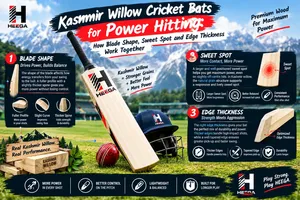 Kashmir Willow Cricket Bats for Power Hitting: How Blade Shape, Sweet Spot and Edge Thickness Work TogetherLearn how Kashmir willow cricket bat blade shape, sweet spot position, and edge thickness work together to support powerful shots, control, and balance.
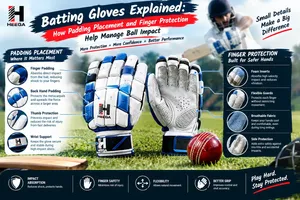 Batting Gloves Explained: How Padding Placement and Finger Protection Help Manage Ball ImpactLearn how batting glove padding placement, finger protection, and fit help manage ball impact. Find practical tips for choosing cricket batting gloves.
 Cricket Shoes for Fast Bowlers: How Ankle Support, Heel Stability and Traction Affect the Bowling ActionLearn how cricket shoes for fast bowlers affect ankle support, heel stability, traction, and landing control. Find the right fit for your bowling action.