Why Every Cricket Ball Tells a Different Story: Understanding Ball Wear During a Match

Introduction: The Cricket Ball Is Always Changing
At the start of every cricket match, the ball looks almost perfect.
Its leather is smooth.
Its seam is firm.
Its shine is evenly spread across the surface.
To many spectators, it may appear that the same ball remains unchanged throughout the innings.
In reality, every delivery slowly changes the ball.
Each time it hits the pitch, strikes the bat, travels across the outfield, or lands in a fielder's hands, its condition evolves.
By the end of an innings, that same ball may behave very differently from when it was first used.
This gradual transformation is one of cricket's most fascinating features.
Unlike many sports that frequently replace the ball, cricket embraces the changing condition of the ball as part of the contest between bat and ball.
Across Nepal, Germany, the United States, Canada, the Netherlands, and the United Kingdom, players at every level learn how understanding ball wear can improve both individual performance and team strategy.
Every Ball Begins the Same
Before play begins, a new leather cricket ball offers predictable performance.
It typically provides:
- Strong seam movement.
- Consistent bounce.
- Maximum shine.
- Clear grip for bowlers.
Fast bowlers often enjoy the greatest assistance during this stage.
The Seam Plays an Important Role
The raised stitched seam is one of the most important parts of the cricket ball.
A prominent seam helps bowlers generate:
- Seam movement.
- Better grip.
- Greater control.
As overs pass, repeated contact with the pitch gradually reduces the seam's sharpness.
This changes how the ball behaves after pitching.
The Shine Starts to Fade
One side of the cricket ball is carefully maintained by fielding teams.
Players regularly polish the leather using:
- Sweat.
- Clothing.
Maintaining one shiny side while allowing the other side to become rough creates different aerodynamic properties.
This difference becomes increasingly important as the innings progresses.
Swing Bowling Changes Throughout the Innings
Swing is one of cricket's most exciting skills.
During the early overs, conventional swing often occurs because of:
- Smooth leather.
- Firm seam.
- Airflow around the ball.
Later in the innings, different types of movement may develop as the ball wears.
Reverse Swing Rewards Skilled Bowlers
Once one side becomes significantly rougher than the other, experienced fast bowlers may produce reverse swing.
Unlike conventional swing, reverse swing often causes the ball to move in the opposite direction than batters expect.
This makes it one of cricket's most challenging bowling techniques.
Spin Bowlers Benefit from Older Balls
As the leather surface changes, spin bowlers may gain additional grip.
Older balls can assist:
- Finger spinners.
- Wrist spinners.
Depending on pitch conditions, slower bowlers often become increasingly influential during later stages of an innings.
Batting Also Changes
A new ball presents different challenges compared to an older one.
Early in the innings, batters often face:
- Extra swing.
- Higher seam movement.
- Faster pace.
Later, as the ball softens, stroke play may become easier on certain surfaces.
Successful batters adapt their techniques as conditions change.
Fielding Affects Ball Wear
Every fielding action contributes to the ball's condition.
Examples include:
- Sliding stops.
- Throws.
- Ground contact.
- Catching.
Although these changes are gradual, they influence how the ball behaves over time.
Outfield Conditions Matter
The condition of the outfield influences ball wear.
Different surfaces may produce different rates of abrasion.
Factors include:
- Grass length.
- Soil.
- Moisture.
- Dryness.
Ground conditions therefore become part of overall match strategy.
Weather Influences the Ball
Environmental conditions also affect leather cricket balls.
Examples include:
- Humidity.
- Heat.
- Cold temperatures.
- Rain.
- Wind.
These factors influence both ball maintenance and bowling performance.
Why Captains Pay Attention to the Ball
Captains closely monitor the condition of the cricket ball.
They consider:
- Which bowlers should use it.
- When to attack.
- When to rotate bowlers.
- Field placements.
Ball condition often influences tactical decisions throughout the innings.
Umpires Monitor Ball Condition
Although fielding teams may polish the ball, cricket laws strictly regulate ball maintenance.
Umpires ensure:
- The ball is treated fairly.
- No illegal alterations occur.
- Replacements are used when necessary.
Protecting the integrity of the ball protects the integrity of the game.
Nepal: Learning Ball Management
As cricket continues growing in Nepal, coaches increasingly teach young players how to understand and manage ball condition during competitive matches.
Germany: Building Technical Awareness
German cricket clubs emphasize bowling fundamentals, including seam presentation and proper ball handling.
Understanding ball wear becomes an important part of player education.
United States: Professional Cricket Raising Standards
Professional competitions in the USA expose players to modern bowling techniques, including swing and reverse swing.
Ball management has become an increasingly valuable skill.
Canada: Adapting to Different Conditions
Canadian cricketers often encounter varied playing conditions throughout the season.
Learning how weather affects ball wear helps improve tactical awareness.
The Netherlands: Technical Cricket Development
Dutch cricket programs continue teaching players how changing ball conditions influence batting, bowling, and fielding decisions.
United Kingdom: Home of Swing Bowling
The UK remains famous for conditions that encourage swing bowling.
Generations of bowlers have mastered using changing ball conditions to challenge even the world's best batters.
Quality Cricket Balls Make a Difference
Reliable leather cricket balls provide:
- Consistent seam quality.
- Durable leather.
- Balanced construction.
- Predictable performance.
High-quality balls allow players to develop important technical skills more effectively.
How Heega Sports Supports Better Cricket
At Heega Sports, we understand that every delivery matters.
That is why we offer dependable cricket equipment designed for both practice and competitive play.
Our collection includes:
- Premium leather cricket balls.
- Practice balls.
- Kashmir Willow cricket bats.
- Cricket helmets.
- Batting gloves.
- Batting pads.
- Cricket shoes.
- Practice nets.
- Cricket kit bags.
- Training accessories.
Quality equipment helps players better understand every stage of the game—including how the cricket ball evolves throughout an innings.
Final Thoughts
A cricket ball is never truly the same from one over to the next.
Every delivery changes its condition.
Every bounce shapes its future behavior.
Every fielder contributes to its story.
Understanding ball wear allows players to appreciate one of cricket's most unique tactical elements.
Across Nepal, Germany, the United States, Canada, the Netherlands, and the United Kingdom, players continue learning that success often depends not only on skill but also on recognizing how the ball changes throughout a match.
The next time you watch cricket, pay attention to the ball.
Its story is changing with every single delivery.
🏏 Experience Quality Cricket with Heega Sports
Explore premium leather cricket balls, Kashmir Willow cricket bats, practice balls, cricket helmets, batting gloves, batting pads, cricket shoes, practice nets, cricket kit bags, and training accessories designed to help players perform with confidence.
Shop Now
Heega Sports – Quality Cricket Equipment for Every Ball, Every Match, Every Player.
Related posts
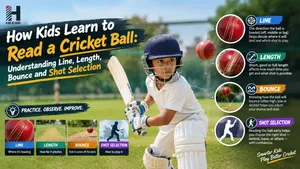 How Kids Learn to Read a Cricket Ball: Understanding Line, Length, Bounce and Shot SelectionLearn how kids can read a cricket ball by understanding line, length, bounce and shot selection to develop better batting skills and confidence.
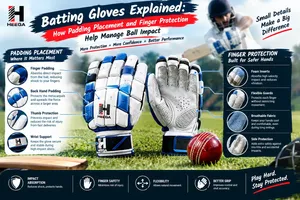 Batting Gloves Explained: How Padding Placement and Finger Protection Help Manage Ball ImpactLearn how batting glove padding placement, finger protection, and fit help manage ball impact. Find practical tips for choosing cricket batting gloves.
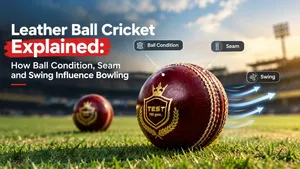 Leather Ball Cricket Explained: How Ball Condition, Seam and Swing Influence BowlingLearn how leather ball cricket works and how ball condition, seam position, shine, and swing influence bowling accuracy, movement, and performance.