Why Every Young Cricketer Should Learn Fielding Before Focusing Only on Batting

Introduction: Every Child Wants to Bat First
Ask a group of young cricketers what they enjoy most, and you'll probably hear the same answer:
"Batting!"
It's easy to understand why.
Batting brings boundaries, applause, and memorable moments.
Many children dream of hitting sixes like their favorite professional players.
As a result, they often spend most of their practice time working on batting while giving very little attention to fielding.
But here's something experienced coaches know:
A great batter can win a game. A great fielder can change one.
Modern cricket rewards players who contribute in every department of the game.
Across Nepal, Germany, the United States, Canada, the Netherlands, and the United Kingdom, coaches increasingly encourage young players to develop strong fielding skills from the very beginning—not as an afterthought.
Let's explore why fielding deserves just as much attention as batting.
Cricket Is a Team Sport
Unlike many individual sports, cricket depends on contributions from every player.
Even if a child doesn't bat for long, they may still influence the match by:
- Taking a catch.
- Saving important runs.
- Creating a run-out.
- Stopping boundaries.
Every player spends time fielding.
That makes it one of the most valuable skills to develop.
Good Fielders Stay Involved Throughout the Match
A batter may face only a few deliveries.
A bowler may bowl only a limited number of overs.
But fielders remain active throughout the innings.
Every ball creates an opportunity.
Children who enjoy fielding stay mentally engaged from the first over to the last.
Fielding Builds Confidence
Young players often gain confidence through small successes.
A clean catch.
A direct hit.
A diving stop.
These moments help children believe in their abilities—even if batting doesn't go well that day.
Fielding teaches an important lesson:
There are many ways to help your team.
Fielding Improves Hand-Eye Coordination
Catching and throwing constantly challenge the eyes and hands to work together.
Regular fielding practice improves:
- Catching ability.
- Ball tracking.
- Reflexes.
- Reaction speed.
These improvements also benefit batting and wicketkeeping.
Better Fielding Creates Better Athletes
Fielding isn't just about catching.
It develops:
- Speed.
- Agility.
- Balance.
- Coordination.
- Quick movement.
Many of these athletic qualities improve every area of cricket.
Quick Reflexes Win Matches
Modern cricket moves fast.
A fraction of a second often separates:
- A catch from a dropped chance.
- A run-out from a safe single.
- A boundary from a saved four.
Fielding drills sharpen reaction time through regular repetition.
Fielding Encourages Communication
Children learn to:
- Call for catches.
- Support teammates.
- Stay alert.
- Work together.
These communication skills strengthen teamwork both on and off the field.
Every Position Matters
Many children believe only certain fielding positions are important.
In reality:
- Slip fielders create chances.
- Inner-circle fielders stop singles.
- Boundary fielders save fours and sixes.
- Close-in fielders build pressure.
Every position contributes differently.
Learning them all creates more complete players.
Coaches Notice Good Fielders
At academy trials and team selections, coaches look beyond batting averages.
Players who consistently:
- Catch well.
- Throw accurately.
- Move quickly.
- Show energy.
often leave a strong impression.
Excellent fielding can become a deciding factor during team selection.
Fielding Develops Discipline
Good fielders stay ready every ball.
They learn to:
- Focus continuously.
- Anticipate shots.
- Stay balanced.
- React quickly.
These habits improve overall cricket awareness.
Fielding Helps Batters Too
Many parents don't realize that better fielding can improve batting.
How?
Fielding develops:
- Faster reactions.
- Better balance.
- Improved coordination.
- Stronger hands.
These same abilities support batting performance.
Simple Fielding Drills Children Can Practice
Home practice doesn't require expensive equipment.
Simple drills include:
Wall Catching
Throw a tennis ball against a wall.
Catch it cleanly.
Repeat.
One-Hand Catching
Practice catching with each hand separately.
This strengthens confidence and coordination.
Target Throwing
Place buckets or cones around the yard.
Practice accurate throws.
Ground Ball Collection
Roll a ball across the floor.
Practice moving quickly and collecting it cleanly.
Reaction Games
Have a parent randomly bounce a tennis ball.
Children react and catch it.
These short sessions quickly improve reflexes.
Make Fielding Fun
Children learn best when enjoying themselves.
Turn drills into games:
- Catch competitions.
- Target challenges.
- Relay races.
- Throwing accuracy contests.
Fun creates consistency.
Consistency creates improvement.
Nepal: Fielding Becoming a Bigger Focus
As cricket continues growing in Nepal, academies increasingly emphasize athletic fielding alongside batting and bowling.
Germany: Building Complete Players
German coaches encourage young cricketers to develop all-round skills rather than specializing too early.
The United States: Modern Cricket Values Athleticism
American youth cricket increasingly rewards players who contribute in every aspect of the game.
Canada: Indoor and Outdoor Fielding Practice
Canadian players often continue fielding drills indoors during winter, helping maintain reflexes year-round.
The Netherlands: Smart Cricket Starts with Strong Fielding
Dutch coaching systems place significant emphasis on movement, catching, and game awareness.
The United Kingdom: Fielding Is No Longer Optional
Modern British cricket has transformed fielding into one of the game's most important disciplines.
Every young player is expected to contribute.
How Heega Sports Supports Young Fielders
At Heega Sports, we believe every young cricketer deserves equipment that supports complete skill development.
Whether practicing catches in the backyard or preparing for academy training, quality equipment makes every session more productive.
Our collection includes:
- Junior cricket bats
- Practice balls
- Leather cricket balls
- Tennis balls
- Practice nets
- Cricket helmets
- Batting gloves
- Cricket shoes
- Cricket kit bags
- Training accessories
Every great cricketer begins by mastering the basics.
Weekly Fielding Practice Plan
Try this simple routine:
Monday: Wall catches (10 minutes)
Wednesday: Target throwing (15 minutes)
Friday: Ground fielding drills (15 minutes)
Weekend: Match simulation with family or friends
Short, regular sessions produce lasting improvement.
Final Thoughts
It's natural for young cricketers to dream about scoring centuries and hitting sixes.
Batting will always be exciting.
But cricket is much bigger than batting alone.
Strong fielding builds confidence, athleticism, teamwork, concentration, and match awareness.
It helps children become complete cricketers who contribute in every situation.
Across Nepal, Germany, the United States, Canada, the Netherlands, and the United Kingdom, the best youth coaches understand that fielding isn't something players learn later.
It's one of the first skills they should master.
Encourage your child to celebrate great catches as much as great boundaries.
Those habits will help them become the kind of player every team wants.
🏏 Develop Every Cricket Skill with Heega Sports
Explore premium-quality junior cricket bats, practice balls, leather cricket balls, tennis balls, cricket shoes, practice nets, cricket helmets, cricket kit bags, and training accessories designed to help young players improve every aspect of their game.
Shop Now
Heega Sports – Helping Young Cricketers Become Complete Players.
Related posts
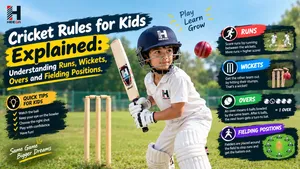 Cricket Rules for Kids Explained: Understanding Runs, Wickets, Overs and Fielding Positions.Learn cricket rules for kids, including runs, wickets, overs, fielding positions, batting, bowling, and basic match rules in a simple beginner's guide.
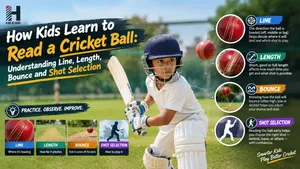 How Kids Learn to Read a Cricket Ball: Understanding Line, Length, Bounce and Shot SelectionLearn how kids can read a cricket ball by understanding line, length, bounce and shot selection to develop better batting skills and confidence.
 Cricket Batting Pads Explained: How Knee Protection, Shin Coverage and Strap Placement Affect Comfort and MobilityLearn how cricket batting pads, knee protection, shin coverage and strap placement affect comfort, mobility, impact protection and batting performance.