Why Young Cricketers Should Play Different Roles Before Choosing Their Main Position

Introduction: Young Cricketers Do Not Need to Choose One Role Immediately
When a child starts playing cricket, parents and coaches sometimes ask an important question:
"What position does your child play?"
Is the child a batter?
A bowler?
An all-rounder?
A wicketkeeper?
A specialist fielder?
For a very young cricketer, there may not be a simple answer.
And that is perfectly fine.
Young players are still discovering what they enjoy and what they are naturally good at. Their coordination, strength, confidence, and understanding of cricket are also developing.
Choosing one role too early can sometimes limit that discovery.
Instead, young cricketers can benefit from experiencing different parts of the game.
A child who thinks they want to be a batter may discover that they enjoy bowling.
A player who starts as a bowler may discover an ability to keep wicket.
Another child may become an excellent all-rounder simply because they were given opportunities to try everything.
The goal of youth cricket should not always be to identify a specialist immediately.
It should be to help children learn the game, enjoy different challenges, and gradually discover where their strengths and interests lie.
Why Playing Different Roles Can Be Valuable
Cricket is made up of many different skills.
Players need to understand:
- Batting.
- Bowling.
- Fielding.
- Wicketkeeping.
- Running between wickets.
- Communication.
- Decision-making.
- Teamwork.
Trying different roles exposes young players to more of these skills.
This can help them become more complete cricketers.
Even if they eventually specialize, the experience gained from other roles can remain useful.
Young Players Are Still Developing
Children do not develop at exactly the same speed.
One player may be taller at an early age.
Another may have better coordination.
Someone else may develop strength later.
A child who appears to be a natural fast bowler at one age may develop into a completely different type of player several years later.
That is why youth cricket should leave room for development.
A player's current ability does not necessarily predict their final role.
Batting Can Teach More Than Shot-Making
Batting is often the first role children want to try.
Holding the bat and hitting the ball is naturally exciting.
But batting teaches much more than stroke play.
Young batters learn:
- Balance.
- Footwork.
- Timing.
- Hand-eye coordination.
- Patience.
- Decision-making.
- Concentration.
These skills can benefit players even when they are fielding or bowling.
Every Young Cricketer Should Experience Batting
Even a child who eventually becomes a specialist bowler can benefit from batting.
Why?
Because understanding batting helps players understand what batters are thinking.
A bowler who knows how difficult a particular delivery is to face may develop better tactical awareness.
A fielder who understands where a batter wants to hit can anticipate shots more effectively.
Batting therefore provides lessons that extend beyond the crease.
Bowling Teaches Patience and Strategy
Bowling is a completely different challenge.
A young bowler must learn to repeat movements while thinking about the batter.
They may experiment with:
- Line.
- Length.
- Pace.
- Swing.
- Seam.
- Spin.
- Angles.
Bowling also teaches patience.
A player may not take a wicket immediately.
They have to keep working toward creating an opportunity.
Young Batters Can Learn From Bowling
A batter who spends time bowling may understand the bowler's perspective better.
They may learn:
- Why line and length matter.
- How changes of pace work.
- Why certain deliveries are difficult.
- How field placement affects bowling.
- How bowlers try to create mistakes.
This can improve batting awareness.
Fielding Should Never Be Treated as a Backup Role
Sometimes young players think fielding is what they do when they are not batting or bowling.
That is the wrong mindset.
Fielding is an important part of cricket.
A good fielder can:
- Save runs.
- Take catches.
- Create run-outs.
- Stop boundaries.
- Put pressure on batters.
Young players should experience different fielding positions rather than always standing in the same place.
Try Different Fielding Positions
A young cricketer may benefit from experiencing:
- Slip.
- Gully.
- Point.
- Cover.
- Mid-off.
- Mid-on.
- Square leg.
- Fine leg.
- Midwicket.
- Deep fielding positions.
Each position creates different challenges.
Close fielders need quick reactions.
Inner-ring fielders need agility and anticipation.
Boundary fielders need speed and accurate throwing.
Field Placement Can Teach Game Awareness
Moving around different positions also teaches players how the field works.
A young player begins to understand:
"Why am I standing here?"
That question is important.
Instead of simply following instructions, they gradually learn how field placement supports the bowler and affects the batter.
Wicketkeeping Is a Unique Experience
Wicketkeeping is one of the most specialized roles in cricket.
It involves:
- Fast reactions.
- Footwork.
- Glove skills.
- Concentration.
- Communication.
- Catching.
- Stumping.
- Understanding bowling.
Even if a child does not become a wicketkeeper, trying the role can teach useful skills.
Wicketkeeping Can Improve Reaction Skills
The wicketkeeper is involved in almost every delivery.
They must remain alert.
The ball may:
- Pass cleanly.
- Take an edge.
- Bounce unexpectedly.
- Deflect from the bat.
- Move sharply after pitching.
This develops awareness and reaction ability.
Wicketkeepers Also Learn About Bowlers
A wicketkeeper stands directly behind the batter and is closely involved with the bowler.
They can learn how different deliveries behave.
They may notice:
- Swing.
- Spin.
- Bounce.
- Pace.
- Variation.
This experience can improve their overall understanding of cricket.
Trying Different Roles Can Reveal Hidden Strengths
Sometimes a child's strongest skill is not obvious.
A quiet child may become an excellent wicketkeeper because they have exceptional concentration.
A player who struggles with batting may discover they have natural bowling accuracy.
Another child may not be the fastest runner but may have excellent catching ability.
Trying different roles creates opportunities for these strengths to appear.
Physical Development Can Change a Player's Role
A child's physical development can influence cricket skills over time.
A young player may initially struggle to generate power.
Later, as they grow and develop coordination, their abilities may change.
Similarly, a child who starts as a medium-pace bowler may develop more pace as they mature.
This is another reason not to make permanent decisions too early.
Avoid Early Labels
Labels can sometimes become limiting.
If a child is told:
"You are only a batter."
they may stop trying other skills.
If another child is told:
"You are not a good bowler."
they may never discover whether they could improve with coaching and practice.
Young players should be given room to experiment.
Let Children Discover What They Enjoy
Ability is not the only factor.
Enjoyment matters.
A child may technically be good at batting but love bowling more.
Another player may enjoy fielding because they like movement and teamwork.
A young cricketer is more likely to stay engaged when they enjoy the role they are performing.
Enjoyment Can Support Long-Term Participation
Youth cricket should encourage children to keep playing.
If every session feels like a test of whether they are good enough for one specific position, cricket can become stressful.
Trying different roles creates variety.
One week a player may focus on batting.
Another session may involve bowling.
Another may include wicketkeeping or fielding challenges.
This variety can keep training interesting.
Playing Different Roles Builds Empathy
A batter may become frustrated when a bowler gives away runs.
But if that batter has spent time bowling, they understand how difficult it can be.
A bowler may become frustrated when a fielder misses a catch.
But after spending time fielding, they may understand the pressure involved.
Experiencing different roles can therefore create better teammates.
It Can Improve Communication
Cricket involves constant communication.
Players communicate about:
- Runs.
- Catches.
- Fielding positions.
- Bowling plans.
- Batting partnerships.
- Match situations.
Trying different roles gives young players more opportunities to communicate with teammates.
Batting With a Partner Teaches Teamwork
Batting is not always an individual activity.
The two batters must work together.
They need to communicate about:
- Calling.
- Running.
- Taking risks.
- Strike rotation.
This can teach young players how their individual decisions affect another teammate.
Bowling Can Teach Responsibility
A bowler controls an important part of each delivery.
They must follow a plan while adapting to the batter.
Young bowlers can learn:
- Concentration.
- Discipline.
- Patience.
- Consistency.
- Responsibility.
These qualities can benefit them in other parts of life as well.
Fielding Teaches Players to Stay Ready
Fielders may not receive the ball every delivery.
They still need to remain alert.
A ball can suddenly come toward them.
This teaches young players to stay mentally engaged even when they are not directly involved in the action.
Different Roles Develop Different Types of Confidence
Confidence can come from many sources.
A child may feel confident because they:
- Hit a good shot.
- Took a wicket.
- Made a difficult catch.
- Completed a run-out.
- Kept wicket successfully.
- Supported a teammate.
Trying different roles creates more opportunities for positive experiences.
Do Not Measure a Young Player Only by Runs
Young cricket development should not be reduced to statistics.
A player who scores only a few runs may still have:
- Improved footwork.
- Made good decisions.
- Supported a partnership.
- Bowled accurately.
- Taken a catch.
Development happens in many ways.
Do Not Measure Bowlers Only by Wickets
The same applies to bowling.
A young bowler may not take wickets but could still improve:
- Line.
- Length.
- Control.
- Movement.
- Tactical awareness.
A good coach can recognize these improvements.
Young Players Can Learn From Every Position
Each role provides a different perspective.
Batter
Learns timing, decision-making, and shot selection.
Bowler
Learns strategy, consistency, and patience.
Fielder
Learns anticipation, movement, and throwing.
Wicketkeeper
Learns reactions, concentration, and communication.
Together, these experiences create a broader understanding of cricket.
Becoming an All-Rounder Can Happen Naturally
Some young players eventually become all-rounders.
This does not always need to be planned from the beginning.
A child may simply enjoy both batting and bowling.
With time, coaching and practice can develop both skills.
The important thing is not to force the label.
But Not Every Player Needs to Become an All-Rounder
Trying different roles does not mean every child should become a specialist in everything.
Eventually, a player may discover:
"I really love batting."
Or:
"Bowling is the part of cricket I enjoy most."
That is completely fine.
Experimentation is about discovery, not permanent commitment to every role.
When Should a Young Player Start Specializing?
There is no universal age at which every young cricketer should choose one role.
It depends on:
- Age.
- Physical development.
- Skill level.
- Coaching environment.
- Competition.
- Personal interest.
For younger players, broad skill development can be particularly valuable.
As players become older and competition becomes more specialized, they may naturally spend more time developing their strongest role.
Coaches Should Encourage Exploration
Coaches have an important role in this process.
They can give players opportunities to:
- Bat.
- Bowl.
- Keep wicket.
- Field in different positions.
- Lead small activities.
- Make tactical decisions.
This creates a richer learning environment.
Parents Should Avoid Choosing the Position
Parents naturally want their children to succeed.
But choosing a cricket position based only on what looks impressive may not be helpful.
Instead of saying:
"You should become a fast bowler."
parents can ask:
"Which part of cricket do you enjoy most?"
This encourages the child to become involved in their own development.
Avoid Comparing Siblings
Two children in the same family can have completely different cricket abilities.
One may love batting.
Another may prefer bowling.
Parents should avoid forcing both children into the same role.
Individual development matters more than comparison.
Don't Compare Young Players With Professionals
A young player should not be expected to perform like an international cricketer.
Professional players have spent years developing their skills.
Young players should be evaluated according to their own progress.
Different Roles Can Improve Game Awareness
One of the biggest benefits of role experimentation is understanding the entire game.
A batter who has bowled understands what bowlers are trying to do.
A bowler who has fielded understands fielding pressure.
A wicketkeeper who has batted understands what the batter is looking for.
This broader knowledge can improve decision-making.
Learn Why the Bowler Uses a Particular Field
Once a young player understands both batting and bowling, field placement becomes easier to understand.
For example, a bowler may place a fielder at:
- Fine leg.
- Leg slip.
- Deep square leg.
- Cow corner.
- Point.
- Slip.
The player can start thinking about the tactical reason behind the position.
Understand the Leg Side and Off Side
Trying different roles can also improve basic cricket awareness.
Young players learn to understand:
- Off side.
- Leg side.
- Fielding circles.
- Gaps.
- Boundaries.
- Running opportunities.
These concepts become easier to understand when players experience different positions.
Learn What Makes a Good Team
Cricket is not only about individual performance.
A team needs different types of players.
Some players contribute through:
- Batting.
- Bowling.
- Fielding.
- Wicketkeeping.
- Leadership.
- Communication.
Young players who experience multiple roles can better understand how these contributions fit together.
Trying Different Roles Can Make Training More Fun
Variety can make practice sessions more enjoyable.
Imagine a training session where a child only bats for two hours.
Now imagine a session where they:
- Bat for 30 minutes.
- Bowl for 30 minutes.
- Practice catching for 20 minutes.
- Try wicketkeeping for 15 minutes.
- Finish with a small match.
The second session can provide more variety and different challenges.
Use Small Games to Encourage Experimentation
Coaches can create small-sided games where players rotate roles.
For example:
Game 1: Player A bats, Player B bowls.
Game 2: They switch.
Game 3: Another player keeps wicket.
Game 4: Players change fielding positions.
This makes experimentation natural.
Rotate Roles During Practice Matches
Practice matches are an excellent opportunity for role rotation.
A young player who normally bats at number three could try opening.
A bowler could spend some time keeping wicket.
A wicketkeeper could field in the outfield.
These experiences can reveal new strengths.
Learn From Different Playing Conditions
Different roles also expose players to different match situations.
A player may learn how batting changes when:
- The pitch is slow.
- The ball swings.
- Spin becomes important.
- The field is spread.
These experiences improve adaptability.
Young Cricketers Should Develop a Broad Foundation
Before specialization becomes the priority, young players can benefit from developing:
- Catching.
- Throwing.
- Running.
- Batting.
- Bowling.
- Movement.
- Coordination.
- Game awareness.
A broad foundation can support future specialization.
The Importance of Good Coaching
Trying different roles works best when players receive appropriate coaching.
A coach can identify:
- Natural strengths.
- Technical weaknesses.
- Areas of interest.
- Development opportunities.
The coach can then gradually help the player understand where they may want to focus more.
A Simple Role-Discovery Exercise
Young players can rate how much they enjoy different cricket activities.
For example:
Cricket ActivityEnjoyment
Batting
⭐⭐⭐⭐⭐
Bowling
⭐⭐⭐⭐
Fielding
⭐⭐⭐
Wicketkeeping
⭐⭐⭐⭐
The numbers do not decide the player's future.
They simply help the child think about what they enjoy.
Try, Learn, Then Decide
A simple approach for young cricketers is:
Try → Learn → Improve → Reflect → Decide
Try
Experience different roles.
Learn
Understand what each role requires.
Improve
Practice the skills that feel interesting or challenging.
Reflect
Think about what you enjoy and where you are improving.
Decide
Gradually spend more time developing your preferred role.
This process allows specialization to happen naturally.
Nepal, Germany, USA, Canada, the Netherlands, and the UK
Young cricket is developing across many different countries.
In Nepal, children are increasingly finding opportunities through schools, clubs, academies, and local cricket programs.
In Germany, developing cricket communities are introducing more young players to structured training and competition.
In the United States, youth cricket continues to expand through schools, clubs, academies, and organized programs.
In Canada, young players may experience both seasonal outdoor cricket and indoor development programs.
In the Netherlands, structured club environments provide opportunities for young players to develop multiple cricket skills.
The United Kingdom has a long-established junior cricket culture with opportunities across schools, clubs, academies, and county pathways.
The environments may be different, but young players everywhere can benefit from the same principle:
Give them the opportunity to discover the game before asking them to define their role in it.
A Parent's Checklist
Parents can support role exploration by asking:
- Does my child enjoy the activity?
- Are they interested in trying something new?
- Are they developing different cricket skills?
- Am I allowing them to make choices?
- Am I avoiding unnecessary comparisons?
- Am I focusing on development rather than statistics?
- Is their coach encouraging exploration?
These questions can help create a healthier cricket experience.
A Coach's Checklist
Coaches can ask:
- Have players experienced different roles?
- Are opportunities being shared fairly?
- Are children enjoying training?
- Are players developing broad cricket skills?
- Are we avoiding early labels?
- Are we recognizing effort and improvement?
- Are players gradually discovering their strengths?
A flexible environment can help young players develop with confidence.
Equipment Should Support Every Role
Trying different cricket roles may also mean using different equipment.
A young player may need:
- Junior cricket bat.
- Batting gloves.
- Batting pads.
- Cricket helmet.
- Cricket balls.
- Wicketkeeping gloves.
- Wicketkeeping pads.
- Cricket shoes.
- Practice equipment.
Equipment should always be appropriate for the player's size, role, and level.
Young players do not need to own every piece of equipment immediately.
The priority is having suitable equipment for the activities they actually perform.
How Heega Sports Supports Young Cricketers
At Heega Sports, we understand that young cricketers need the freedom to learn and develop different skills.
Our cricket range includes:
- Junior cricket bats.
- Kashmir Willow cricket bats.
- Leather cricket balls.
- Practice cricket balls.
- Batting gloves.
- Batting pads.
- Cricket helmets.
- Cricket shoes.
- Cricket kit bags.
- Practice nets.
- Training accessories.
Whether a child is discovering batting, experimenting with bowling, improving fielding, or trying wicketkeeping for the first time, suitable equipment can help make the learning experience more comfortable.
The goal is not to force a young player into one role.
It is to give them the opportunity to discover where they feel most confident, motivated, and excited to improve.
Final Thoughts
Young cricketers do not need to know their final cricket position immediately.
They have plenty of time to discover what they enjoy.
A child who starts as a batter may become a bowler.
A young bowler may discover a talent for batting.
A player who never expected to keep wicket may find that they love being behind the stumps.
Another child may enjoy every part of the game and naturally develop into an all-rounder.
These discoveries are part of the fun of youth cricket.
Playing different roles can help children develop a broader understanding of the game, learn new skills, build confidence, and appreciate the contribution of their teammates.
It can also prevent young players from becoming trapped by labels created too early.
The most important thing is to create an environment where children can try, learn, make mistakes, and improve.
Parents can encourage exploration.
Coaches can provide opportunities.
Young players can pay attention to what they enjoy and where they are making progress.
Eventually, specialization may become appropriate.
But there is no need to rush it.
The goal of youth cricket should be to develop capable, confident, adaptable players who understand more than just one part of the game.
From Nepal, Germany, the United States, Canada, and the Netherlands to the established cricket environment of the United Kingdom, young players are finding different pathways into cricket.
Wherever that journey begins, giving children the freedom to experience different roles can help them discover something important:
The position they thought they wanted may not always be the position they love the most.
And sometimes, the best cricket development begins when a player is simply given permission to try something new.
🏏 Discover Your Game With Heega Sports
Explore junior cricket bats, Kashmir Willow bats, leather balls, practice balls, batting gloves, pads, helmets, cricket shoes, kit bags, practice nets, and training accessories designed to support young players as they explore every side of cricket.
Shop Now
Heega Sports – Helping Young Cricketers Explore, Learn, and Find Their Game.
Related posts
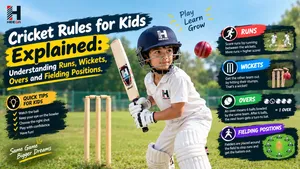 Cricket Rules for Kids Explained: Understanding Runs, Wickets, Overs and Fielding Positions.Learn cricket rules for kids, including runs, wickets, overs, fielding positions, batting, bowling, and basic match rules in a simple beginner's guide.
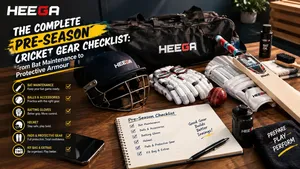 The Complete Pre-Season Cricket Gear Checklist: From Bat Maintenance to Protective Armour.Get match-ready with the ultimate pre-season cricket gear checklist. Learn how to inspect, restore, and maintain your bats, protective armour, spikes, and kit bag.
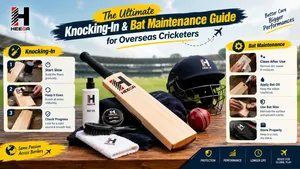 The Ultimate Knocking-In & Bat Maintenance Guide for Overseas CricketersLearn how to knock in and maintain your cricket bat for overseas cricket, including oiling, moisture control, storage, repairs, travel, and seasonal care.