Your Cricket Kit, Upgraded: Essential Gear for Better Comfort and Performance

The essential cricket equipment every player should consider when building a more comfortable, confident, and performance-focused kit
A cricket kit is more than a collection of bats, gloves, pads, and shoes.
It's the equipment you rely on every time you step onto the field.
When your gear fits properly and suits your playing style, you can focus more on the game and less on distractions. When equipment is uncomfortable, poorly fitted, or unsuitable for the conditions, even small problems can affect your confidence and movement.
That doesn't mean you need to spend a fortune upgrading everything.
In fact, smart cricket equipment choices are usually more valuable than simply buying more equipment.
The goal is to create a kit that supports your role, playing conditions, comfort, protection, and performance.
Whether you're a beginner building your first kit, a club cricketer replacing worn equipment, or an experienced player looking for an upgrade, here's how to make every part of your cricket kit work harder for you.
1. Start With the Cricket Bat
For most batters, the bat is the centerpiece of the kit.
Choosing one should be a personal decision.
Instead of focusing only on appearance, consider:
- Weight
- Pickup
- Balance
- Sweet-spot position
- Profile
- Handle
- Grip
- Willow type
A bat that's too heavy can be difficult to control. A bat that's too light may not provide the feel you're looking for.
The right choice is the one that feels comfortable through your normal batting movements.
Upgrade tip
Take your stance and practice your backlift when testing a bat.
Ask yourself:
Can I control this comfortably without changing my natural technique?
If yes, you're heading in the right direction.
2. Upgrade Your Bat Grip
Sometimes you don't need a new bat.
You simply need a better grip.
A worn or slippery grip can affect how securely you hold the handle.
A suitable grip can provide:
- Better handling
- Comfortable texture
- Secure hand placement
- Consistent feel
Inspect your grip regularly, especially if you train frequently.
Upgrade tip
If your bat still feels good but the handle feels uncomfortable or slippery, replacing the grip may be a simple and affordable improvement.
3. Invest in Quality Batting Gloves
Your hands are one of the most vulnerable parts of your body when batting.
Batting gloves therefore need to combine protection with flexibility.
Look for:
- Finger protection
- Thumb protection
- Comfortable fit
- Secure wrist closure
- Suitable grip
- Freedom of movement
Gloves shouldn't feel excessively tight or loose.
Upgrade tip
Grip your bat while wearing the gloves.
If you can comfortably hold and maneuver the bat without excessive movement inside the glove, the fit is likely more suitable.
4. Don't Compromise on Your Helmet
A helmet should be treated as essential protective equipment.
When upgrading your helmet, prioritize:
- Correct size
- Secure fit
- Clear vision
- Appropriate grille positioning
- Comfortable chin strap
- Ventilation
- Applicable safety standards
A helmet should remain appropriately positioned during normal movement.
Upgrade tip
Always follow the manufacturer's sizing and fitting guidance. If protective equipment is damaged or has experienced a significant impact, follow the manufacturer's recommendations regarding inspection or replacement.
5. Upgrade Your Batting Pads
Batting pads should protect your legs while allowing you to move naturally.
Look for an appropriate combination of:
- Protection
- Weight
- Fit
- Knee alignment
- Comfort
- Mobility
Your pads should remain secure while you move around the crease and run between wickets.
Upgrade tip
Walk, bend your knees, and take your batting stance while testing pads.
If they constantly shift or restrict movement, reconsider the fit or design.
6. Choose Cricket Shoes for Your Playing Surface
Your footwear is one of the most overlooked parts of a cricket kit.
Yet every movement starts from your feet.
Good cricket footwear should be appropriate for your playing surface and role.
Consider whether you play on:
- Natural grass
- Artificial turf
- Hard training surfaces
- Different seasonal conditions
Depending on the environment, different sole designs may be appropriate.
Upgrade tip
Don't buy shoes simply because they're popular or look professional.
Choose footwear for the surface you actually play on.
Always follow the manufacturer's recommendations.
7. Don't Ignore Shoe Comfort
Cricket can involve long periods of standing, running, bowling, and fielding.
A shoe that feels comfortable for a few minutes may feel very different after several hours.
Consider:
- Fit
- Heel security
- Cushioning
- Support
- Weight
- Traction
- Overall comfort
Upgrade tip
When possible, test footwear with realistic cricket movements.
Walk.
Run.
Stop.
Change direction.
Your feet should feel secure rather than distracted.
8. Upgrade Your Cricket Clothing
Cricket clothing needs to support movement and comfort throughout a match or training session.
Look for:
- Comfortable fit
- Breathability
- Flexibility
- Moisture management
- Durability
The right clothing should allow you to bat, bowl, field, and run without unnecessary restriction.
Upgrade tip
Don't choose cricket clothing based only on appearance.
Comfort becomes particularly important during long matches.
9. Choose a Cricket Bag That Actually Works for You
A good cricket bag makes equipment management easier.
Depending on your kit, useful features may include:
- Bat compartments
- Helmet storage
- Shoe compartments
- Clothing sections
- Accessory pockets
- Ventilation
- Durable zippers
- Comfortable straps
Upgrade tip
Before buying a bigger bag, take inventory of your current equipment.
Choose a bag based on what you actually carry.
10. Add Role-Specific Protection
Different players face different equipment requirements.
Depending on your role, age, and level, additional protective equipment may include:
- Abdominal protection
- Thigh guards
- Arm protection
- Chest protection
- Inner gloves
- Wicketkeeping protection
You don't need every accessory available.
You need the protection appropriate to your role.
Upgrade tip
Consider the situations in your game where you are most exposed and select suitable protective equipment accordingly.
11. Think About Your Playing Conditions
Your equipment should reflect where you play.
Conditions can affect your requirements.
Consider:
- Pitch type
- Ground surface
- Weather
- Match format
- Training environment
For example, footwear requirements can differ significantly between natural grass and artificial surfaces.
Upgrade tip
Before upgrading equipment, ask:
"Will this product actually work in the conditions I play in?"
12. Upgrade Based on Your Skill Level
Your equipment requirements can change as you develop.
Beginner
Focus on:
- Correct sizing
- Basic protection
- Comfort
- Durability
- Value
Junior Player
Pay particular attention to:
- Proper fit
- Appropriate weight
- Protection
- Adjustability
Club Player
Consider:
- Performance
- Comfort
- Durability
- Playing conditions
Competitive Player
You may place greater emphasis on:
- Precise fit
- Weight distribution
- Construction
- Specialized equipment
- Long-session comfort
Your kit should grow with your cricket.
13. Don't Copy a Professional Player's Kit
Professional players can provide inspiration, but their equipment is often highly personalized.
Their bat may be customized.
Their shoes may be selected around specific conditions.
Their protective equipment may be professionally fitted.
Their preferences may have developed over years.
Instead of asking:
"What does my favorite player use?"
Ask:
"What problem is that equipment solving for them?"
Then determine whether you have the same requirement.
14. Don't Assume Expensive Means Better
A premium product isn't automatically the best product for you.
A costly bat may be too heavy.
An expensive helmet may not fit your head correctly.
A high-end shoe may be unsuitable for your playing surface.
The smarter approach is to consider:
Fit + Function + Protection + Comfort + Durability + Value
Price should be considered alongside these factors—not instead of them.
15. Use Training Equipment With a Purpose
Training equipment can make practice more focused when it's connected to a specific goal.
Depending on what you're working on, you might use:
- Cones
- Training balls
- Stumps
- Batting targets
- Throw-down equipment
- Agility equipment
- Practice nets
Upgrade tip
Before purchasing a training product, identify the skill you're trying to improve.
If you can't explain what the equipment will help you practice, you may not need it.
16. Your Cricket Kit Should Reduce Distractions
Imagine facing a bowler while thinking:
"My gloves are slipping."
"My helmet keeps moving."
"My pads feel uncomfortable."
"My shoes don't feel stable."
That's attention you could be giving to the game.
Now imagine everything feels secure.
Your bat feels natural.
Your gloves fit.
Your helmet stays in position.
Your pads move with you.
Your shoes feel stable.
You can focus on the ball.
That's what good equipment should do.
It should support your concentration rather than compete with it.
17. Maintenance Is Part of an Equipment Upgrade
Upgrading your kit isn't only about buying new products.
Sometimes better maintenance can make your existing equipment perform better for longer.
Bat
Follow appropriate care and knocking-in instructions.
Gloves
Air them out after use and inspect them regularly.
Pads
Check straps, stitching, and protective sections.
Helmet
Inspect the shell, grille, padding, and straps.
Shoes
Clean according to manufacturer guidance and inspect the soles.
Bag
Check zippers, seams, and compartments.
A well-maintained kit is easier to rely on.
18. Know When It's Time to Replace Equipment
Not every worn product needs immediate replacement.
But damaged protective equipment deserves particular attention.
Look for:
- Cracks
- Broken straps
- Damaged padding
- Loose components
- Excessive wear
- Poor fit
- Structural damage
If protective equipment has suffered a significant impact, follow the manufacturer's guidance.
Never compromise safety to extend the life of a product.
19. Upgrade One Problem at a Time
You don't have to replace your entire kit.
Instead, identify the biggest weakness.
For example:
Problem: Bat feels difficult to control
Consider reassessing bat weight and pickup.
Problem: Gloves feel uncomfortable
Look at fit and protection.
Problem: Pads restrict movement
Reassess size, alignment, and design.
Problem: Shoes feel unstable
Check fit and surface compatibility.
Problem: Helmet shifts
Review sizing and adjustment.
This approach makes upgrading more practical and cost-effective.
20. Build a Performance-Focused Cricket Kit
A smart kit should work as a complete system.
Think of it as:
Bat + Gloves + Helmet + Pads + Shoes + Clothing + Protection + Accessories
Each component should complement your playing role.
The goal isn't to create the most expensive kit.
It's to create a kit that allows you to:
- Move comfortably
- Grip securely
- Stay protected
- Focus clearly
- Prepare efficiently
- Perform naturally
The Smart Cricket Kit Checklist
Before upgrading any equipment, ask:
Fit
Does it fit correctly?
Comfort
Can I use it for long periods?
Performance
Does it support what I need to do?
Protection
Does it provide appropriate protection?
Mobility
Can I move naturally?
Conditions
Is it suitable for my playing surface and environment?
Durability
Can it handle my training and match frequency?
Value
Does the improvement justify the cost?
Purpose
What specific problem will this upgrade solve?
If you can answer these questions, you're making a much smarter equipment decision.
When Should You Upgrade?
A useful rule is:
Don't upgrade because something is new. Upgrade because something needs to improve.
You may have a good reason to upgrade when:
- Your equipment no longer fits
- Your playing level has changed
- Your technique has developed
- Your equipment is damaged
- Your playing conditions have changed
- Your current gear causes discomfort
- Your equipment restricts movement
- You need additional protection
This approach prevents unnecessary spending while keeping your kit suited to your game.
Final Thoughts
A cricket kit doesn't need to be enormous to be effective.
It needs to be smart.
The right bat can support control.
Well-fitted gloves can provide protection and a secure connection to the handle.
A properly fitted helmet can provide appropriate protection.
Comfortable pads can support movement.
Suitable shoes can provide traction and stability for the playing surface.
Good clothing can keep you comfortable throughout long sessions.
A well-organized bag can make preparation easier.
And role-specific protective equipment can help you play with greater confidence.
At Heega Sports, we help cricketers find equipment for training and competitive cricket, including cricket bats, batting gloves, helmets, pads, cricket shoes, bags, accessories, and sportswear.
You don't need to replace everything to upgrade your cricket kit.
Start with the equipment that's creating the biggest problem.
Choose based on fit, function, protection, comfort, conditions, and value.
Then get back to what matters most:
training consistently, playing confidently, and focusing on the next ball.
Shop Now
Heega Sports – Quality Cricket Equipment Designed for Players From Head to Toe.
Related posts
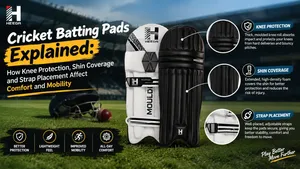 Cricket Batting Pads Explained: How Knee Protection, Shin Coverage and Strap Placement Affect Comfort and MobilityLearn how cricket batting pads, knee protection, shin coverage and strap placement affect comfort, mobility, impact protection and batting performance.
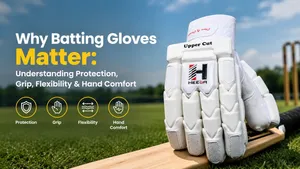 Why Batting Gloves Matter: Understanding Protection, Grip, Flexibility & Hand ComfortLearn why batting gloves matter for protection, grip, flexibility and comfort, plus how to choose the right cricket batting gloves for your playing level.
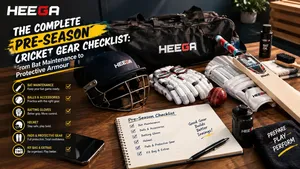 The Complete Pre-Season Cricket Gear Checklist: From Bat Maintenance to Protective Armour.Get match-ready with the ultimate pre-season cricket gear checklist. Learn how to inspect, restore, and maintain your bats, protective armour, spikes, and kit bag.