The Parent's Guide to Buying a First Cricket Bat Based on Height and Age

Introduction: Your Child's First Cricket Bat Is More Important Than You Think
Buying a first cricket bat is an exciting milestone for both parents and children.
Whether your child has just joined a cricket academy, started playing at school, or simply enjoys cricket in the backyard, choosing the right bat can make a significant difference to their learning experience.
Many parents believe that buying a bigger bat is a smart investment because their child will eventually grow into it.
Unfortunately, this is one of the biggest mistakes beginners make.
A bat that is too large or too heavy can negatively affect technique, reduce confidence, and even discourage young players from enjoying the game.
The ideal cricket bat should match your child's height, strength, and stage of development, not just their age.
Across Nepal, Germany, the United States, Canada, the Netherlands, and the United Kingdom, youth cricket coaches recommend selecting junior cricket bats primarily according to a player's height while also considering their age and physical development.
This guide explains everything parents should know before purchasing their child's first cricket bat.
Why Choosing the Correct Bat Matters
Young cricketers develop batting techniques during their early years.
Using the correct bat allows children to:
- Learn proper batting mechanics
- Swing comfortably
- Improve hand-eye coordination
- Build confidence
- Reduce unnecessary strain
Good equipment supports good habits.
Height Is More Important Than Age
Children of the same age often have different heights.
That is why professional coaches recommend choosing bat sizes primarily according to height.
Height provides a more accurate indication of the correct bat length.
Age should be used only as a general reference.
Cricket Bat Size Chart Based on Height
Child HeightRecommended Bat Size
- Up to 4'3" (130 cm) - Size 3
- 4'3" – 4'6" (130–137 cm) - Size 4
- 4'6" – 4'9" (137–145 cm) - Size 5
- 4'9" – 5'2" (145–157 cm) - Size 6
- 5'2" – 5'5" (157–165 cm) - Harrow
- Above 5'5" (165 cm+) - Short Handle (SH)
This sizing chart helps parents make informed purchasing decisions.
Understanding Each Bat Size
Size 3
Ideal for younger children beginning cricket.
Suitable for:
- Basic coaching
- Soft-ball practice
- Backyard cricket
Size 4
As children grow, Size 4 bats provide improved balance while remaining easy to control.
They support continued technical development.
Size 5
This size is commonly used when children begin playing structured school or academy cricket.
Players develop:
- Better timing
- Stronger technique
- Greater confidence
Size 6
Suitable for older junior players preparing for more competitive cricket.
The bat offers:
- Increased reach
- Better shot development
- Improved match preparation
Harrow
The Harrow bat bridges the transition between junior and adult cricket.
It is widely used by teenagers who are still growing.
Short Handle (SH)
Once players reach adult height, the Short Handle becomes the standard bat for competitive cricket.
Bat Weight Is Just as Important
Even if two bats have the same size, they may have different weights.
For beginners, lighter bats usually allow:
- Faster swings
- Better control
- Improved timing
- Easier learning
A comfortable bat encourages correct technique.
Should Beginners Choose Kashmir Willow?
Yes.
For most young cricketers, Kashmir Willow bats offer:
- Excellent durability
- Affordable pricing
- Reliable performance
- Great value for beginners
They are widely recommended for school cricket and junior coaching.
Signs Your Child's Bat Is Too Big
Parents should look for these common signs:
- Difficulty lifting the bat
- Slow swing speed
- Poor balance
- Fatigue after short practice sessions
- Awkward batting posture
An oversized bat can slow skill development.
Signs the Bat Fits Properly
A correctly sized bat allows the child to:
- Swing naturally
- Maintain balance
- Play comfortably
- Practice for longer periods
- Build confidence
Comfort usually indicates proper sizing.
Common Mistakes Parents Make
Avoid these mistakes:
- Buying a bat for future growth instead of current height.
- Choosing the heaviest bat available.
- Purchasing adult equipment for junior players.
- Ignoring advice from coaches.
- Selecting equipment based only on price.
The right fit is more valuable than the highest price.
Don't Forget Other Cricket Equipment
A beginner's cricket journey involves more than just the bat.
Parents should also consider:
- Batting gloves
- Batting pads
- Practice balls
- Cricket kit bag
- Practice nets
- Protective equipment
Proper equipment supports safer and more enjoyable learning.
Nepal: Supporting Young Cricket Talent
As cricket grows rapidly across Nepal, more parents are investing in correctly sized junior equipment to support children's development.
Germany: Helping New Players Learn Properly
German cricket clubs continue introducing children to cricket with beginner-friendly coaching and appropriately sized equipment.
The United States: Youth Cricket Is Expanding
As cricket becomes more popular in America, parents are increasingly seeking guidance on selecting the right beginner equipment.
Canada: Long-Term Development Begins Early
Canadian academies emphasize proper equipment selection to build strong technical foundations.
The Netherlands: Building Better Junior Players
Dutch youth cricket programs encourage players to use height-appropriate bats throughout their development.
The United Kingdom: Proven Junior Cricket Pathways
British cricket has long promoted proper bat sizing as an essential part of junior coaching.
How Heega Sports Helps Parents Make the Right Choice
At Heega Sports, we understand that choosing a child's first cricket bat can feel overwhelming.
Our junior cricket range is designed to support players at every stage of growth.
Our collection includes:
- Junior cricket bats (Size 3, 4, 5, 6, Harrow, SH)
- Premium Kashmir Willow bats
- Leather cricket balls
- Practice balls
- Batting gloves
- Batting pads
- Cricket kit bags
- Practice nets
- Training accessories
Our goal is to help every young cricketer begin their journey with equipment that encourages confidence, comfort, and correct technique.
Expert Buying Tips for Parents
Before buying your child's first cricket bat:
- Measure your child's height.
- Choose the recommended bat size.
- Select a comfortable weight.
- Ask the coach for advice if unsure.
- Avoid buying oversized bats for future use.
- Upgrade the bat as your child grows.
Small decisions today create better players tomorrow.
Final Thoughts
A child's first cricket bat plays an important role in shaping their early experience with the game.
Choosing the correct size based on height—and considering age as a supporting factor—helps children develop proper batting techniques, improve confidence, and enjoy cricket from the very beginning.
Across Nepal, Germany, the United States, Canada, the Netherlands, and the United Kingdom, experienced coaches continue recommending height-based bat selection because it gives young players the best opportunity to learn and progress.
When parents combine quality coaching with properly fitted equipment, children are far more likely to build a lifelong love for cricket.
🏏 Find the Perfect First Cricket Bat at Heega Sports
Explore premium-quality junior cricket bats in Size 3, Size 4, Size 5, Size 6, Harrow, and Short Handle, along with leather balls, practice balls, batting gloves, pads, cricket kit bags, practice nets, and training accessories designed for every young cricketer.
Shop Now
Heega Sports – Helping Parents Choose the Perfect First Cricket Bat for Every Young Player.
Related posts
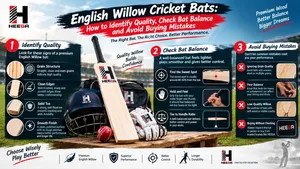 English Willow Cricket Bats: How to Identify Quality, Check Bat Balance and Avoid Buying MistakesLearn how to identify a quality English willow cricket bat, check its balance and pickup, understand grain patterns, and avoid common buying mistakes.
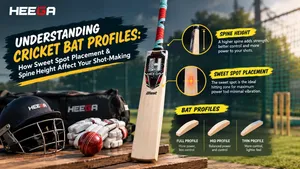 Understanding Cricket Bat Profiles: How Sweet Spot Placement & Spine Height Affect Your Shot-MakingDiscover how cricket bat profiles, sweet spot placement, spine height, and edge thickness impact your shot-making, pick-up, and power transmission on the pitch.
 Buying a Cricket Bat from India: A Guide for Overseas Buyers.Looking to buy an authentic cricket bat directly from India while living overseas? Discover the ultimate 2026 step-by-step guide on seller checks, custom specs, willow selection, shipping, customs duties, and knocking-in protocols.